Department of General Surgery, The Second People's Hospital of Lianyungang, Lianyungang, China.
Department of Pediatric Surgery, The Second People's Hospital of Lianyungang, Lianyungang, China.
BMC Med Genomics. 2023 Dec 12;16(1):327. doi: 10.1186/s12920-023-01763-w.
Colorectal cancer (CRC) is a prevalent malignancy worldwide, with increasing incidence and mortality rates. Although treatment options have improved, CRC remains a leading cause of death due to metastasis. Early intervention can significantly improve patient outcomes, making it crucial to understand the molecular mechanisms underlying CRC metastasis. In this study, we performed bioinformatics analysis to identify potential genes associated with CRC metastasis.
We downloaded and integrated gene expression datasets (GSE89393, GSE100243, and GSE144259) from GEO database. Differential expression analysis was conducted, followed by Gene Ontology (GO) functional enrichment analysis and Kyoto Encyclopedia of Genes and Genomes (KEGG) pathway enrichment analysis. The hub gene SERPINA3 was selected for further in vitro functional studies. Additionally, the role of miR-137-3p/miR-296-5p/ Serpin family A member 3 (SERPINA3) in CRC cell function was investigated using in vitro assays.
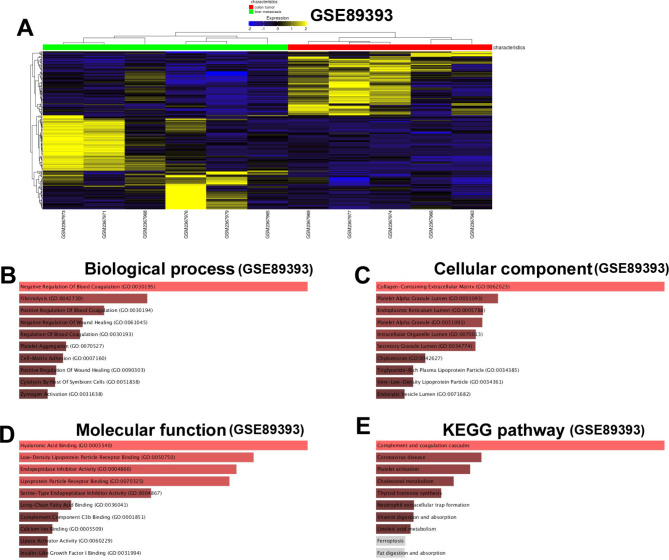
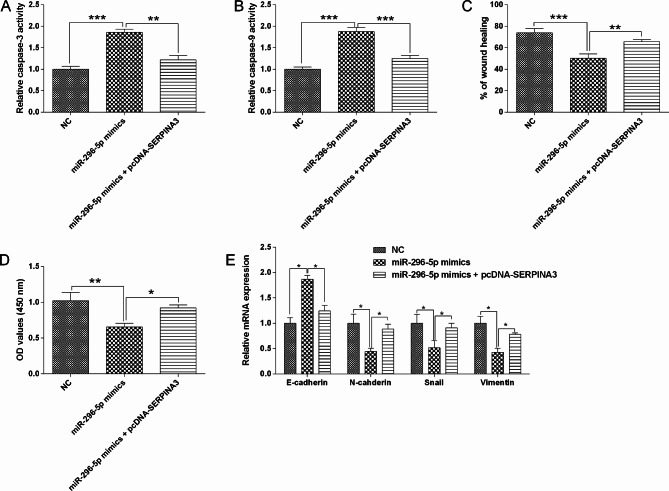
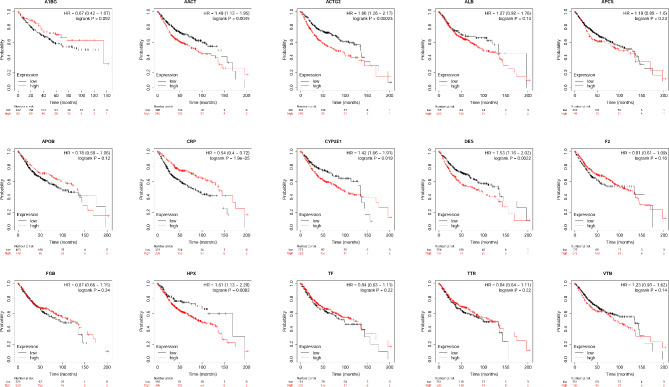
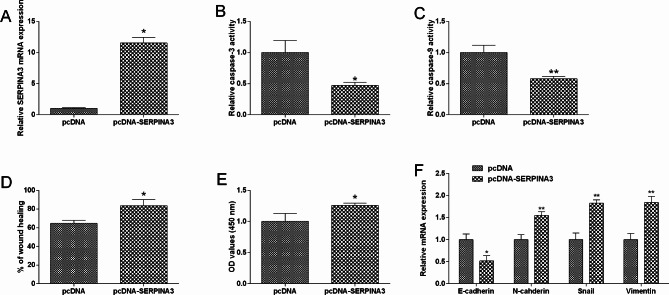
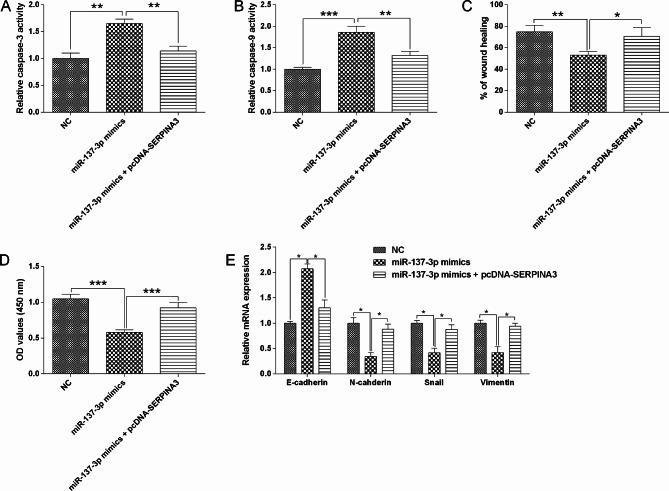
Analysis of the gene expression datasets revealed differentially expressed genes (DEGs) associated with CRC metastasis. GO analysis showed enrichment in biological processes such as blood coagulation regulation and wound healing. Cellular component analysis highlighted extracellular matrix components and secretory granules. Molecular function analysis identified activities such as serine-type endopeptidase inhibition and lipoprotein receptor binding. KEGG analysis revealed involvement in pathways related to complement and coagulation cascades, cholesterol metabolism, and immune responses. The common DEGs among the datasets were further investigated. We identified SERPINA3 as a hub gene associated with CRC metastasis. SERPINA3 exerted enhanced effects on migration, proliferation and epithelial-mesenchymal transition (EMT) and inhibitory effects on caspase-3/-9 activities in HT29 and SW620 cells. MiR-137-3p overexpression increased activities of caspase-3/-9, decreased migration and proliferation, and also repressed EMT in HT29 cells, which were obviously attenuated by SERPINA3 enforced overexpression. Consistently, SERPINA3 enforced overexpression also largely reversed miR-296-5p mimics-induced increased in activities of caspase-3/-9, decrease in migration, proliferation and EMT in HT29 cells.
Through bioinformatics analysis, we identified potential genes associated with CRC metastasis. The functional studies focusing on SERPINA3/miR-137-3p/miR-296-5p further consolidated its role in regulating CRC progression. Our findings provide insights into novel mechanisms underlying CRC metastasis and might contribute to the development of effective treatment strategies. However, the role of SERPINA3/miR-137-3p/miR-296-5p signaling in CRC still requires further investigation.
结直肠癌(CRC)是一种普遍存在的恶性肿瘤,其发病率和死亡率呈上升趋势。尽管治疗选择有所改善,但CRC 仍是导致死亡的主要原因,因为它会转移。早期干预可以显著改善患者的预后,因此了解 CRC 转移的分子机制至关重要。在本研究中,我们进行了生物信息学分析,以鉴定与 CRC 转移相关的潜在基因。
我们从 GEO 数据库下载并整合了基因表达数据集(GSE89393、GSE100243 和 GSE144259)。进行了差异表达分析,随后进行了基因本体论(GO)功能富集分析和京都基因与基因组百科全书(KEGG)通路富集分析。选择 SERPINA3 作为进一步的体外功能研究的枢纽基因。此外,使用体外实验研究了 miR-137-3p/miR-296-5p/Serpin 家族 A 成员 3(SERPINA3)在 CRC 细胞功能中的作用。
对基因表达数据集的分析揭示了与 CRC 转移相关的差异表达基因(DEGs)。GO 分析显示,生物过程富集与血液凝固调节和伤口愈合有关。细胞成分分析突出了细胞外基质成分和分泌颗粒。分子功能分析确定了丝氨酸内肽酶抑制和脂蛋白受体结合等活性。KEGG 分析表明,该途径与补体和凝血级联、胆固醇代谢和免疫反应有关。对数据集之间的共同 DEGs 进行了进一步研究。我们确定 SERPINA3 是与 CRC 转移相关的枢纽基因。SERPINA3 在 HT29 和 SW620 细胞中增强迁移、增殖和上皮-间充质转化(EMT),并抑制半胱天冬酶-3/-9 活性。miR-137-3p 过表达增加半胱天冬酶-3/-9 活性,减少迁移和增殖,并在 HT29 细胞中抑制 EMT,而过表达 SERPINA3 可明显减弱这些作用。同样,SERPINA3 的强制过表达也在很大程度上逆转了 miR-296-5p 模拟物诱导的 HT29 细胞中半胱天冬酶-3/-9 活性增加、迁移、增殖和 EMT 减少。
通过生物信息学分析,我们鉴定了与 CRC 转移相关的潜在基因。针对 SERPINA3/miR-137-3p/miR-296-5p 的功能研究进一步证实了其在调节 CRC 进展中的作用。我们的发现为 CRC 转移的潜在机制提供了新的见解,并可能为开发有效的治疗策略做出贡献。然而,SERPINA3/miR-137-3p/miR-296-5p 信号在 CRC 中的作用仍需要进一步研究。