Department of Epileptology, Medical Faculty, University of Bonn, Venusberg-Campus 1, 53127, Bonn, Germany.
Department of Epileptology, Neurology, RWTH Aachen University, Aachen, Germany.
Sci Rep. 2023 Dec 14;13(1):22187. doi: 10.1038/s41598-023-49310-y.
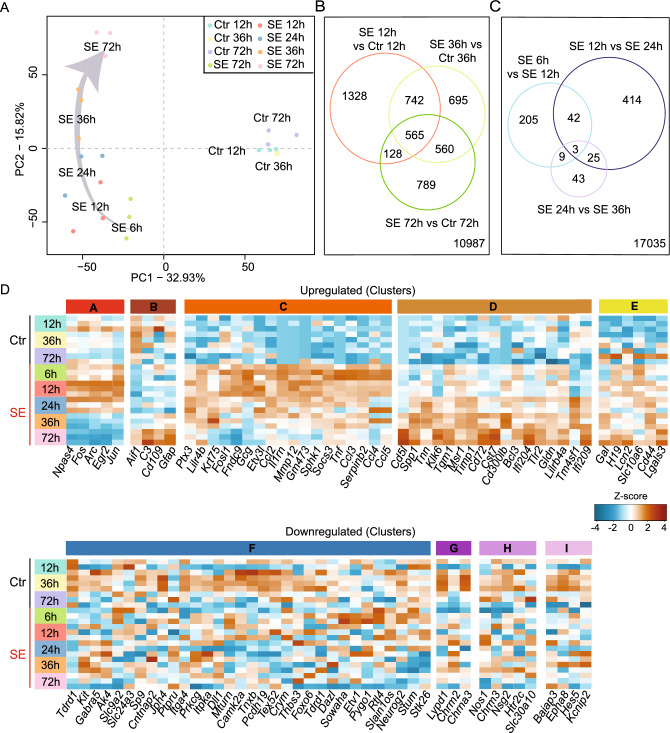
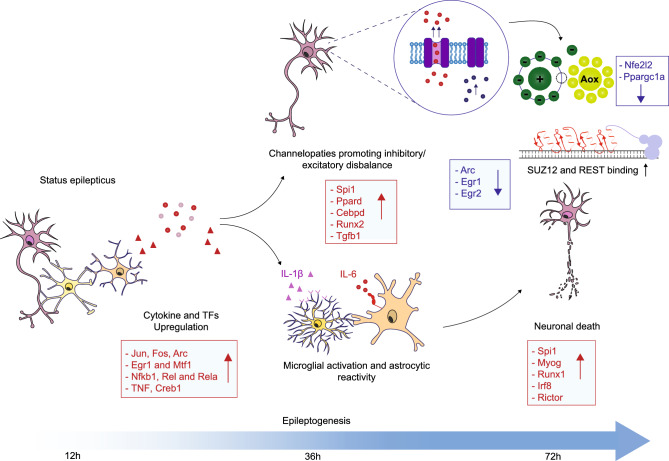
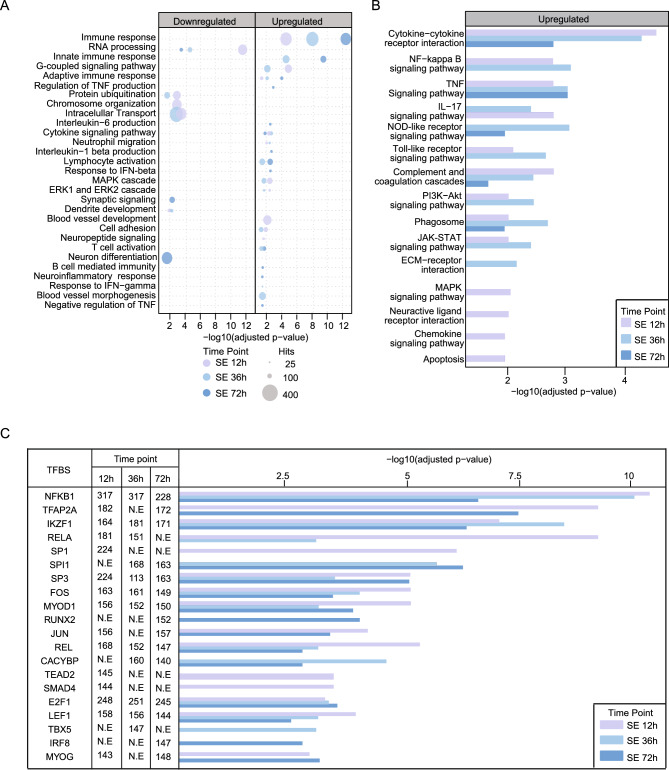
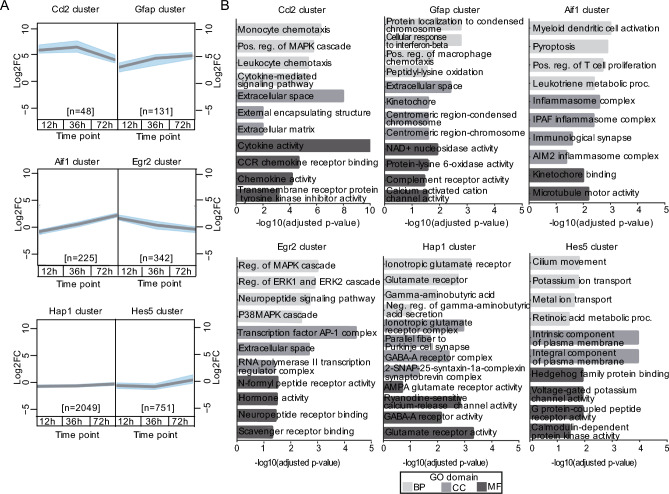
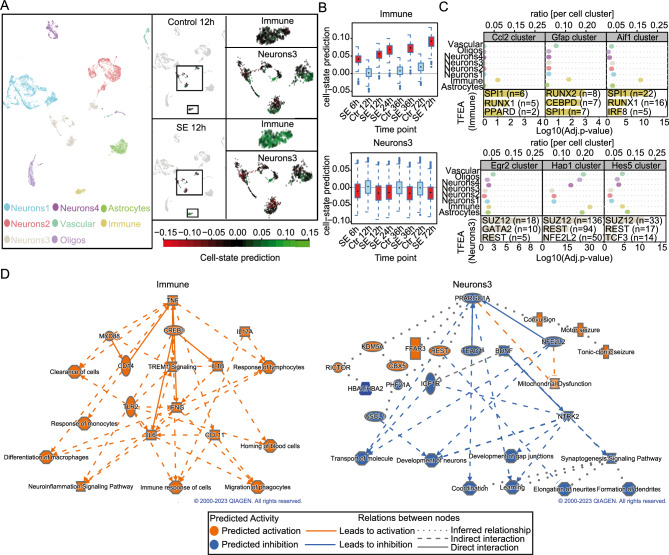
Transient brain insults including status epilepticus (SE) can initiate a process termed 'epileptogenesis' that results in chronic temporal lobe epilepsy. As a consequence, the entire tri-synaptic circuit of the hippocampus is fundamentally impaired. A key role in epileptogenesis has been attributed to the CA1 region as the last relay station in the hippocampal circuit and as site of aberrant plasticity, e.g. mediated by acquired channelopathies. The transcriptional profiles of the distinct hippocampal neurons are highly dynamic during epileptogenesis. Here, we aimed to elucidate the early SE-elicited mRNA signature changes and the respective upstream regulatory cascades in CA1. RNA sequencing of CA1 was performed in the mouse pilocarpine-induced SE model at multiple time points ranging from 6 to 72 h after the initial insult. Bioinformatics was used to decipher altered gene expression, signalling cascades and their corresponding cell type profiles. Robust transcriptomic changes were detected at 6 h after SE and at subsequent time points during early epileptogenesis. Major differentially expressed mRNAs encoded primarily immediate early and excitability-related gene products, as well as genes encoding immune signalling factors. Binding sites for the transcription factors Nfkb1, Spi1, Irf8, and two Runx family members, were enriched within promoters of differentially expressed genes related to major inflammatory processes, whereas the transcriptional repressors Suz12, Nfe2l2 and Rest were associated with hyperexcitability and GABA / glutamate receptor activity. CA1 quickly responds to SE by inducing transcription of genes linked to inflammation and excitation stress. Transcription factors mediating this transcriptomic switch represent targets for new highly selected, cell type and time window-specific anti-epileptogenic strategies.
短暂性脑损伤包括癫痫持续状态 (SE),可引发“癫痫发生”过程,导致慢性颞叶癫痫。因此,海马体的整个三突触回路受到根本损害。癫痫发生过程中的关键作用归因于 CA1 区域,作为海马回路的最后一个中继站,以及异常可塑性的部位,例如通过获得性通道病介导。在癫痫发生过程中,不同海马神经元的转录谱高度动态。在这里,我们旨在阐明 SE 诱发的 CA1 中早期 mRNA 特征变化及其各自的上游调节级联。在初始损伤后 6 至 72 小时的多个时间点,对匹鲁卡品诱导的 SE 模型中的 CA1 进行 RNA 测序。生物信息学用于破译改变的基因表达、信号级联及其相应的细胞类型谱。在 SE 后 6 小时和早期癫痫发生过程中的随后时间点检测到稳健的转录组变化。主要差异表达的 mRNA 主要编码早期即刻和兴奋性相关基因产物,以及编码免疫信号因子的基因。转录因子 Nfkb1、Spi1、Irf8 和两个 Runx 家族成员的结合位点在与主要炎症过程相关的差异表达基因的启动子中富集,而转录抑制剂 Suz12、Nfe2l2 和 Rest 与过度兴奋和 GABA/谷氨酸受体活性相关。CA1 通过诱导与炎症和兴奋应激相关的基因转录,对 SE 迅速做出反应。介导这种转录组转换的转录因子代表新的高度选择的、细胞类型和时间窗口特异性抗癫痫发生策略的靶标。