Lee Jung Hyun, Gatera Vesara Ardhe, Smith Ted, Panimbang Fahmi, Gonzalez Alejandro, Abdulah Rizky, Bonham Connie, Bryant Alaina Kateri, Liu Sa
School of Health Sciences, Purdue University, West Lafayette, Indiana, USA.
Department of Pharmacy and Health Sciences, University Kuala Lumpur - Royal College of Medicine Perak, Ipoh, Perak, Malaysia.
New Solut. 2024 Feb;33(4):220-235. doi: 10.1177/10482911231218478. Epub 2023 Dec 19.
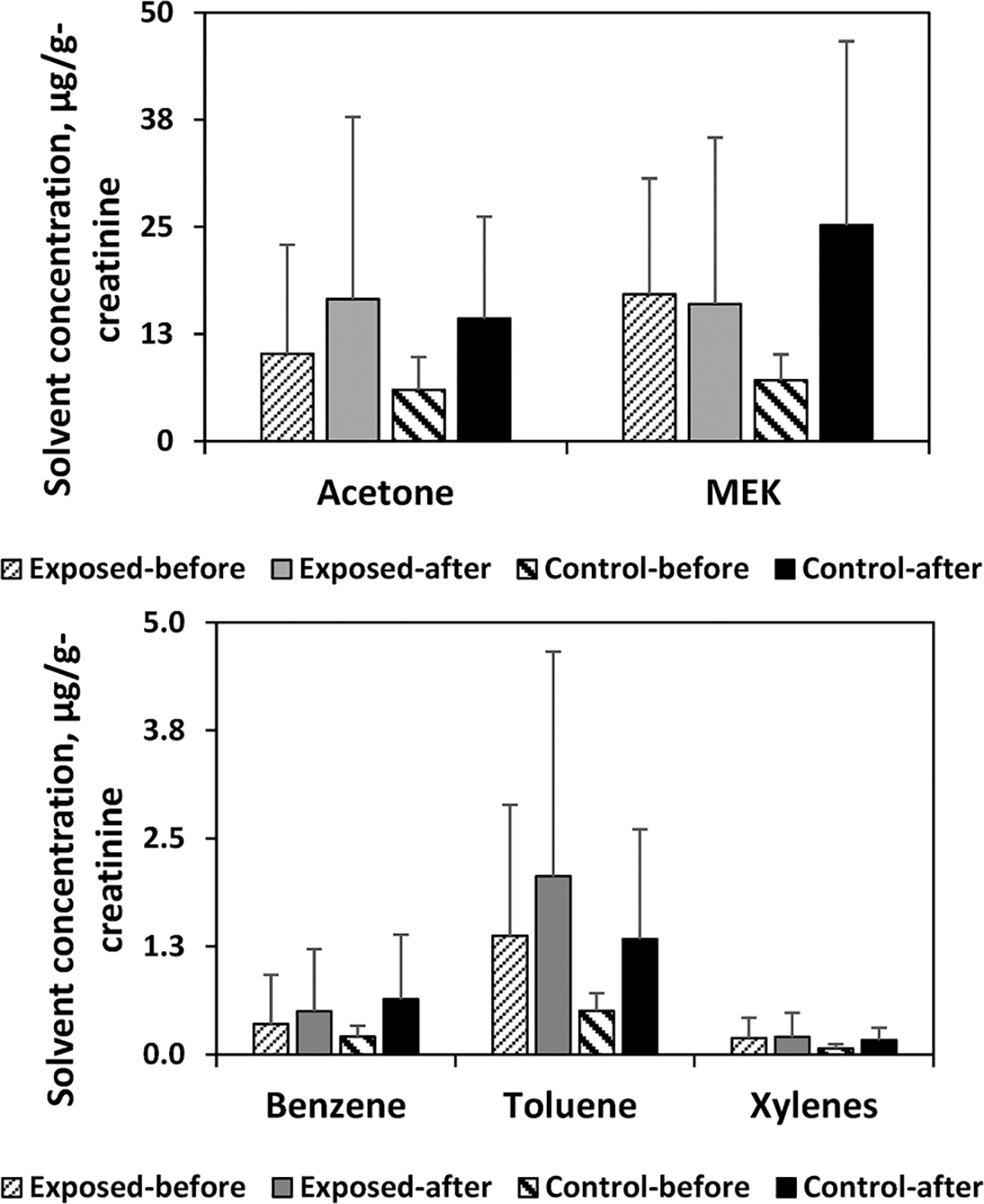
Concerns about chemical exposure in the electronics manufacturing industry have long been recognized, but data are lacking in Southeast Asia. We conducted a study in Batam, Indonesia, to evaluate chemical exposures in electronics facilities, using participatory research and biological monitoring approaches. A convenience sample of 36 workers (28 exposed, 8 controls) was recruited, and urine samples were collected before and after shifts. Five solvents (acetone, methyl ethyl ketone, toluene, benzene, and xylenes) were found in 46%-97% of samples, and seven metals (arsenic, cadmium, cobalt, tin, antimony, lead, and vanadium) were detected in 60%-100% of samples. Biological monitoring and participatory research appeared to be useful in assessing workers' exposure when workplace air monitoring is not feasible due to a lack of cooperation from the employer. Several logistical challenges need to be addressed in future biomonitoring studies of electronics workers in Asia in factories where employers are reluctant to track workers' exposure and health.
长期以来,人们一直认识到电子制造业中化学物质暴露的问题,但东南亚地区缺乏相关数据。我们在印度尼西亚的巴淡岛开展了一项研究,采用参与式研究和生物监测方法来评估电子设施中的化学物质暴露情况。招募了36名工人的便利样本(28名暴露工人,8名对照工人),并在轮班前和轮班后收集尿液样本。在46%-97%的样本中发现了五种溶剂(丙酮、甲乙酮、甲苯、苯和二甲苯),在60%-100%的样本中检测到了七种金属(砷、镉、钴、锡、锑、铅和钒)。当由于雇主缺乏合作而无法进行工作场所空气监测时,生物监测和参与式研究似乎有助于评估工人的暴露情况。在亚洲工厂对电子工人进行未来生物监测研究时,若雇主不愿追踪工人的暴露情况和健康状况,还需要应对若干后勤方面的挑战。