Medical Technology College, Shanghai University of Medicine & Health Sciences, 279 Zhouzhu Road, Pudong New Area, Shanghai, 201318, China.
Public Health College, Shanghai University of Medicine & Health Sciences, 279 Zhouzhu Road, Pudong New Area, Shanghai, 201318, China.
J Health Popul Nutr. 2023 Dec 20;42(1):145. doi: 10.1186/s41043-023-00488-x.
Vitamin D plays an important role in the health of adolescents, whereas vitamin D status of Chinese college students was seldom studied in China. To explore the vitamin D status and its relationship with ethnicity and geographic location in Chinese college students.
The freshmen were taken a physical examination by trained medical personnel after they reported to university. Demographic information including age, gender, ethnicity, region of original residence was collected using a questionnaire survey. Serum 25(OH)D concentrations were measured using a liquid chromatograph mass spectrometer. Multiple regression analyses were used to explore the factors that influence serum 25(OH)D levels.
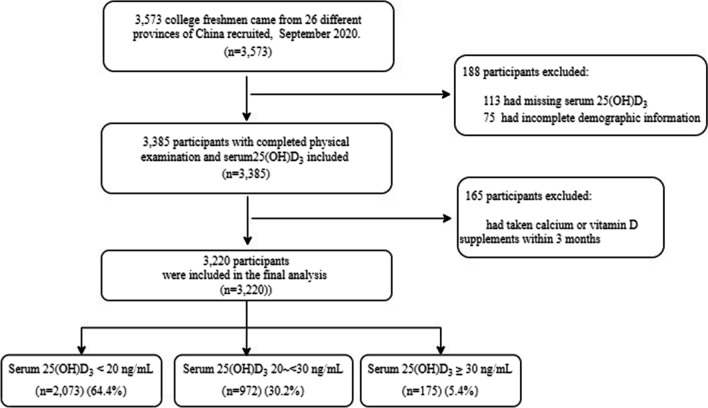
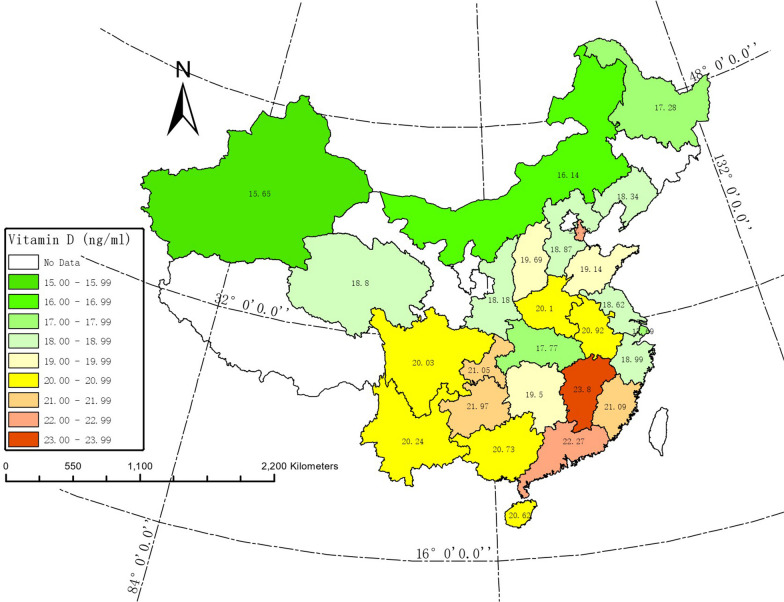
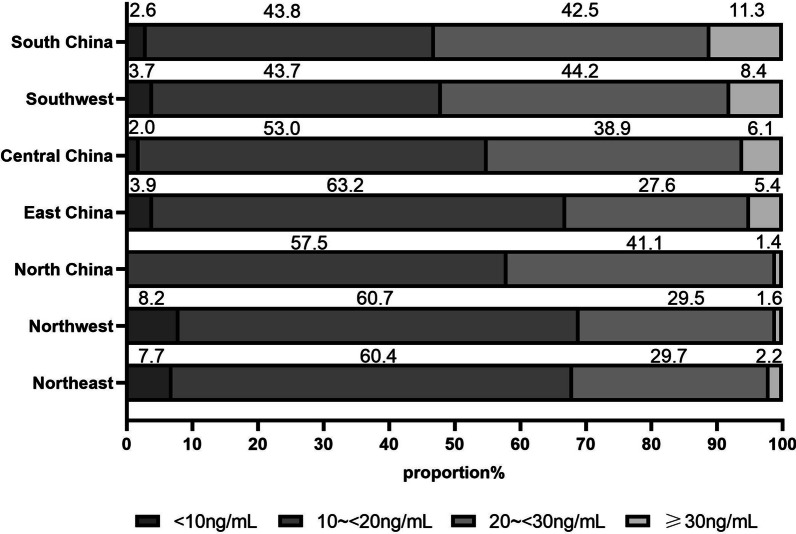
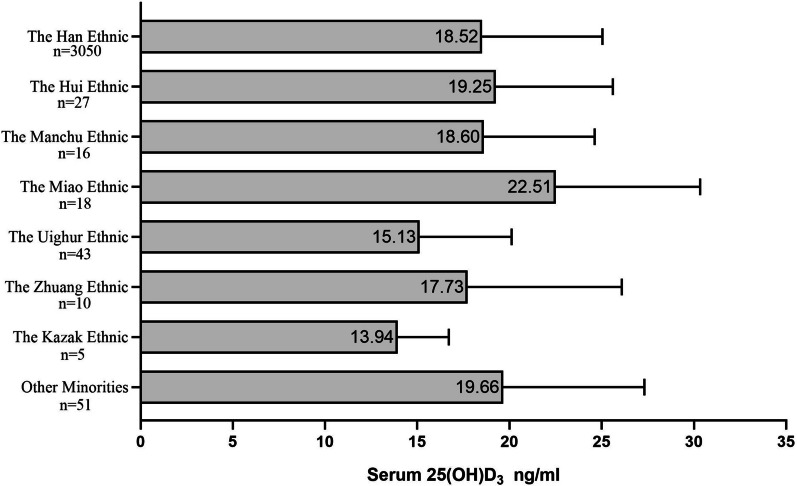
Totally 3220 freshmen who came from 26 provinces, autonomous districts or municipalities were recruited, with a mean age of 18.75 ± 1.18 years and 70.2% of them were female. The mean serum 25(OH)D levels were 18.51 ± 6.54 ng/mL, and the proportion of vitamin D deficiency (< 20 ng/mL) and insufficiency (20 ~ < 30 ng/mL) was 64.4% and 30.2%, respectively. The combined proportion of vitamin D deficiency and insufficiency was increased with the latitude increased. Miao had the highest serum 25(OH)D levels, whereas Kazak ethnic had the lowest (22.51 ng/mL vs. 13.94 ng/mL) among different ethnic groups. Female students, students from city, Uighur and Kazak ethnic, residing in high latitude was significantly associated with lower serum 25(OH)D levels (P < 0.05).
Vitamin D deficiency is an important health problem in Chinese college students. Sunlight activities, dietary and life-style intervention for college students according to geographic location and ethnicities should be considered.
维生素 D 在青少年健康中发挥着重要作用,而中国大学生的维生素 D 状况在国内很少有研究。本研究旨在探讨中国大学生维生素 D 状况及其与种族和地理位置的关系。
新生入学体检时,由经过培训的医务人员采集其一般人口学信息,包括年龄、性别、种族、原籍地。采用液相色谱-质谱联用仪检测血清 25 羟维生素 D[25(OH)D]浓度。采用多元回归分析影响血清 25(OH)D 水平的因素。
共纳入来自全国 26 个省、自治区、直辖市的 3220 名新生,平均年龄为 18.75±1.18 岁,其中 70.2%为女性。血清 25(OH)D 平均水平为 18.51±6.54ng/ml,维生素 D 缺乏(<20ng/ml)和不足(20~<30ng/ml)的比例分别为 64.4%和 30.2%。维生素 D 缺乏和不足的比例随纬度升高而增加。不同种族中,苗族学生血清 25(OH)D 水平最高,而哈萨克族学生血清 25(OH)D 水平最低(22.51ng/ml 比 13.94ng/ml)。女生、城市生源、维吾尔族和哈萨克族学生以及高纬度地区生源学生的血清 25(OH)D 水平较低,差异有统计学意义(P<0.05)。
维生素 D 缺乏是中国大学生面临的一个重要健康问题。应根据地理位置和种族,考虑对大学生开展阳光活动、饮食和生活方式干预。