Department of Neuroradiology, Clinical Neuroscience Center, University Hospital of Zurich, Zurich, Switzerland.
Department of Radiology, Oregon Health & Science University, Portland, OR, USA.
Eur Radiol. 2024 Jul;34(7):4628-4637. doi: 10.1007/s00330-023-10524-3. Epub 2023 Dec 26.
Cytotoxic lesions of the corpus callosum (CLOCC) are a common magnetic resonance imaging (MRI) finding associated with various systemic diseases including COVID-19. Although an increasing number of such cases is reported in the literature, there is a lack of systematic evidence summarizing the etiology and neuroimaging findings of these lesions. Thus, the aim of this systematic review was to synthesize the applied nomenclature, neuroimaging and clinical features, and differential diagnoses as well as associated disease entities of CLOCC.
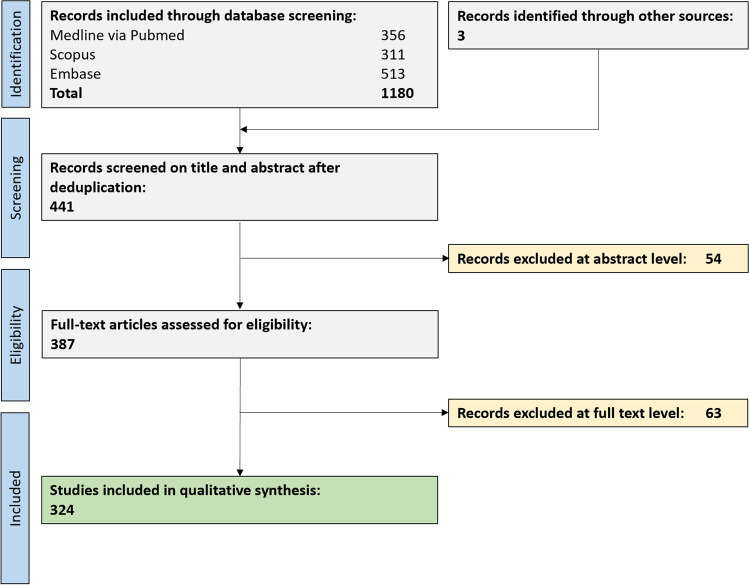
A comprehensive literature search in three biomedical databases identified 441 references, out of which 324 were eligible for a narrative summary including a total of 1353 patients.
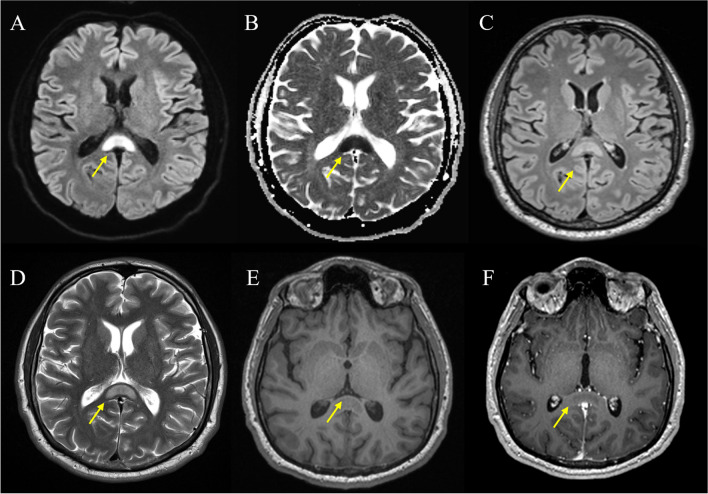
Our PRISMA-conform systematic review identifies a broad panel of disease entities which are associated with CLOCC, among them toxic/drug-treatment-associated, infectious (viral, bacterial), vascular, metabolic, traumatic, and neoplastic entities in both adult and pediatric individuals. On MRI, CLOCC show typical high T2 signal, low T1 signal, restricted diffusion, and lack of contrast enhancement. The majority of the lesions were reversible within the follow-up period (median follow-up 3 weeks). Interestingly, even though CLOCC were mostly associated with symptoms of the underlying disease, in exceptional cases, CLOCC were associated with callosal neurological symptoms. Of note, employed nomenclature for CLOCC was highly inconsistent.
Our study provides high-level evidence for clinical and imaging features of CLOCC as well as associated disease entities.
Our study provides high-level evidence on MRI features of CLOCC as well as a comprehensive list of disease entities potentially associated with CLOCC. Together, this will facilitate rigorous diagnostic workup of suspected CLOCC cases.
• Cytotoxic lesions of the corpus callosum (CLOCC) are a frequent MRI feature associated with various systemic diseases. • Cytotoxic lesions of the corpus callosum show a highly homogenous MRI presentation and temporal dynamics. • This comprehensive overview will benefit (neuro)radiologists during diagnostic workup.
胼胝体细胞毒性病变(CLOCC)是一种常见的磁共振成像(MRI)表现,与包括 COVID-19 在内的各种系统性疾病有关。尽管文献中越来越多报道了此类病例,但缺乏系统证据来总结这些病变的病因、神经影像学表现和鉴别诊断以及相关疾病实体。因此,本系统综述的目的是综合应用命名法、神经影像学和临床特征以及鉴别诊断以及相关疾病实体的胼胝体细胞毒性病变。
在三个生物医学数据库中进行全面的文献检索,共确定了 441 篇参考文献,其中 324 篇符合纳入标准,包括总共 1353 名患者。
我们的 PRISMA 符合系统综述确定了广泛的疾病实体与 CLOCC 相关,其中包括成人和儿童的中毒/药物治疗相关、感染(病毒、细菌)、血管、代谢、创伤和肿瘤实体。在 MRI 上,CLOCC 显示典型的高 T2 信号、低 T1 信号、受限扩散和缺乏对比增强。在随访期间,大多数病变是可逆的(中位随访 3 周)。有趣的是,尽管 CLOCC 主要与基础疾病的症状相关,但在极少数情况下,CLOCC 与胼胝体神经症状相关。值得注意的是,用于 CLOCC 的命名法高度不一致。
本研究提供了关于 CLOCC 的临床和影像学特征以及相关疾病实体的高水平证据。
本研究提供了关于 CLOCC 的 MRI 特征以及可能与 CLOCC 相关的广泛疾病实体的综合列表。综上所述,这将有助于对疑似 CLOCC 病例进行严格的诊断检查。
胼胝体细胞毒性病变(CLOCC)是一种与各种系统性疾病相关的常见磁共振成像(MRI)表现。
胼胝体细胞毒性病变表现出高度同质的 MRI 表现和时间动态。
该综合概述将有助于(神经)放射科医生进行诊断检查。