Eichler Fabienne, Ehrle Anna, Jensen Katharina Charlotte, Baudisch Natalie, Petersen Hannah, Bäumer Wolfgang, Lischer Christoph, Wiegard Mechthild
Equine Clinic, Veterinary Hospital Freie Universität Berlin, School of Veterinary Medicine, Freie Universität Berlin, Berlin, Germany.
Institute of Veterinary Epidemiology and Biostatistics, School of Veterinary Medicine, Freie Universität Berlin, Berlin, Germany.
Front Vet Sci. 2023 Dec 11;10:1305868. doi: 10.3389/fvets.2023.1305868. eCollection 2023.
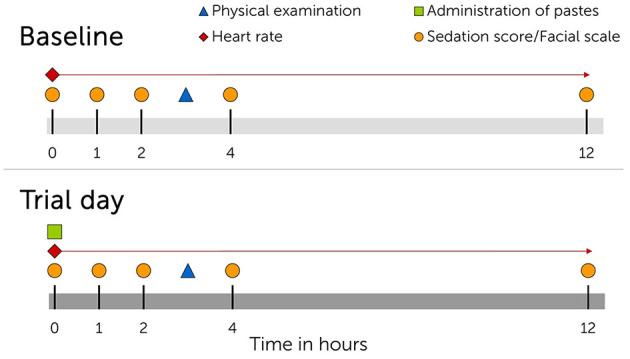
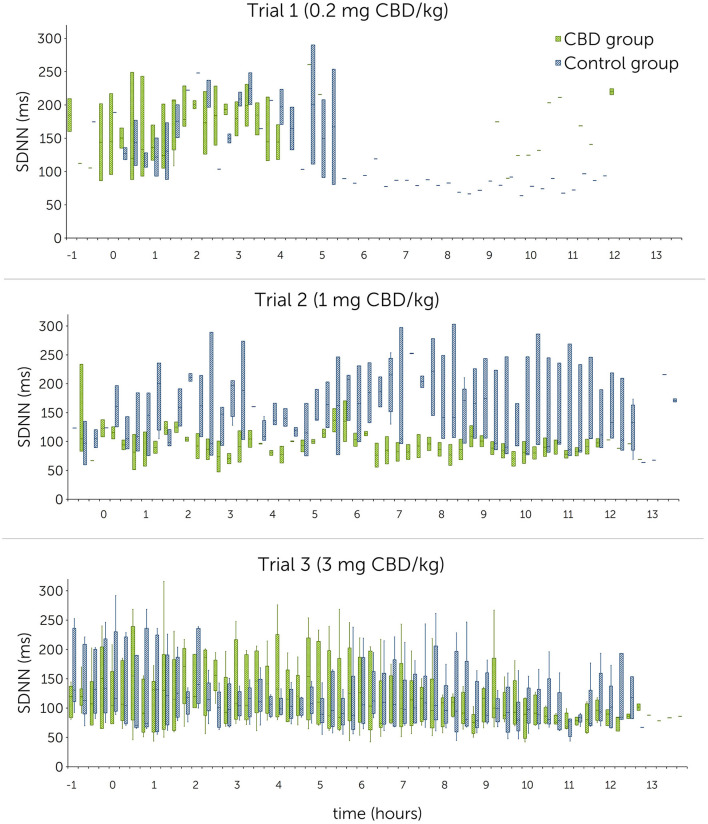
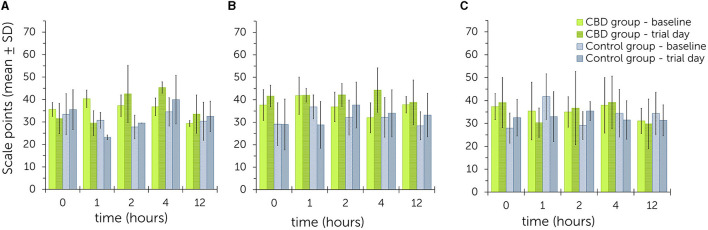
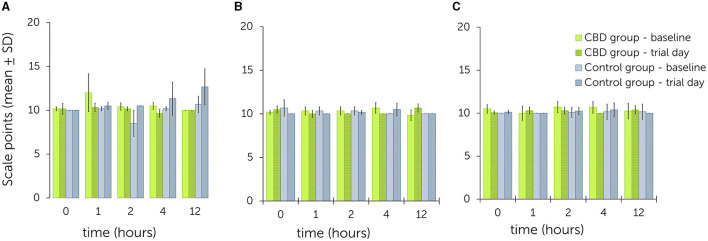
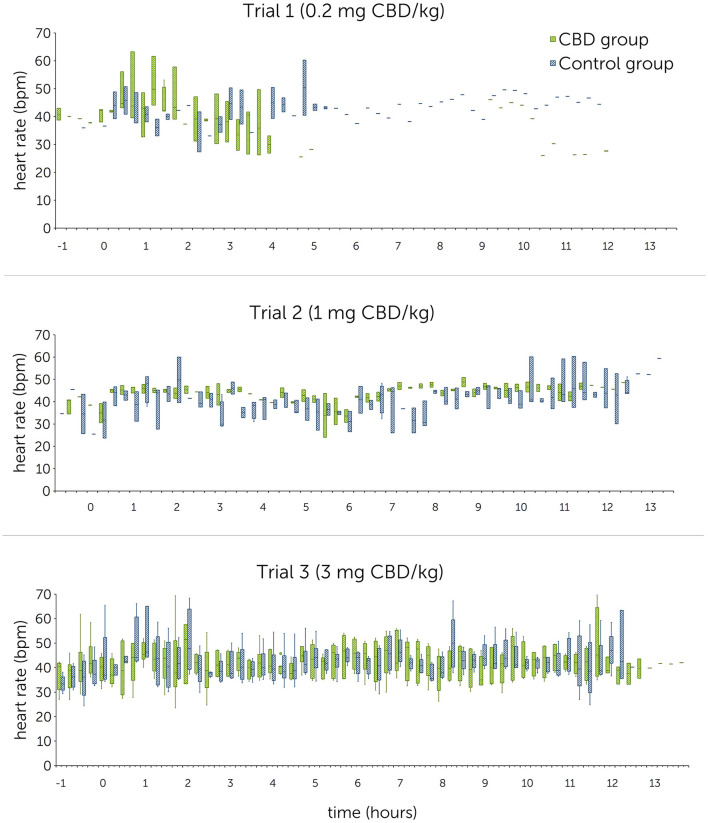
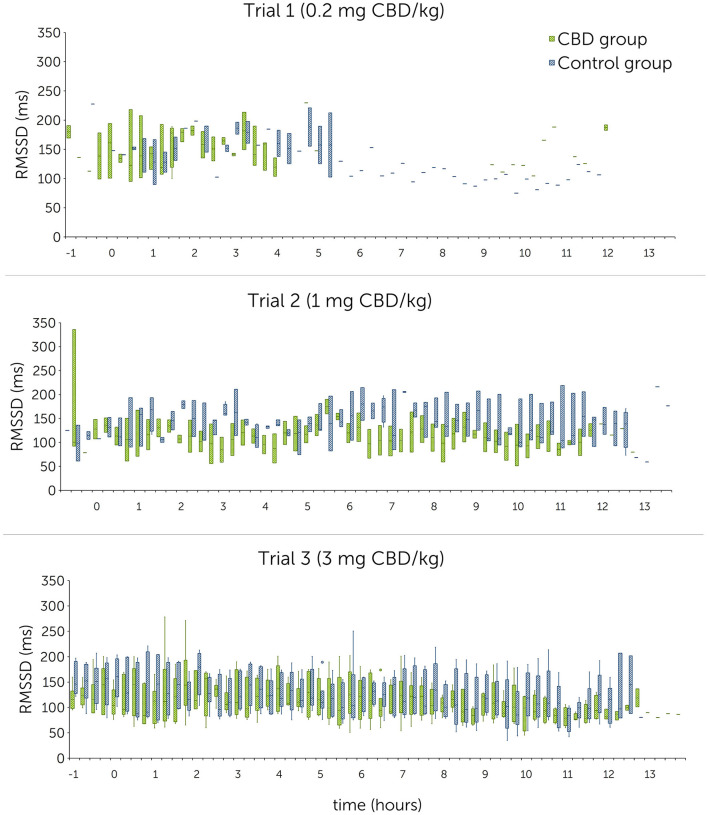
Cannabidiol (CBD) products have been proposed to exert stress- and anxiety-relieving effects in animals. Despite the increasing popularity of CBD for veterinary use, the available research detailing the effects of CBD in horses is limited. The aim of this study (part 1 of 2) was to analyze stress parameters via behavioral observations and heart rate monitoring in healthy horses following single oral administration of a CBD containing paste in different doses. Study products were two pastes for oral administration, one containing CBD and one containing no active ingredient. Pastes were applied as single administrations in consecutive trials with escalating dosages (doses: 0.2, 1.0, 3.0 mg CBD/kg) to a treatment (trial 1: = 3, trial 2: = 3, trial 3: = 5 horses) and a control group (trial 1: = 3, trial 2: = 3, trial 3: = 6 horses) with minimum wash-out periods of seven days in between. Behavioral parameters were evaluated using video recordings to score the levels of sedation including the horses' reactions to acoustic and visual stimuli. Facial expression was assessed using photographs. Evaluation was based on the previously described facial sedation scale for horses (FaceSed) and the Horse Grimace Scale. For baseline values, identical observations were recorded on the day before each paste administration. Both paste administration and behavioral evaluation were performed double blinded. Cardiac beat-to-beat (R-R) intervals were continuously recorded throughout the trial and assessed using heart rate and heart rate variability parameters. Statistical analysis included comparison between treatment and control group over escalating doses and time points using linear mixed models. The CBD paste was well tolerated, and no side effects were observed. Analysis of sedation scores and facial expressions did not indicate significant differences between treatment and control group over the escalating doses. The heart rate was neither reduced, nor were significant changes in heart rate variability observed compared to the control group. Main limitation of this study is the small sample size. Further research is required to determine adequate doses and indications for the use of CBD products in horses.
大麻二酚(CBD)产品已被认为对动物具有缓解压力和焦虑的作用。尽管CBD在兽医领域的应用越来越普遍,但关于CBD对马匹影响的详细现有研究有限。本研究(共两部分的第一部分)的目的是通过行为观察和心率监测,分析健康马匹单次口服不同剂量含CBD糊剂后的应激参数。研究产品为两种口服糊剂,一种含CBD,另一种不含活性成分。糊剂在连续试验中以递增剂量(剂量:0.2、1.0、3.0 mg CBD/kg)单次给药,分别给予一个治疗组(试验1:n = 3,试验2:n = 3,试验3:n = 5匹马)和一个对照组(试验1:n = 3,试验2:n = 3,试验3:n = 6匹马),两组之间的最短洗脱期为7天。使用视频记录评估行为参数,以对镇静水平进行评分,包括马匹对声音和视觉刺激的反应。使用照片评估面部表情。评估基于先前描述的马匹面部镇静量表(FaceSed)和马匹痛苦量表。对于基线值,在每次糊剂给药前一天记录相同的观察结果。糊剂给药和行为评估均采用双盲法进行。在整个试验过程中持续记录逐搏(R-R)间期,并使用心率和心率变异性参数进行评估。统计分析包括使用线性混合模型比较治疗组和对照组在递增剂量和时间点的差异。CBD糊剂耐受性良好,未观察到副作用。在递增剂量下,镇静评分和面部表情分析未显示治疗组和对照组之间存在显著差异。与对照组相比,心率既未降低,心率变异性也未观察到显著变化。本研究的主要局限性是样本量小。需要进一步研究以确定在马匹中使用CBD产品的适当剂量和适应症。