Center of Elephant and Wildlife Health, Animal Hospital, Faculty of Veterinary Medicine, Chiang Mai University, Chiang Mai, 50100, Thailand.
Cardiac Electrophysiology Unit, Department of Physiology, Faculty of Medicine, Chiang Mai University, Chiang Mai, 50200, Thailand.
Sci Rep. 2023 Dec 27;13(1):23027. doi: 10.1038/s41598-023-50429-1.
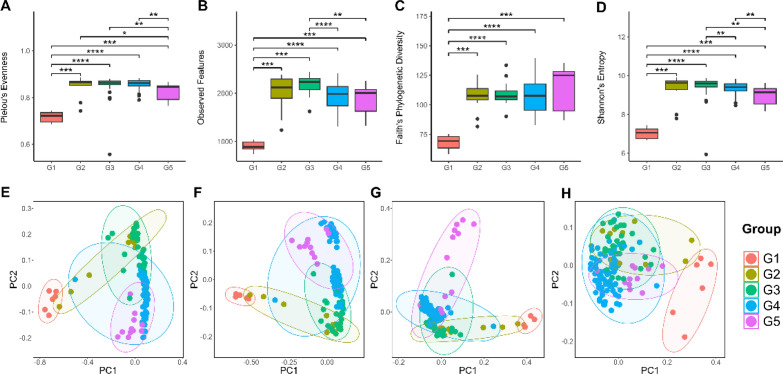
Gut microbiota play an important role in the health and disease of Asian elephants, however, its characteristics at each stage of life have not been thoroughly investigated in maintaining and regulating health of elephants. This study, therefore, aimed to characterize the profiles of the gut microbiota of captive Asian elephants from infants to the elderly. Gut microbiota were identified by 16S rRNA sequencing from the feces of captive Asian elephants with varying age groups, including infant calves, suckling calves, weaned calves, subadult and adult elephants, and geriatric elephants. The diversity of the gut microbiota was lowest in infants, stable during adulthood, and slightly decreased in the geriatric period. The gut microbiota of the infant elephants was dominated by milk-fermenting taxa including genus Bifidobacterium of family Bifidobacteriaceae together with genus Akkermansia. The fiber-fermenting taxa such as Lachnospiraceae_NK3A20_group were found to be increased in suckling elephants in differential abundance analysis by Analysis of Compositions of Microbiomes with Bias Correction (ANCOM-BC). The gut microbiota profiles after weaning until the adult period has been uniform as indicated by no significant differences in beta diversity between groups. However, the composition of the gut microbiota was found to change again in geriatric elephants. Understanding of the composition of the gut microbiota of captive Asian elephants at various life stages could be beneficial for promoting good health throughout their lifespan, as well as ensuring the welfare of captive elephants.
肠道微生物在亚洲象的健康和疾病中发挥着重要作用,然而,其在维持和调节大象健康方面在生命各个阶段的特征尚未得到彻底研究。因此,本研究旨在描述从婴儿到老年的圈养亚洲象肠道微生物组的特征。通过对不同年龄组的圈养亚洲象粪便进行 16S rRNA 测序,鉴定了肠道微生物组。这些年龄组包括婴儿象、哺乳期象、断奶期象、亚成体和成年象以及老年象。肠道微生物组的多样性在婴儿期最低,在成年期稳定,在老年期略有下降。婴儿象的肠道微生物组主要由双歧杆菌科双歧杆菌属等产奶菌以及阿克曼氏菌属等组成。通过有偏微生物组组成分析(ANCOM-BC)的差异丰度分析发现,纤维发酵菌科的 Lachnospiraceae_NK3A20_group 在哺乳期象中增加。断奶后至成年期的肠道微生物组谱一直保持一致,各组之间的β多样性无显著差异。然而,在老年象中发现肠道微生物组的组成再次发生变化。了解圈养亚洲象在各个生命阶段的肠道微生物组组成,可能有助于促进其整个生命周期的健康,并确保圈养大象的福利。