School of Medicine, The First Affiliated Hospital of Xiamen University, Xiamen University, Xiamen, 361003, China.
The Third Clinical Medical College, Fujian Medical University, Fujian, China.
Mol Biol Rep. 2023 Dec 29;51(1):39. doi: 10.1007/s11033-023-08916-1.
Muscone is a chemical monomer derived from musk. Although many studies have confirmed the cardioprotective effects of muscone, the effects of muscone on cardiac hypertrophy and its potential mechanisms are unclear.The aim of the present study was to investigate the effect of muscone on angiotensin (Ang) II-induced cardiac hypertrophy.
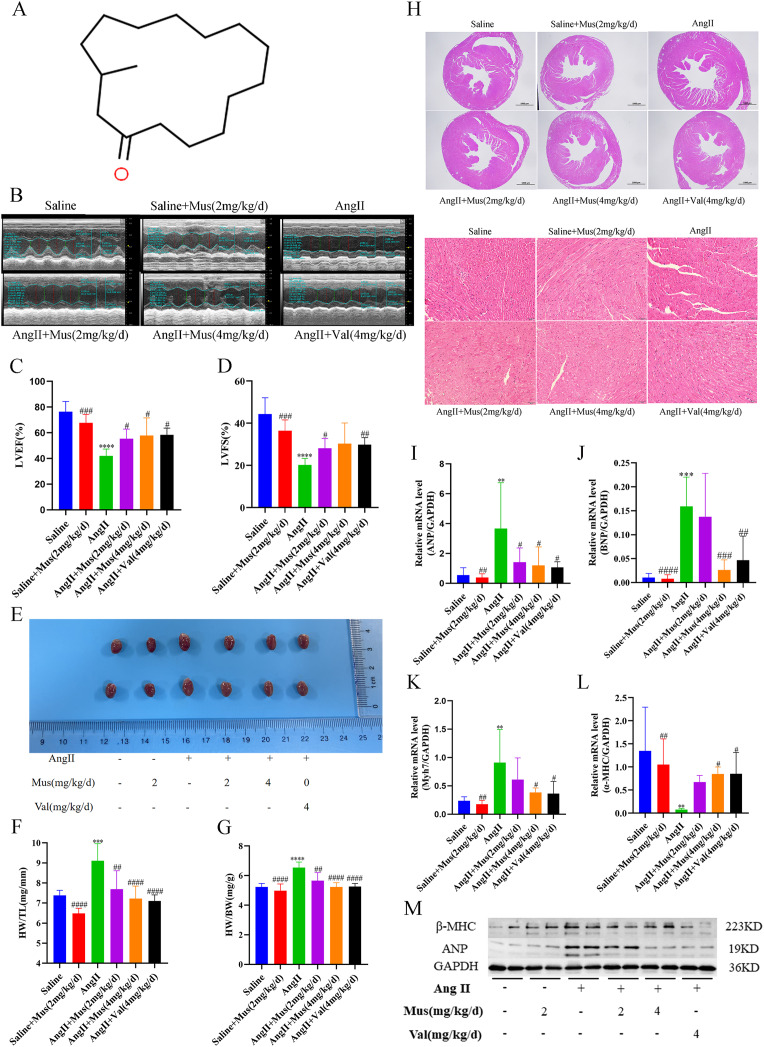
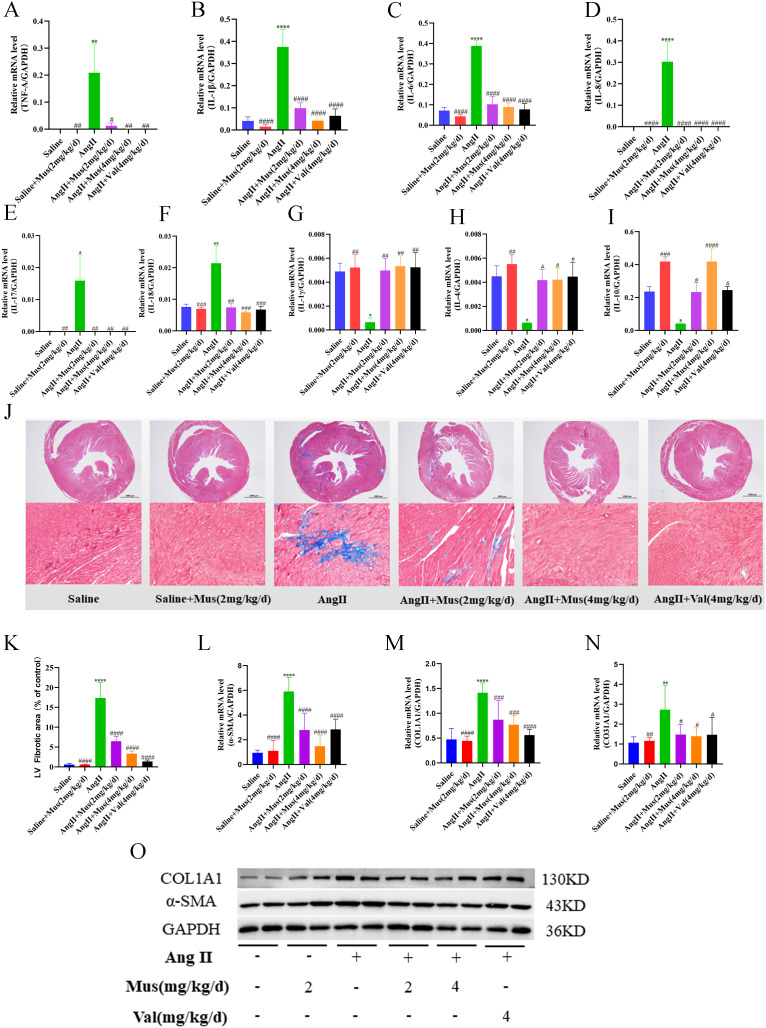
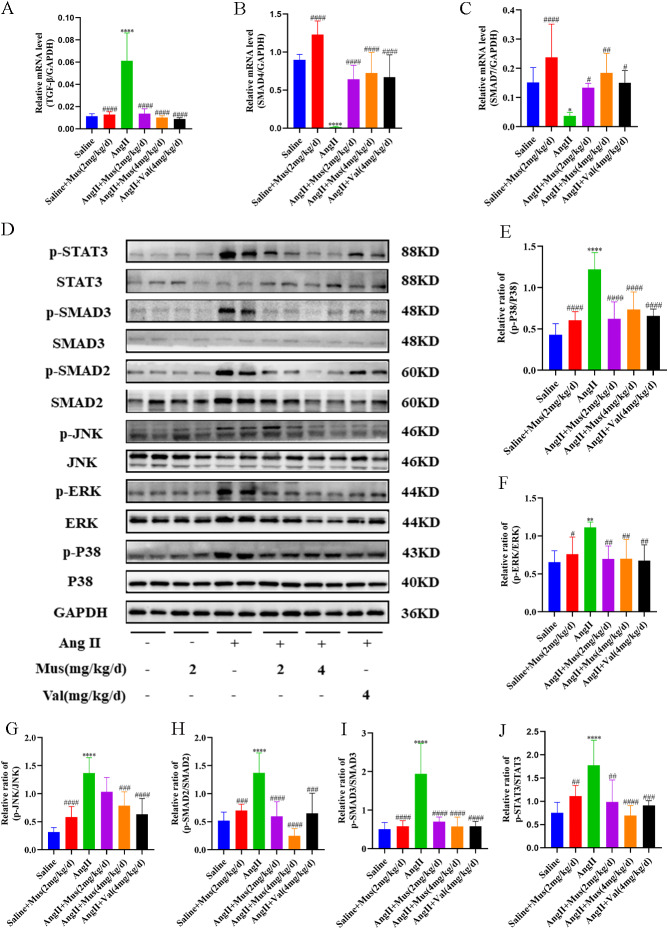
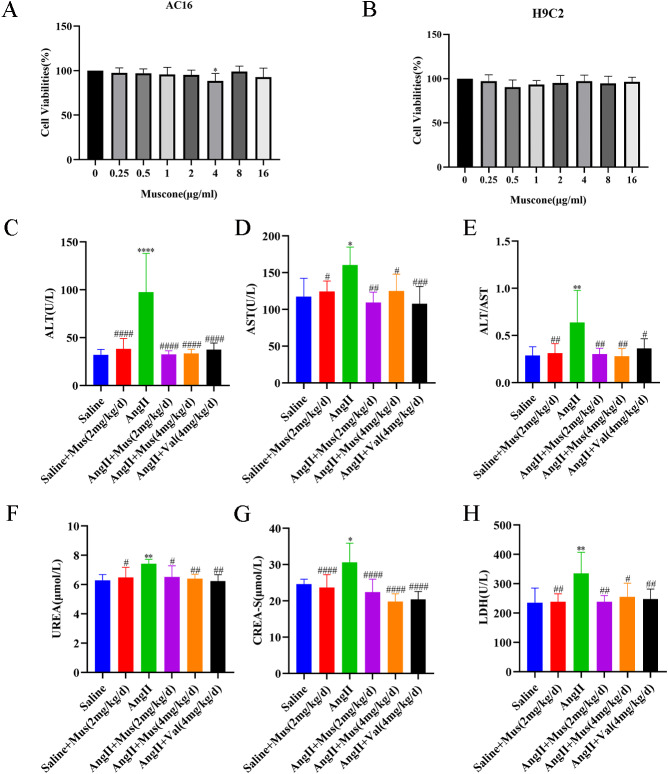
In the present study, we found for the first time that muscone exerted inhibitory effects on Ang II-induced cardiac hypertrophy and cardiac injury in mice. Cardiac function was analyzed by echocardiography measurement, and the degree of cardiac fibrosis was determined by the quantitative real-time polymerase chain reaction (qRT-PCR), Masson trichrome staining and western blot assay. Secondly, qRT-PCR experiment showed that muscone attenuated cardiac injury by reducing the secretion of pro-inflammatory cytokines and promoting the secretion of anti-inflammatory cytokines. Moreover, western blot analysis found that muscone exerted cardio-protective effects by inhibiting phosphorylation of key proteins in the STAT3, MAPK and TGF-β/SMAD pathways. In addition, CCK-8 and determination of serum biochemical indexes showed that no significant toxicity or side effects of muscone on normal cells and organs.
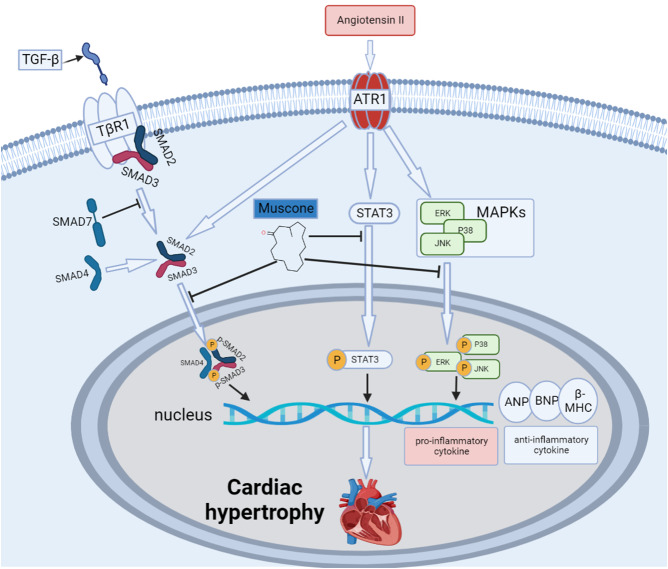
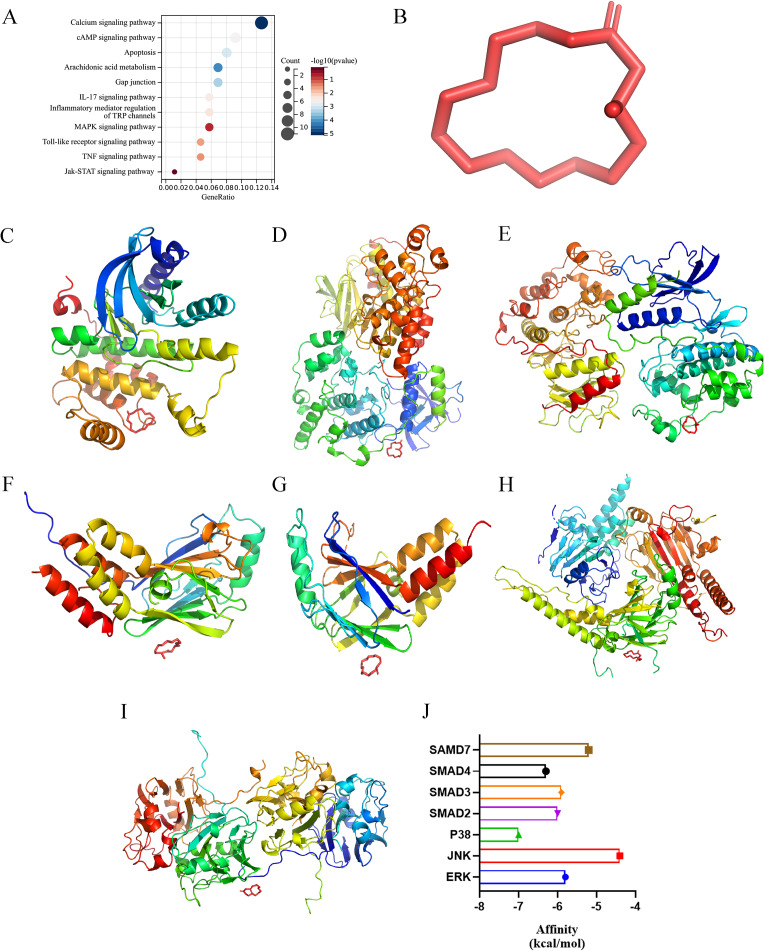
Muscone could attenuate Ang II-induced cardiac hypertrophy, in part, by inhibiting the STAT3, MAPK, and TGF-β/SMAD signaling pathways.
麝香酮是一种从麝香中提取的化学单体。虽然许多研究已经证实麝香酮具有心脏保护作用,但麝香酮对心肌肥厚的影响及其潜在机制尚不清楚。本研究旨在探讨麝香酮对血管紧张素(Ang)Ⅱ诱导的心肌肥厚的影响。
本研究首次发现麝香酮对 AngⅡ诱导的小鼠心肌肥厚和心肌损伤具有抑制作用。通过超声心动图测量分析心功能,通过实时定量聚合酶链反应(qRT-PCR)、Masson 三色染色和 Western blot 检测确定心肌纤维化程度。其次,qRT-PCR 实验表明,麝香酮通过减少促炎细胞因子的分泌和促进抗炎细胞因子的分泌来减轻心肌损伤。此外,Western blot 分析发现,麝香酮通过抑制 STAT3、MAPK 和 TGF-β/SMAD 通路中关键蛋白的磷酸化发挥心脏保护作用。另外,CCK-8 和血清生化指标测定表明麝香酮对正常细胞和器官没有明显的毒性或副作用。
麝香酮可通过抑制 STAT3、MAPK 和 TGF-β/SMAD 信号通路,减轻 AngⅡ诱导的心肌肥厚。