Tombolini Beatrice, Crincoli Emanuele, Sacconi Riccardo, Battista Marco, Fantaguzzi Federico, Servillo Andrea, Bandello Francesco, Querques Giuseppe
School of Medicine, Vita-Salute San Raffaele University, Milan, Italy.
Division of Head and Neck, Ophthalmology Unit, Department of Ophthalmology, IRCCS San Raffaele Scientific Institute, Via Olgettina 60, 20132, Milan, Italy.
Ophthalmol Ther. 2024 Feb;13(2):449-467. doi: 10.1007/s40123-023-00870-2. Epub 2024 Jan 5.
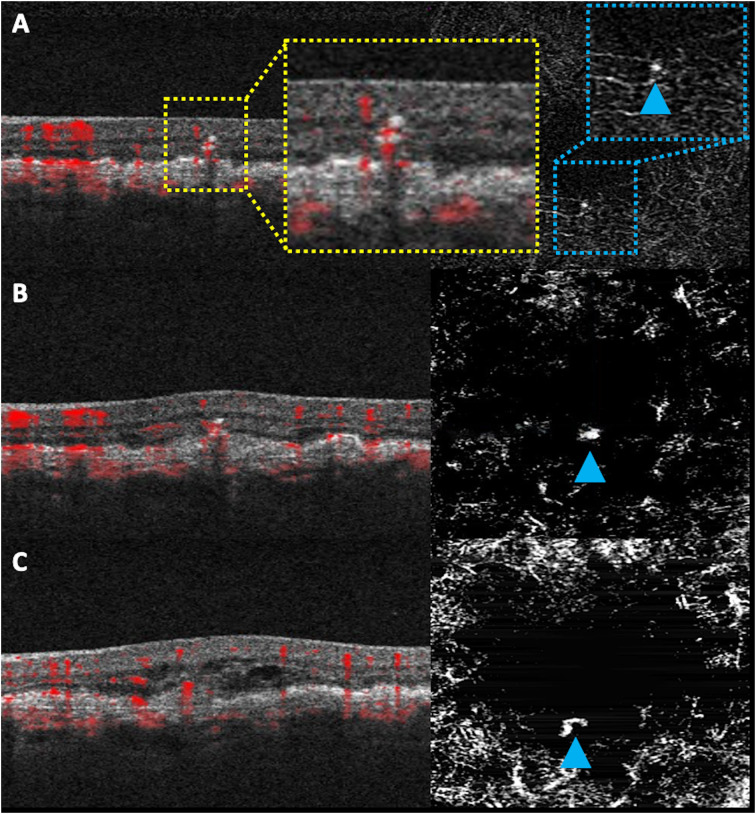
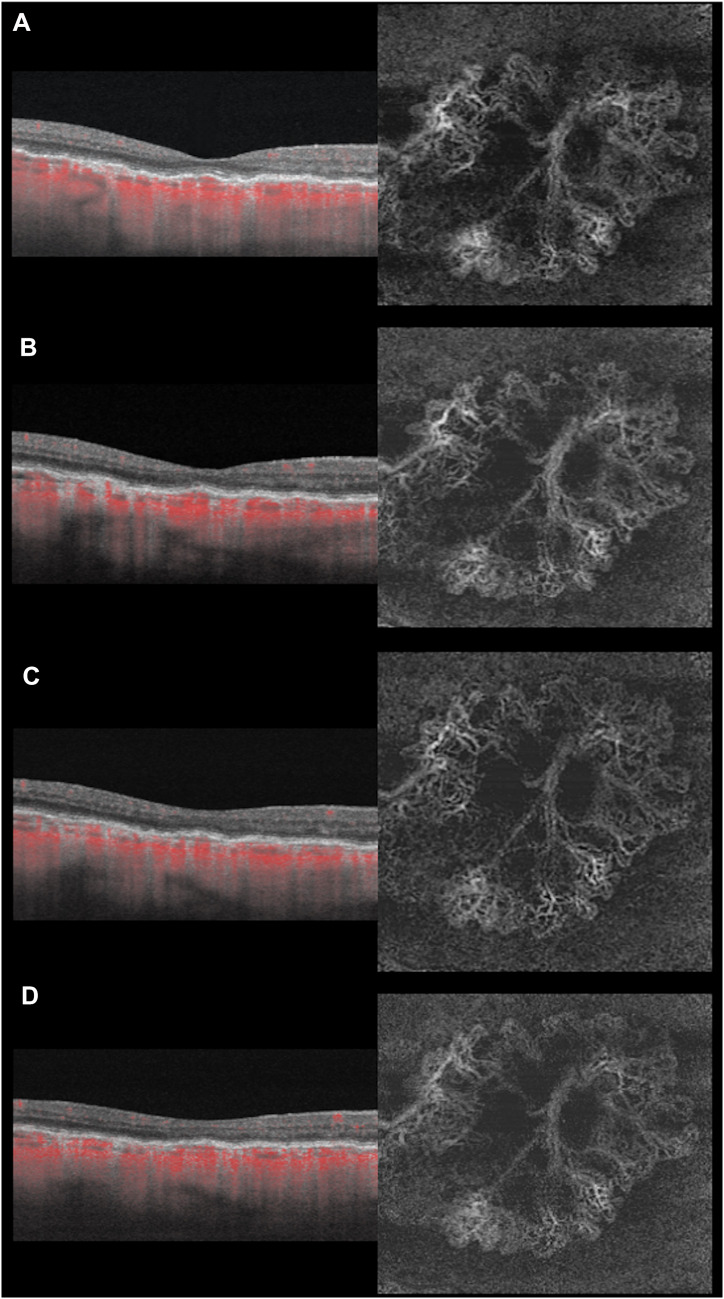
Optical coherence tomography angiography (OCTA) has extensively enhanced our comprehension of eye microcirculation and of its associated diseases. In this narrative review, we explored the key concepts behind OCTA, as well as the most recent evidence in the pathophysiology of age-related macular degeneration (AMD) made possible by OCTA. These recommendations were updated since the publication in 2020, and are targeted for 2023. Importantly, as a future perspective in OCTA technology, we will discuss how artificial intelligence has been applied to OCTA, with a particular emphasis on its application to AMD study.
光学相干断层扫描血管造影(OCTA)极大地增进了我们对眼部微循环及其相关疾病的理解。在这篇叙述性综述中,我们探讨了OCTA背后的关键概念,以及OCTA为年龄相关性黄斑变性(AMD)病理生理学带来的最新证据。这些建议自2020年发布以来进行了更新,目标是2023年。重要的是,作为OCTA技术的未来展望,我们将讨论人工智能如何应用于OCTA,尤其着重于其在AMD研究中的应用。