Plants, Photosynthesis and Soil, School of Biosciences, University of Sheffield, Sheffield S10 2TN, UK.
Ann Bot. 2024 Apr 10;133(3):413-426. doi: 10.1093/aob/mcad202.
The development and morphology of crop plants have been profoundly altered by evolution under cultivation, initially through unconscious selection, without deliberate foresight, and later by directed breeding. Wild wheats remain an important potential source of variation for modern breeders; however, the sequence and timing of morphological changes during domestication are not fully resolved.
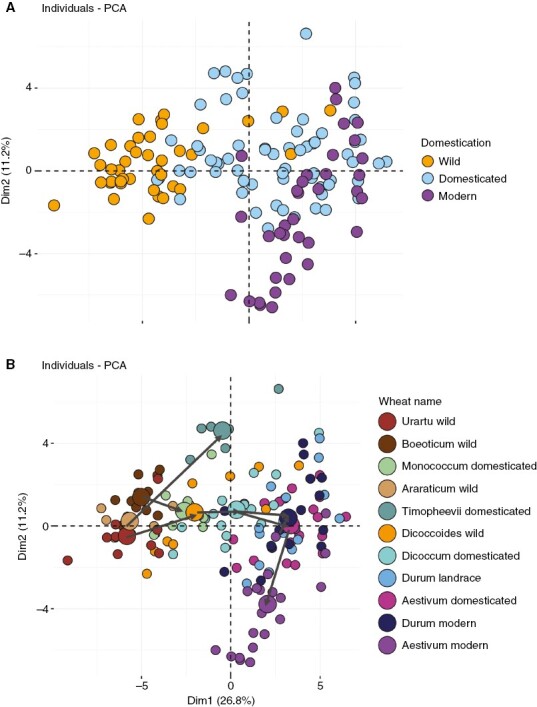
We grew and measured 142 wheat accessions representing different stages in wheat evolution, including three independent domestication events, and compared their morphological traits to define the morphospace of each group.
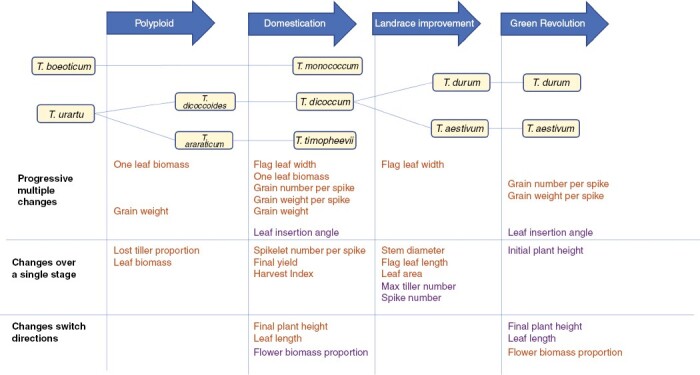
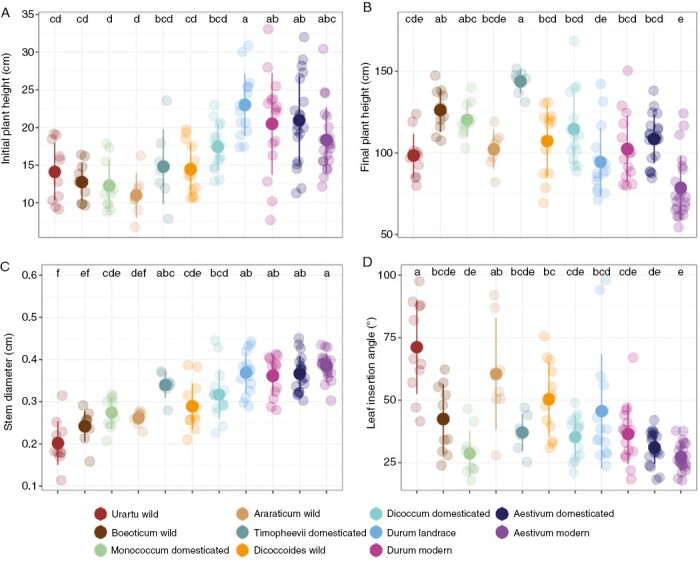
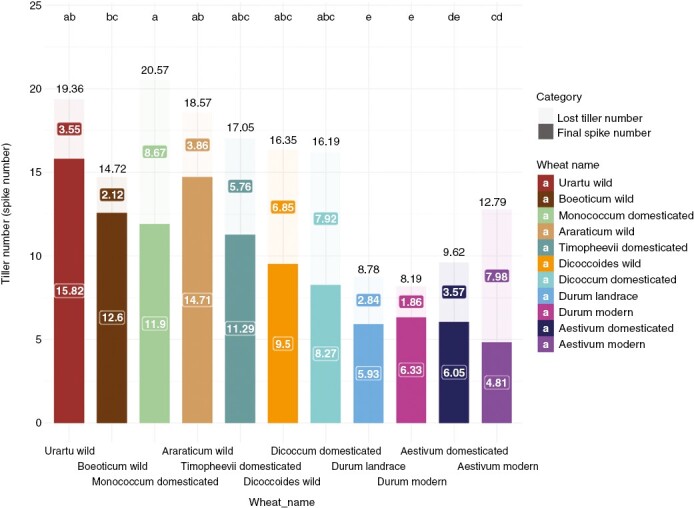
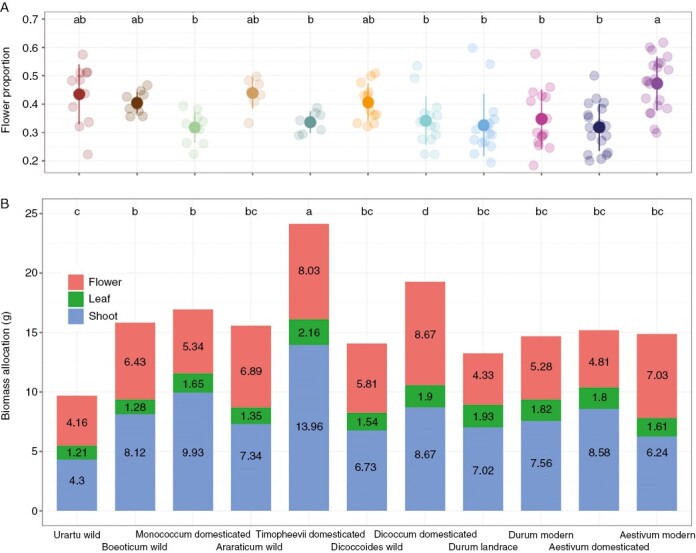
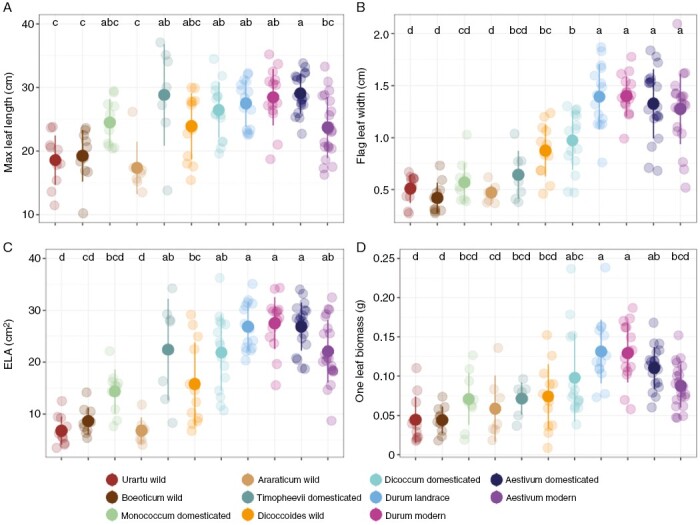
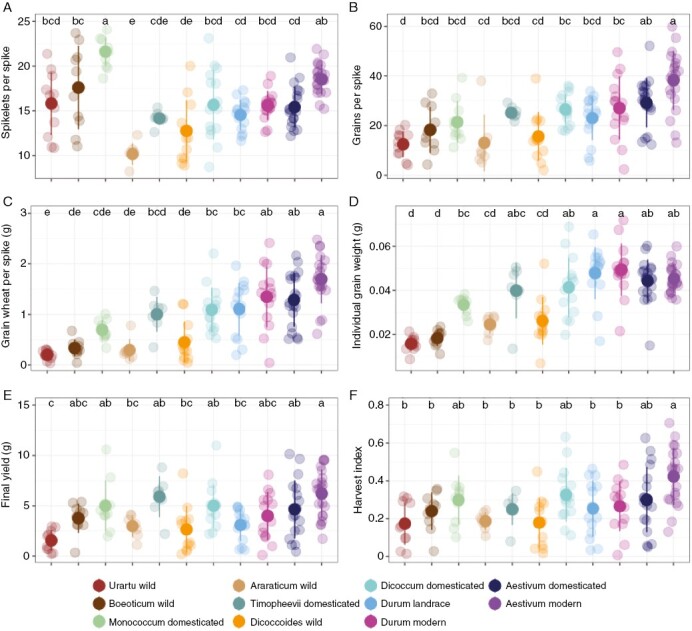
The results show that wild and domesticated wheats have overlapping morphospaces, but each also occupies a distinct area of morphospace from one another. Polyploid formation in wheat increased leaf biomass and seed weight but had its largest effects on tiller loss. Domestication continued to increase the sizes of wheat leaves and seeds and made wheat grow taller, with more erect architecture. Associated changes to the biomass of domesticated wheats generated more grains and achieved higher yields. Landrace improvement subsequently decreased the numbers of tillers and spikes, to focus resource allocation to the main stem, accompanied by a thicker main stem and larger flag leaves. During the Green Revolution, wheat height was reduced to increase the harvest index and therefore yield. Modern wheats also have more erect leaves and larger flower biomass proportions than landraces.
Quantitative trait history in wheat differs by trait. Some trait values show progressive changes in the same direction (e.g. leaf size, grain weight), whereas others change in a punctuated way at particular stages (e.g. canopy architecture), and other trait values switch directions during wheat evolution (e.g. plant height, flower biomass proportion). Agronomically valued domestication traits arose during different stages of wheat history, such that modern wheats are the product of >10 000 years of morphological evolution.
作物的培育和形态发生在进化过程中发生了深刻的变化,最初是无意识的选择,没有刻意的预见,后来是有针对性的选育。野生小麦仍然是现代育种者的一个重要潜在变异来源;然而,驯化过程中形态变化的顺序和时间尚不完全清楚。
我们种植并测量了 142 个小麦品种,代表了小麦进化的不同阶段,包括三个独立的驯化事件,并比较了它们的形态特征,以定义每个群体的形态空间。
结果表明,野生和驯化小麦有重叠的形态空间,但彼此也占据了不同的形态空间区域。小麦的多倍体形成增加了叶片生物量和种子重量,但对分蘖损失的影响最大。驯化继续增加小麦叶片和种子的大小,使小麦长得更高,株型更直立。驯化小麦生物量的相关变化产生了更多的谷物,实现了更高的产量。随后,地方品种的改良减少了分蘖和穗的数量,将资源分配集中到主茎上,同时主茎变粗,旗叶变大。在绿色革命期间,小麦的高度降低,以提高收获指数,从而提高产量。现代小麦的叶片也比地方品种更直立,花生物量比例更大。
小麦的数量性状历史因性状而异。一些性状值显示出朝着同一方向的渐进变化(例如叶片大小、谷物重量),而其他性状值在特定阶段以间断的方式变化(例如冠层结构),其他性状值在小麦进化过程中改变方向(例如株高、花生物量比例)。具有农业价值的驯化特征出现在小麦历史的不同阶段,因此现代小麦是 10000 多年来形态进化的产物。