Chatzimisios Kyriakos, Tsioli Vassiliki, Brellou Georgia D, Apostolopoulou Emmanouela P, Angelou Vasileia, Pratsinakis Emmanouil D, Cremers Niels A J, Papazoglou Lysimachos G
Unit of Surgery and Obstetrics, Companion Animal Clinic, School of Veterinary Medicine, Faculty of HealthSciences, Aristotle University of Thessaloniki, 54627 Thessaloniki, Greece.
Clinic of Surgery, School of Veterinary Medicine, University of Thessaly, 224 Trikalon Street, Box Office 199, 43100 Karditsa, Greece.
Animals (Basel). 2023 Dec 21;14(1):36. doi: 10.3390/ani14010036.
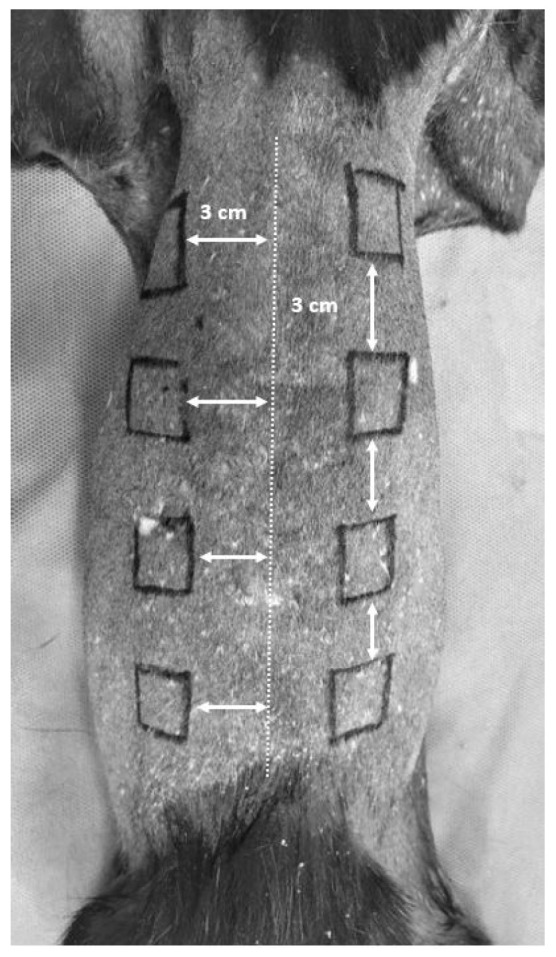
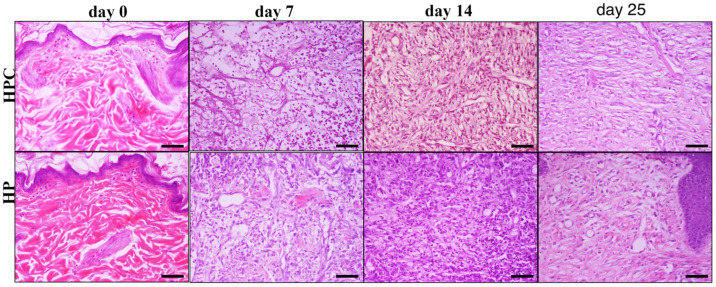
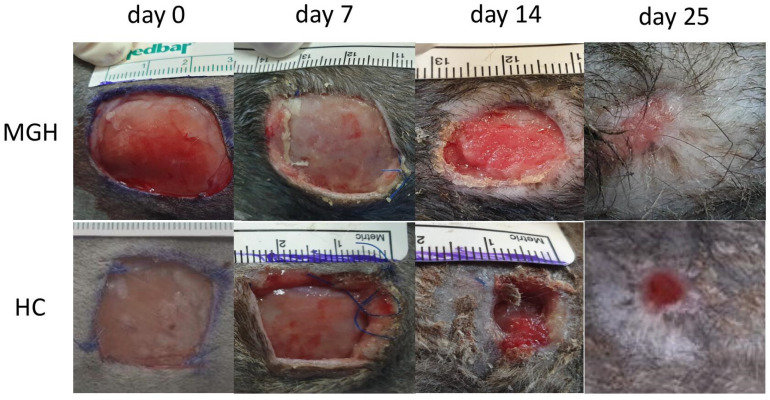
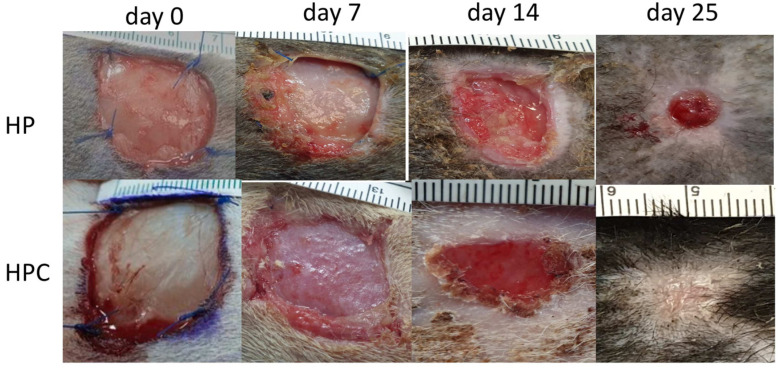
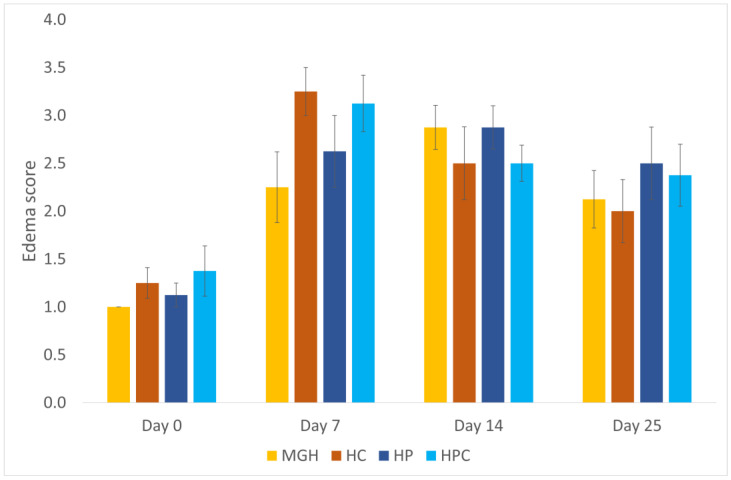
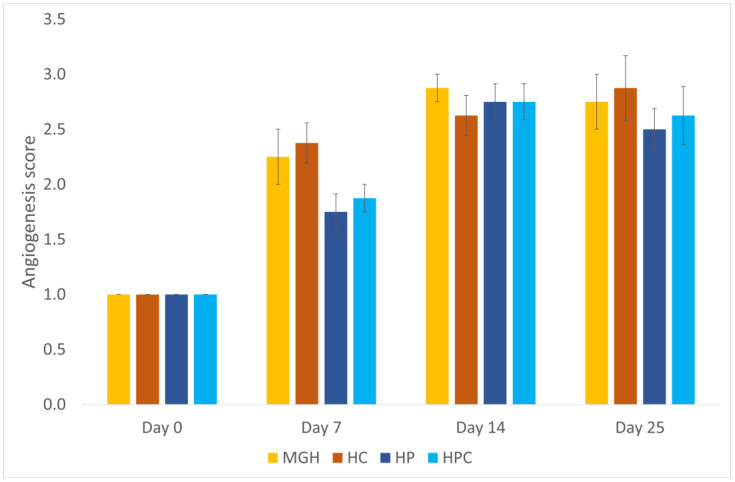
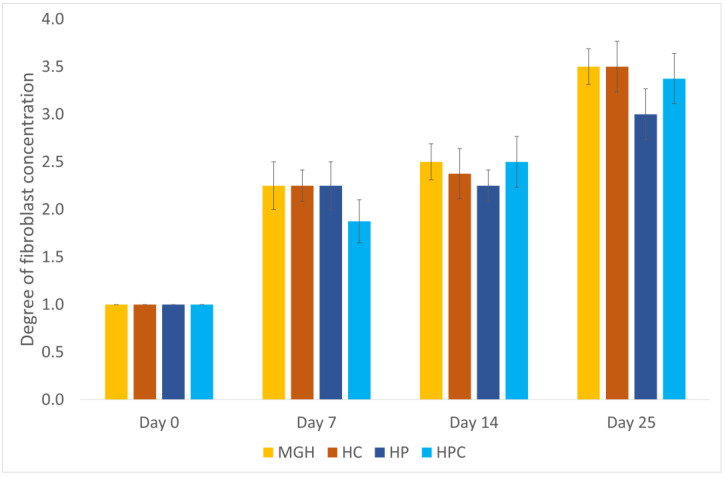
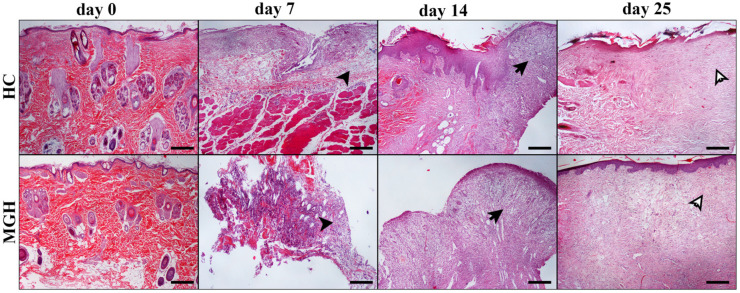
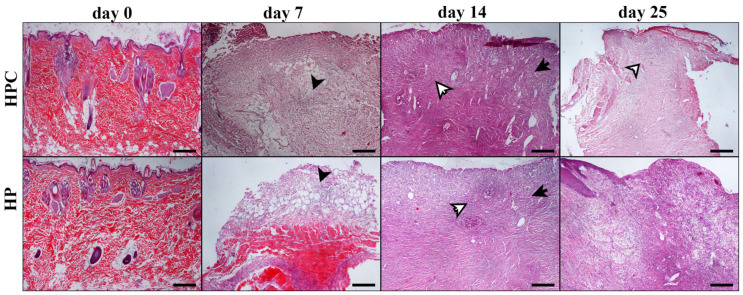
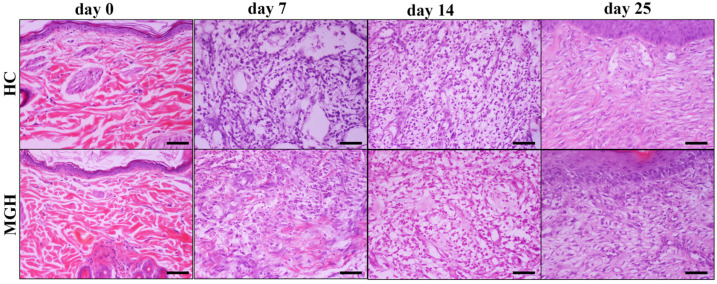
This study aimed to determine the effects of two topical treatments on second-intention wound healing in cats. Eight 2 × 2 cm full-thickness wounds were created, four on each side of the dorsal midline of eight laboratory cats, to receive either medical-grade honey ointment (MGH) and its control (HC), or Hypericum-based ointment (HP) and its control (HPC). MGH or HP ointment was applied to four wounds on the same side, while the remaining four were used as controls, chosen at random. Planimetry, laser Doppler flowmetry, daily physical examinations, and histologic examinations on days 0, 7, 14, and 25 were used to assess the healing of wounds. Tissue perfusion was better in the MGH-treated (2.14 ± 0.18 mm/s) and HP-treated wounds (2.02 ± 0.13 mm/s) than in the untreated controls HC (1.59 ± 0.11 mm/s) and HPC (1.60 ± 0.05 mm/s), respectively ( = 0.001). Histopathology revealed that the median edema score was lower in the MGH-treated (2; range 1-4) compared to the HC-treated wounds (3; range 2-4) on day 7 ( < 0.05). The median angiogenesis score was higher on day 7 in the MGH-treated (2; range 1-3) compared to the HP-treated wounds (2; range 1-2) ( = 0.046). The fibroblast concentration was increased in the MGH-treated wounds (3.5; range 3-4) compared to the HP-treated wounds (3; range 2-4) on day 25 ( = 0.046). MGH and HP increased tissue perfusion compared to the untreated controls. The MGH-treated wounds had histologic parameters superior to the HP-treated wounds regarding angiogenesis and fibroblast concentration in cutaneous wound healing in cats. Topical application of MGH and HP did not accelerate the healing process of feline cutaneous wounds.
本研究旨在确定两种局部治疗方法对猫二期愈合伤口的影响。在八只实验猫的背部中线两侧各创建八个2×2厘米的全层伤口,其中四个伤口分别接受医用级蜂蜜软膏(MGH)及其对照(HC),另外四个伤口分别接受金丝桃属植物软膏(HP)及其对照(HPC)。MGH或HP软膏应用于同一侧的四个伤口,其余四个伤口随机作为对照。在第0、7、14和25天,采用平面测量法、激光多普勒血流仪、每日体格检查和组织学检查来评估伤口愈合情况。与未治疗的对照HC(1.59±0.11毫米/秒)和HPC(1.60±0.05毫米/秒)相比,MGH治疗组(2.14±0.18毫米/秒)和HP治疗组伤口(2.02±0.13毫米/秒)的组织灌注更好(P = 0.001)。组织病理学显示,在第7天,MGH治疗组伤口(中位数为2;范围1 - 4)的水肿评分低于HC治疗组伤口(中位数为3;范围2 - 4)(P < 0.05)。在第7天,MGH治疗组伤口(中位数为2;范围1 - 3)的血管生成评分高于HP治疗组伤口(中位数为2;范围1 - 2)(P = 0.046)。在第25天,与HP治疗组伤口(中位数为3;范围2 - 4)相比,MGH治疗组伤口的成纤维细胞浓度增加(中位数为3.5;范围3 - 4)(P = 0.046)。与未治疗的对照相比,MGH和HP增加了组织灌注。在猫皮肤伤口愈合过程中,就血管生成和成纤维细胞浓度而言,MGH治疗组伤口的组织学参数优于HP治疗组伤口。局部应用MGH和HP并未加速猫皮肤伤口的愈合过程。