Young Martin E
Division of Cardiovascular Disease, Department of Medicine, University of Alabama at Birmingham, Birmingham, Alabama, USA.
JACC Basic Transl Sci. 2023 Jun 21;8(12):1613-1628. doi: 10.1016/j.jacbts.2023.03.024. eCollection 2023 Dec.
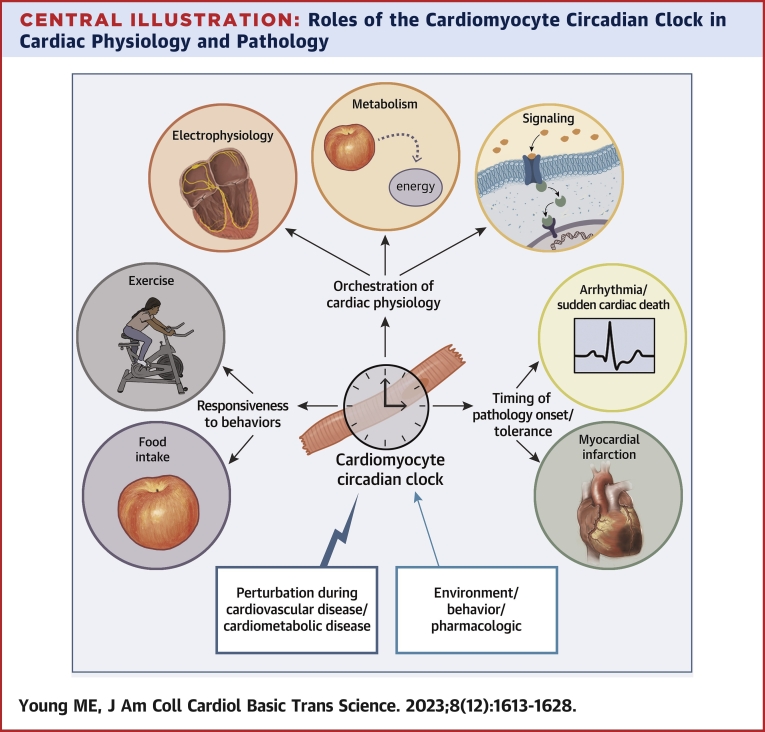
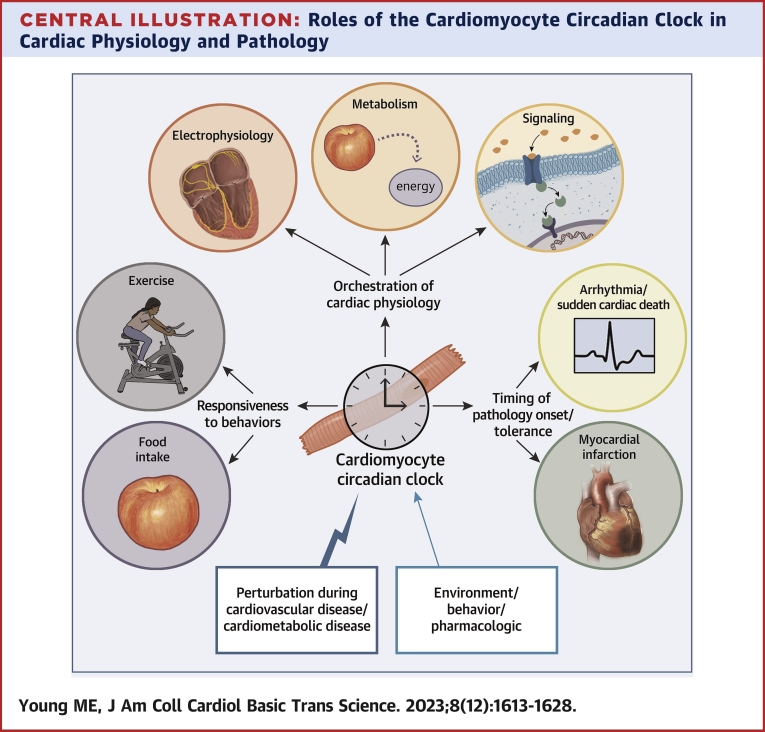
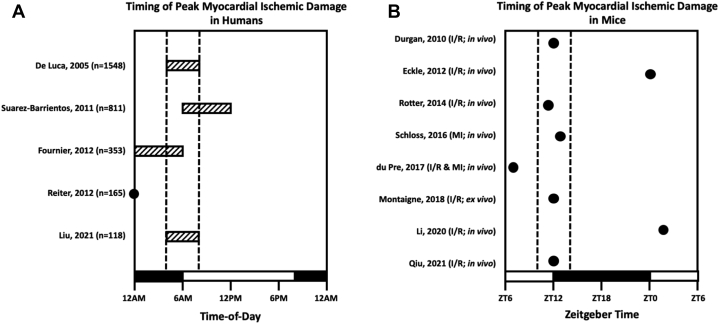
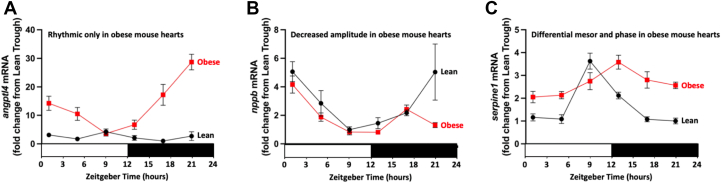
Virtually all aspects of physiology fluctuate with respect to the time of day. This is beautifully exemplified by cardiovascular physiology, for which blood pressure and electrophysiology exhibit robust diurnal oscillations. At molecular/biochemical levels (eg, transcription, translation, signaling, metabolism), cardiovascular-relevant tissues (such as the heart) are profoundly different during the day vs the night. Unfortunately, this in turn contributes toward 24-hour rhythms in both risk of adverse event onset (eg, arrhythmias, myocardial infarction) and pathogenesis severity (eg, extent of ischemic damage). Accumulating evidence indicates that cell-autonomous timekeeping mechanisms, termed circadian clocks, temporally govern biological processes known to play critical roles in cardiovascular function/dysfunction. In this paper, a comprehensive review of our current understanding of the cardiomyocyte circadian clock during both health and disease is detailed. Unprecedented basic, translational, and epidemiologic studies support a need to implement chronobiological considerations in strategies designed for both prevention and treatment of cardiovascular disease.
实际上,生理学的几乎所有方面都会随着一天中的时间而波动。心血管生理学就是一个很好的例证,其血压和电生理学表现出强烈的昼夜振荡。在分子/生化水平(例如转录、翻译、信号传导、代谢)上,与心血管相关的组织(如心脏)在白天和晚上存在着深刻的差异。不幸的是,这反过来又导致了不良事件发生风险(如心律失常、心肌梗死)和发病机制严重程度(如缺血损伤程度)的24小时节律变化。越来越多的证据表明,被称为生物钟的细胞自主计时机制在时间上控制着已知在心血管功能/功能障碍中起关键作用的生物过程。本文详细综述了我们目前对健康和疾病状态下心肌细胞生物钟的理解。前所未有的基础、转化和流行病学研究支持在设计心血管疾病的预防和治疗策略时需要考虑时间生物学因素。