Jiang Xianjie, Peng Qiu, Peng Mingjing, Oyang Linda, Wang Honghan, Liu Qiang, Xu Xuemeng, Wu Nayiyuan, Tan Shiming, Yang Wenjuan, Han Yaqian, Lin Jinguan, Xia Longzheng, Tang Yanyan, Luo Xia, Dai Jie, Zhou Yujuan, Liao Qianjin
Hunan Key Laboratory of Cancer Metabolism, Hunan Cancer Hospital and the Affiliated Cancer Hospital of Xiangya School of Medicine, Central South University, Changsha, Hunan, P. R. China.
Public Service Platform of Tumor Organoids Technology, Changsha, Hunan, P. R. China.
Cancer Commun (Lond). 2024 Feb;44(2):185-204. doi: 10.1002/cac2.12519. Epub 2024 Jan 13.
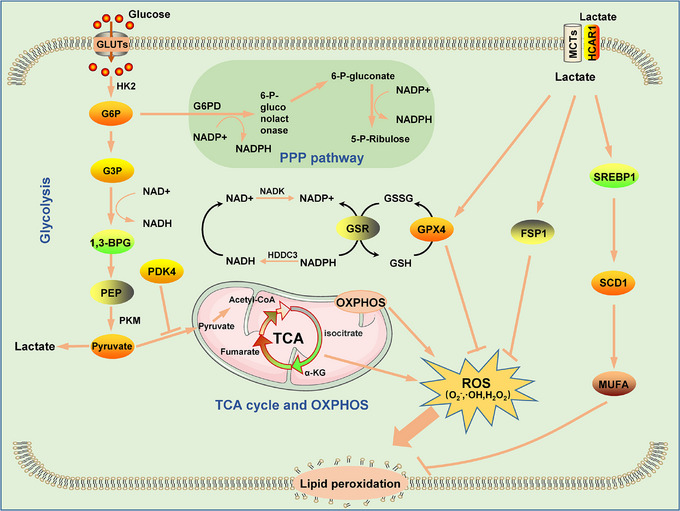
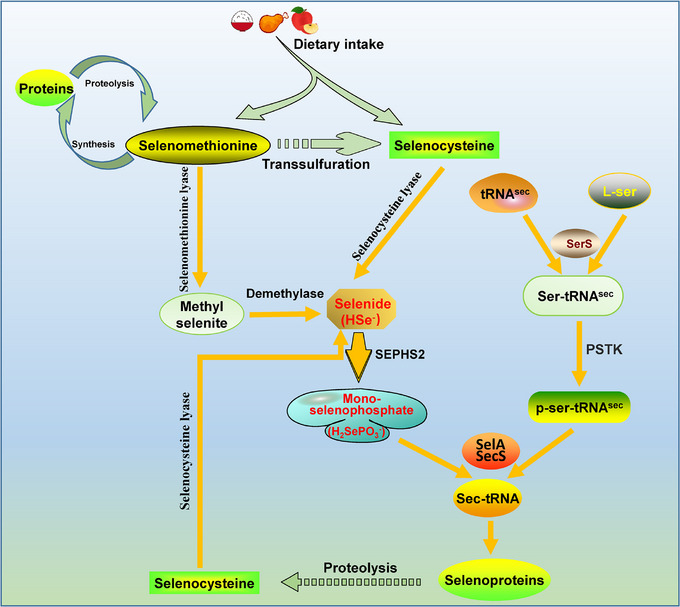
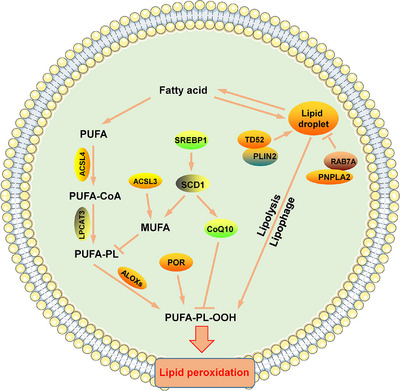
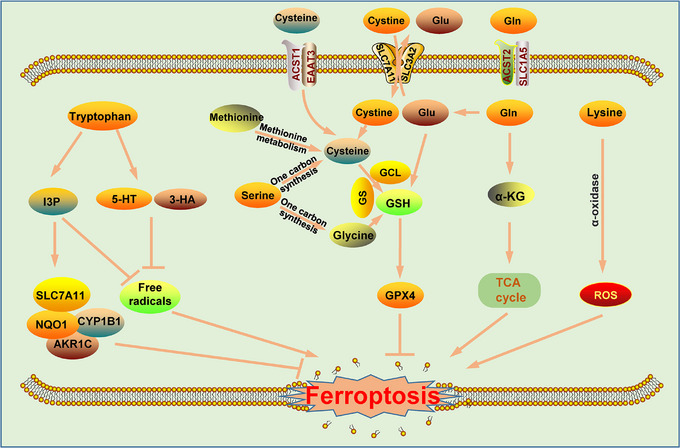
Cellular metabolism is the fundamental process by which cells maintain growth and self-renewal. It produces energy, furnishes raw materials, and intermediates for biomolecule synthesis, and modulates enzyme activity to sustain normal cellular functions. Cellular metabolism is the foundation of cellular life processes and plays a regulatory role in various biological functions, including programmed cell death. Ferroptosis is a recently discovered form of iron-dependent programmed cell death. The inhibition of ferroptosis plays a crucial role in tumorigenesis and tumor progression. However, the role of cellular metabolism, particularly glucose and amino acid metabolism, in cancer ferroptosis is not well understood. Here, we reviewed glucose, lipid, amino acid, iron and selenium metabolism involvement in cancer cell ferroptosis to elucidate the impact of different metabolic pathways on this process. Additionally, we provided a detailed overview of agents used to induce cancer ferroptosis. We explained that the metabolism of tumor cells plays a crucial role in maintaining intracellular redox homeostasis and that disrupting the normal metabolic processes in these cells renders them more susceptible to iron-induced cell death, resulting in enhanced tumor cell killing. The combination of ferroptosis inducers and cellular metabolism inhibitors may be a novel approach to future cancer therapy and an important strategy to advance the development of treatments.
细胞代谢是细胞维持生长和自我更新的基本过程。它产生能量,为生物分子合成提供原材料和中间体,并调节酶活性以维持正常的细胞功能。细胞代谢是细胞生命过程的基础,在包括程序性细胞死亡在内的各种生物学功能中发挥调节作用。铁死亡是最近发现的一种铁依赖性程序性细胞死亡形式。铁死亡的抑制在肿瘤发生和肿瘤进展中起着关键作用。然而,细胞代谢,特别是葡萄糖和氨基酸代谢,在癌症铁死亡中的作用尚未得到充分了解。在此,我们综述了葡萄糖、脂质、氨基酸、铁和硒代谢在癌细胞铁死亡中的参与情况,以阐明不同代谢途径对这一过程的影响。此外,我们详细概述了用于诱导癌症铁死亡的药物。我们解释说,肿瘤细胞的代谢在维持细胞内氧化还原稳态中起着关键作用,破坏这些细胞中的正常代谢过程会使它们更容易受到铁诱导的细胞死亡的影响,从而增强对肿瘤细胞的杀伤作用。铁死亡诱导剂与细胞代谢抑制剂的联合使用可能是未来癌症治疗的一种新方法,也是推进治疗发展的一项重要策略。