• 文献检索
  • 文档翻译
  • 深度研究
  • 学术资讯
  • Suppr Zotero 插件Zotero 插件
  • 邀请有礼
  • 套餐&价格
  • 历史记录
应用&插件
Suppr Zotero 插件Zotero 插件浏览器插件Mac 客户端Windows 客户端微信小程序
定价
高级版会员购买积分包购买API积分包
服务
文献检索文档翻译深度研究API 文档MCP 服务
关于我们
关于 Suppr公司介绍联系我们用户协议隐私条款
关注我们

Suppr 超能文献

核心技术专利:CN118964589B侵权必究
粤ICP备2023148730 号-1Suppr @ 2026

文献检索

告别复杂PubMed语法,用中文像聊天一样搜索,搜遍4000万医学文献。AI智能推荐,让科研检索更轻松。

立即免费搜索

文件翻译

保留排版,准确专业,支持PDF/Word/PPT等文件格式,支持 12+语言互译。

免费翻译文档

深度研究

AI帮你快速写综述,25分钟生成高质量综述,智能提取关键信息,辅助科研写作。

立即免费体验

关于……的有害生物分类

Pest categorisation of .

作者信息

Bragard Claude, Baptista Paula, Chatzivassiliou Elisavet, Di Serio Francesco, Gonthier Paolo, Jaques Miret Josep Anton, Justesen Annemarie Fejer, MacLeod Alan, Magnusson Christer Sven, Milonas Panagiotis, Navas-Cortes Juan A, Parnell Stephen, Potting Roel, Stefani Emilio, Thulke Hans-Hermann, Van der Werf Wopke, Vicent Civera Antonio, Yuen Jonathan, Zappalà Lucia, Migheli Quirico, Vloutoglou Irene, Gobbi Alex, Maiorano Andrea, Pautasso Marco, Reignault Philippe Lucien

出版信息

EFSA J. 2024 Jan 16;22(1):e8548. doi: 10.2903/j.efsa.2024.8548. eCollection 2024 Jan.

DOI:10.2903/j.efsa.2024.8548
PMID:38229874
原文链接:https://pmc.ncbi.nlm.nih.gov/articles/PMC10790189/
Abstract

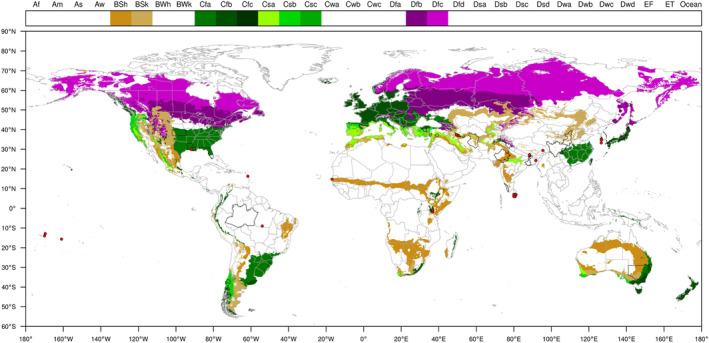
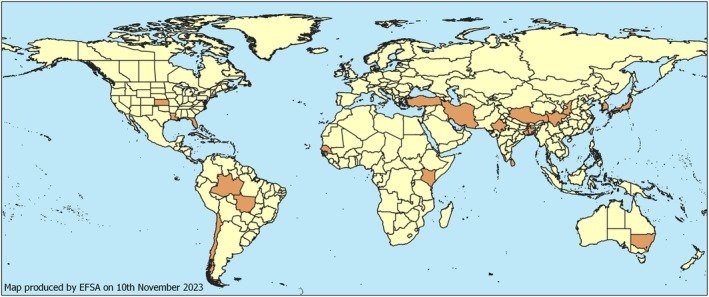
Following the EFSA commodity risk assessment of plants imported from Türkiye into the EU, the EFSA Panel on Plant Health performed a pest categorisation of (Nematoda: Pratylenchidae) for the EU. belongs to the order Rhabditida, subfamily Pratylenchidae. This nematode is not known to be present in the EU. The species is not included in the EU Commission Implementing Regulation 2019/2072. The pest occurs primarily in tropical, subtropical and warm temperate areas. It is widely distributed in Asian countries, with tea plants () as the main host. The pest was reported from more than 60 plant species, but reports from hosts other than , e.g. citrus ( spp.) and banana ( spp.), are associated with high uncertainty due to doubtful pest identification. Morphological and molecular methods are available for the identification of the pest. Pathways of entry are host plants for planting except seeds, as well as soil attached to plants for planting, machinery or footwear. Soil import to the EU is prohibited from third countries. The climatic preferences of are compatible with the microclimatic conditions occurring in the areas of the EU where tea is grown outside. The impact of the nematode is primarily known for Asian countries, where it is a devastating pathogen on tea plants, but there is a key uncertainty on impacts on hosts other than tea. Considering the strong pathogenicity of the pest, its establishment in tea producing areas would have negative consequences for tea producers. Therefore, the Panel concludes that satisfies all the criteria that are within the remit of EFSA to assess for it to be regarded as a potential Union quarantine pest.

摘要

根据欧洲食品安全局(EFSA)对从土耳其进口到欧盟的植物进行的商品风险评估,EFSA植物健康小组对欧盟的[某种线虫名称](线虫纲:短体线虫科)进行了有害生物分类。[该线虫名称]属于小杆目短体线虫科。目前已知该线虫在欧盟境内不存在。该物种未被列入欧盟委员会实施条例2019/2072。这种有害生物主要发生在热带、亚热带和暖温带地区。它在亚洲国家广泛分布,以茶树([茶树学名])为主要寄主。据报道,该有害生物可危害60多种植物,但除茶树外,其在其他寄主上的报道,如柑橘([柑橘属学名])和香蕉([香蕉属学名]),由于有害生物鉴定存疑,不确定性较高。有形态学和分子方法可用于鉴定该有害生物。进入途径是除种子外的种植用寄主植物,以及附着在种植用植物、机械或鞋类上的土壤。禁止从第三国向欧盟进口土壤。[该线虫名称]的气候偏好与欧盟境内种植茶树的外部区域的微气候条件相适应。该线虫的影响主要在亚洲国家为人所知,在那里它是茶树的毁灭性病原体,但对除茶树外的其他寄主的影响存在关键不确定性。考虑到该有害生物的强致病性,其在茶叶产区定殖将对茶叶生产者产生负面影响。因此,小组得出结论,[该线虫名称]符合EFSA职权范围内评估的所有标准,可被视为潜在的欧盟检疫性有害生物。
https://cdn.ncbi.nlm.nih.gov/pmc/blobs/a849/10790189/9bb6aa64725b/EFS2-22-e8548-g001.jpg
https://cdn.ncbi.nlm.nih.gov/pmc/blobs/a849/10790189/f00dbbed7824/EFS2-22-e8548-g002.jpg
https://cdn.ncbi.nlm.nih.gov/pmc/blobs/a849/10790189/9bb6aa64725b/EFS2-22-e8548-g001.jpg
https://cdn.ncbi.nlm.nih.gov/pmc/blobs/a849/10790189/f00dbbed7824/EFS2-22-e8548-g002.jpg
https://cdn.ncbi.nlm.nih.gov/pmc/blobs/a849/10790189/9bb6aa64725b/EFS2-22-e8548-g001.jpg

相似文献

1
Pest categorisation of .关于……的有害生物分类
EFSA J. 2024 Jan 16;22(1):e8548. doi: 10.2903/j.efsa.2024.8548. eCollection 2024 Jan.
2
Pest categorisation of .……的有害生物分类
EFSA J. 2023 Jul 20;21(7):e08117. doi: 10.2903/j.efsa.2023.8117. eCollection 2023 Jul.
3
Pest categorisation of .……的有害生物分类
EFSA J. 2022 Jun 30;20(6):e07395. doi: 10.2903/j.efsa.2022.7395. eCollection 2022 Jun.
4
Pest categorisation of .……的有害生物分类
EFSA J. 2024 May 23;22(5):e8804. doi: 10.2903/j.efsa.2024.8804. eCollection 2024 May.
5
Pest categorisation of .……的有害生物分类
EFSA J. 2024 Jun 28;22(6):e8833. doi: 10.2903/j.efsa.2024.8833. eCollection 2024 Jun.
6
Pest categorisation of .……的有害生物分类
EFSA J. 2023 Oct 31;21(10):e08320. doi: 10.2903/j.efsa.2023.8320. eCollection 2023 Oct.
7
Pest categorisation of .关于……的有害生物分类
EFSA J. 2023 Nov 15;21(11):e08318. doi: 10.2903/j.efsa.2023.8318. eCollection 2023 Nov.
8
Pest categorisation of .……的有害生物分类
EFSA J. 2020 Apr 22;18(4):e06103. doi: 10.2903/j.efsa.2020.6103. eCollection 2020 Apr.
9
Pest categorisation of .……的有害生物分类
EFSA J. 2024 Mar 19;22(3):e8667. doi: 10.2903/j.efsa.2024.8667. eCollection 2024 Mar.
10
Pest categorisation of f. sp. Tropical Race 4.香蕉枯萎病菌热带4号生理小种的有害生物分类
EFSA J. 2022 Jan 21;20(1):e07092. doi: 10.2903/j.efsa.2022.7092. eCollection 2022 Jan.

本文引用的文献

1
Commodity risk assessment of plants from Turkey.来自土耳其的植物的商品风险评估。
EFSA J. 2022 May 5;20(5):e07301. doi: 10.2903/j.efsa.2022.7301. eCollection 2022 May.
2
Guidance on quantitative pest risk assessment.有害生物定量风险评估指南。
EFSA J. 2018 Aug 3;16(8):e05350. doi: 10.2903/j.efsa.2018.5350. eCollection 2018 Aug.
3
Guidance on the use of the weight of evidence approach in scientific assessments.科学评估中证据权重方法的使用指南。
EFSA J. 2017 Aug 3;15(8):e04971. doi: 10.2903/j.efsa.2017.4971. eCollection 2017 Aug.
4
GenBank.GenBank
Nucleic Acids Res. 2020 Jan 8;48(D1):D84-D86. doi: 10.1093/nar/gkz956.
5
The accidental introduction of invasive animals as hitchhikers through inanimate pathways: a New Zealand perspective.通过无生命途径作为搭便车者意外引入入侵动物:新西兰的视角。
Rev Sci Tech. 2010 Apr;29(1):123-33. doi: 10.20506/rst.29.1.1970.