Electrical and Energy Department, Bursa Uludag University, Bursa, Turkey.
Departments of Biomedical Informatics and Neuroscience, College of Medicine, The Ohio State University Neurology, 370 W. 9th Avenue, Columbus, OH, 43210, USA.
J Med Syst. 2024 Jan 22;48(1):15. doi: 10.1007/s10916-023-02032-0.
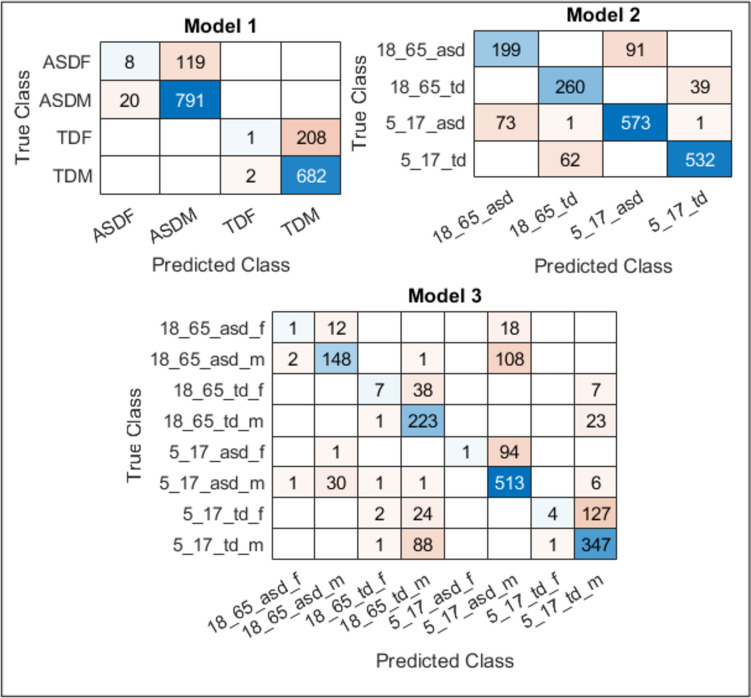
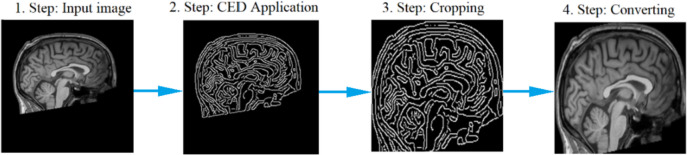
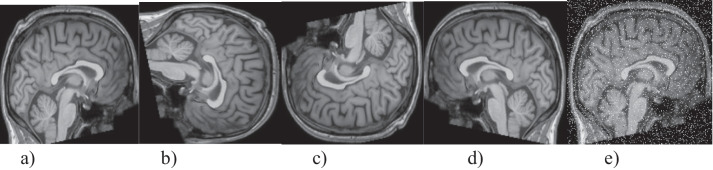
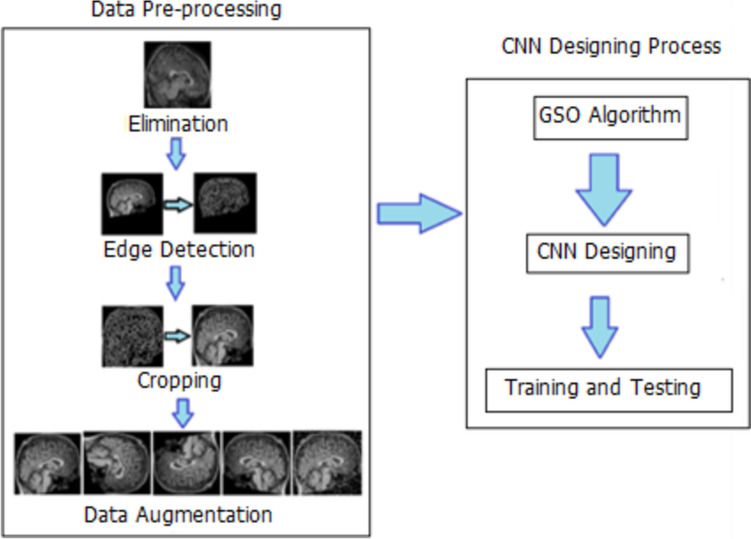
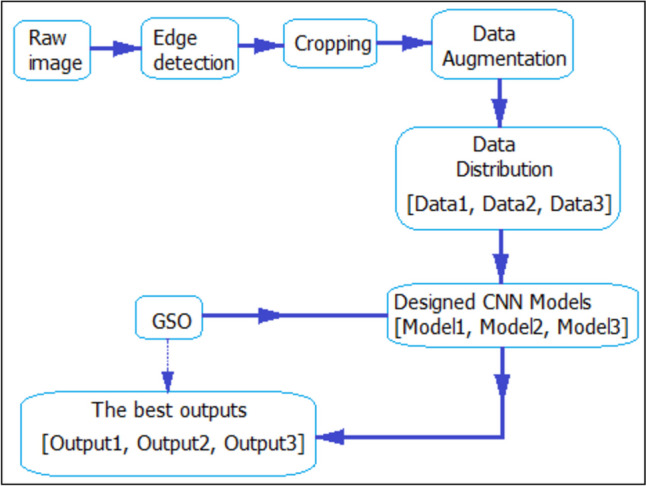
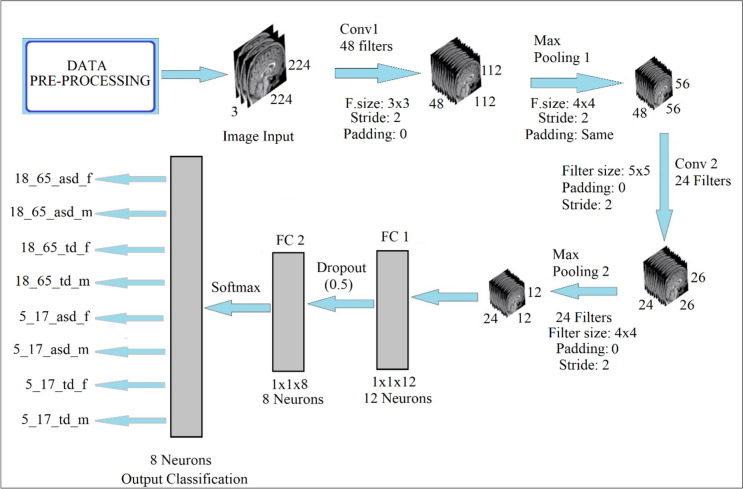
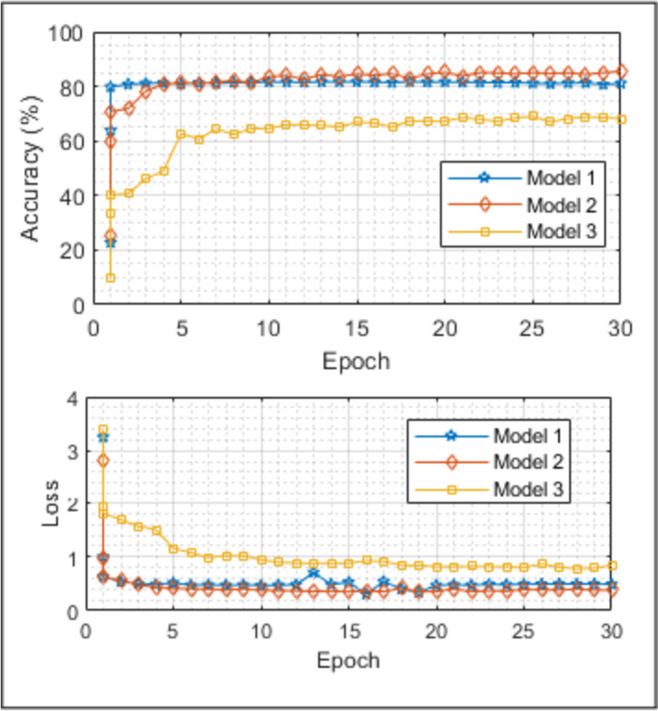
The fact that the rapid and definitive diagnosis of autism cannot be made today and that autism cannot be treated provides an impetus to look into novel technological solutions. To contribute to the resolution of this problem through multiple classifications by considering age and gender factors, in this study, two quadruple and one octal classifications were performed using a deep learning (DL) approach. Gender in one of the four classifications and age groups in the other were considered. In the octal classification, classes were created considering gender and age groups. In addition to the diagnosis of ASD (Autism Spectrum Disorders), another goal of this study is to find out the contribution of gender and age factors to the diagnosis of ASD by making multiple classifications based on age and gender for the first time. Brain structural MRI (sMRI) scans of participators with ASD and TD (Typical Development) were pre-processed in the system originally designed for this purpose. Using the Canny Edge Detection (CED) algorithm, the sMRI image data was cropped in the data pre-processing stage, and the data set was enlarged five times with the data augmentation (DA) techniques. The most optimal convolutional neural network (CNN) models were developed using the grid search optimization (GSO) algorism. The proposed DL prediction system was tested with the five-fold cross-validation technique. Three CNN models were designed to be used in the system. The first of these models is the quadruple classification model created by taking gender into account (model 1), the second is the quadruple classification model created by taking into account age (model 2), and the third is the eightfold classification model created by taking into account both gender and age (model 3). ). The accuracy rates obtained for all three designed models are 80.94, 85.42 and 67.94, respectively. These obtained accuracy rates were compared with pre-trained models by using the transfer learning approach. As a result, it was revealed that age and gender factors were effective in the diagnosis of ASD with the system developed for ASD multiple classifications, and higher accuracy rates were achieved compared to pre-trained models.
目前无法对自闭症做出快速和明确的诊断,也无法对其进行治疗,这一事实促使人们寻求新的技术解决方案。为了通过考虑年龄和性别因素的多种分类来解决这个问题,本研究使用深度学习(DL)方法进行了两次四重和一次八重分类。在其中一个四重分类中考虑了性别因素,在另一个四重分类中考虑了年龄组。在八重分类中,考虑了性别和年龄组创建了类别。除了对自闭症谱系障碍(ASD)进行诊断外,本研究的另一个目标是通过首次基于年龄和性别进行多种分类,找出性别和年龄因素对 ASD 诊断的贡献。参与者的大脑结构磁共振成像(sMRI)扫描具有 ASD 和 TD(典型发育)首先在为此目的设计的系统中进行预处理。在数据预处理阶段,使用 Canny 边缘检测(CED)算法对 sMRI 图像数据进行裁剪,并使用数据增强(DA)技术将数据集放大五倍。使用网格搜索优化(GSO)算法开发了最优化的卷积神经网络(CNN)模型。使用五重交叉验证技术对所提出的 DL 预测系统进行了测试。设计了三个 CNN 模型用于系统中。第一个模型是考虑到性别的四重分类模型(模型 1),第二个模型是考虑到年龄的四重分类模型(模型 2),第三个模型是同时考虑到性别和年龄的八重分类模型(模型 3)。)。为所有三个设计的模型获得的准确率分别为 80.94、85.42 和 67.94。使用迁移学习方法将这些获得的准确率与预训练模型进行了比较。结果表明,在所开发的用于 ASD 多种分类的系统中,年龄和性别因素在 ASD 诊断中是有效的,并且与预训练模型相比,获得了更高的准确率。