Department of Physiotherapy, HM Hospitals Faculty of Health Sciences of the Camilo José Cela University, 28692, Villanueva de la Cañada, Madrid, Spain.
Department of Physical Therapy, Occupational Therapy, Rehabilitation and Physical Medicine. Faculty of Health Sciences, Rey Juan Carlos University, Avenida de Atenas S/N, Alcorcón, 28922, Madrid, Spain.
J Neuroeng Rehabil. 2024 Jan 22;21(1):12. doi: 10.1186/s12984-024-01303-2.
Chronicity and lack of motivation often go together during the upper limb rehabilitation process in stroke. Virtual reality is a useful tool in this context, providing safe, intensive, individualised treatments in a playful environment. B-cost, easy-to-use devices with personalised and motivating games for a specific population seem to be the most effective option in the treatment of the upper limbs.
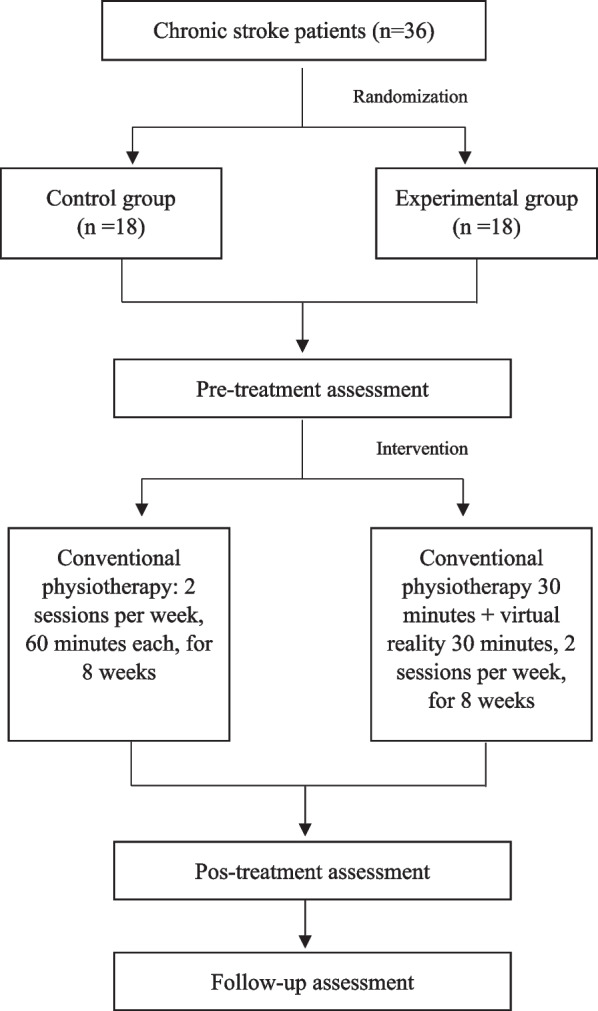
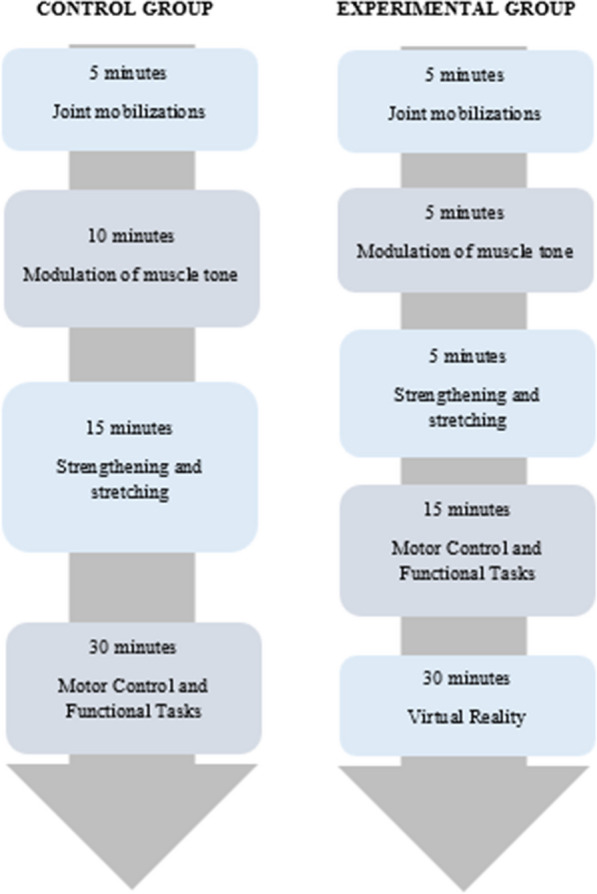
A randomised clinical study with follow-up was carried out to assess the effectiveness of the Leap Motion Controller® device in improving the functionality of the upper limb in patients with chronic stroke. Patients (n = 36) were randomised into a control group that performed conventional therapy and an experimental group that combined the virtual reality protocol with conventional therapy. The outcome measures used were grip strength; the Block and Box Test; the Action Research Arm Test; the Disabilities of the Arm, Shoulder and Hand; as well as a Technology Satisfaction Questionnaire and adherence to treatment.
Inter-group statistical analysis showed no significant differences except in subsection D of the Action Research Arm Test. Intra-group analysis showed significant differences in both groups, but the experimental group reached significance in all long-term variables. Satisfaction and adherence levels were very high.
The Leap Motion Controller system, as a complementary tool, produces improvements in grip strength, dexterity and motor function in patients with chronic stroke. It is perceived as a safe, motivating, and easy-to-use device.
NCT04166617 Clinical Trials.
在上肢康复过程中,慢性和缺乏动力通常是一起出现的。在这种情况下,虚拟现实是一种有用的工具,它可以在一个有趣的环境中提供安全、密集、个性化的治疗。具有成本效益、易于使用的设备,以及针对特定人群的个性化和激励性游戏,似乎是治疗上肢最有效的选择。
进行了一项随机对照临床试验,以评估 Leap Motion Controller® 设备在改善慢性脑卒中患者上肢功能方面的有效性。患者(n=36)随机分为对照组(进行常规治疗)和实验组(将虚拟现实方案与常规治疗相结合)。使用的评估指标包括握力、Block 和 Box 测试、Action Research Arm 测试、手臂、肩部和手部残疾问卷,以及技术满意度问卷和治疗依从性。
组间统计分析显示,除了 Action Research Arm 测试的 D 小节外,没有显著差异。组内分析显示两组均有显著差异,但实验组在所有长期变量中均达到显著水平。满意度和依从度非常高。
Leap Motion Controller 系统作为一种补充工具,可以改善慢性脑卒中患者的握力、灵巧性和运动功能。它被认为是一种安全、激励和易于使用的设备。
NCT04166617 临床试验。