Nutrition and Metabolic Disease Research Center, Clinical Sciences Research Institute, Ahvaz Jundishapur University of Medical Sciences, Ahvaz, Iran.
Department of Nutrition, School of Allied Medical Sciences, Ahvaz Jundishapur University of Medical Sciences, Ahvaz, Iran.
Sci Rep. 2024 Jan 23;14(1):1968. doi: 10.1038/s41598-024-52263-5.
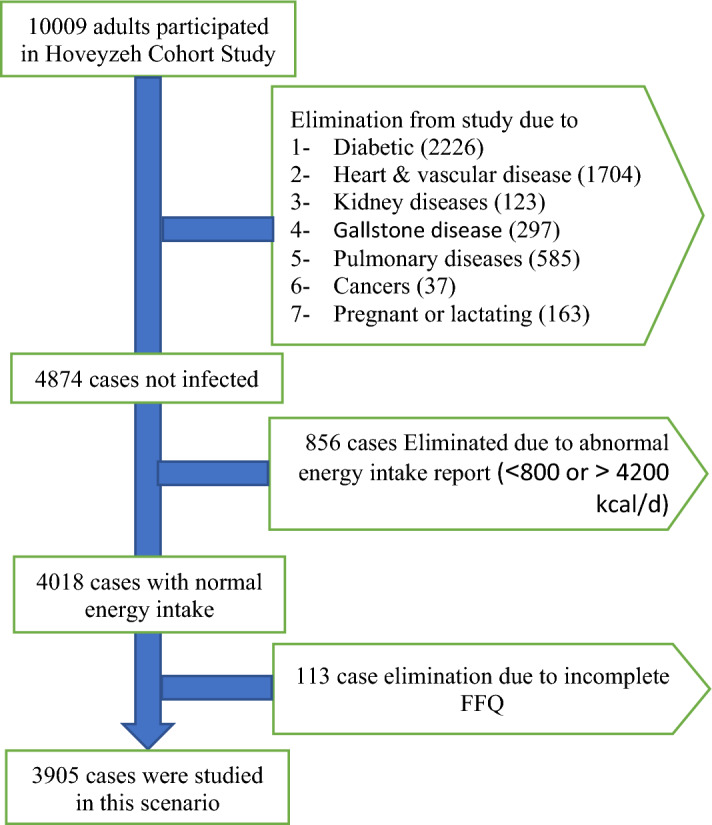
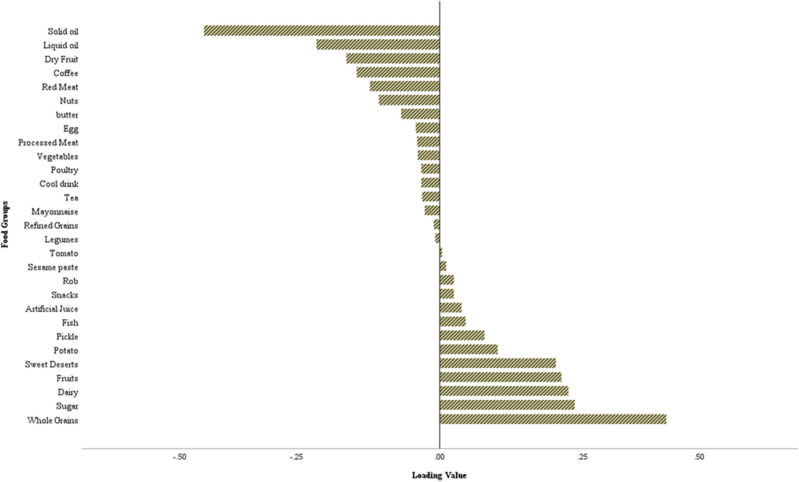
Postprandial insulin secretion has been associated with metabolic disorders such as hyperlipidemia and type 2 diabetes. Therefore, we aimed to explore the relationship between dietary insulin indices and dietary pattern with the risk of Metabolic Syndrome (MetS). The participants of the present cross-sectional study were included among the individuals who participated in the Hoveyzeh Cohort Study (HCS). A total of 3905 Iranian adults, aged 35-70 years, are included in the current analysis. The Food Frequency Questionnaire (FFQ) is used to calculate the dietary Insulin Index (DII), Insulin Load (DIL), and dietary pattern. Dietary pattern was derived using Reduced-Rank Regression (RRR) based on intake of protein (g/day), fiber (g/day), fat (g/day), magnesium (mg/day), and dietary insulin index were considered as response variables. The Generalized Linear Model was used to obtain the odds ratio (OR) and 95% confidence interval (CI) for MetS based on gender, while considering quartiles of DIL, DII scores, and dietary pattern, adjusted for potential confounders. The mean ± SD of age and BMI of the participants in the top quartile of DIL were 45.72 ± 8.05 years and 28.25 ± 5.02 kg/m, respectively. The mean ± SD of DII was 40.53 ± 4.06 and the mean ± SD of DIL was 117,986.1 ± 30,714.06. A significant positive association was observed between DIL and MetS in women after adjusting for confounding factors (OR: 1.51; 95% CI 1.16; 1.96). No significant association was seen between DIL, DII, and MetS among men. A derived dietary pattern characterized by high intakes of fruits, sugar, sweet deserts, Whole Grains, and dairy was associated with an increased risk of MetS in adjusted model2 among women (OR: 1.41; 95% CI 1.13; 1.75) and men in the same model (OR: 2.09; 95% CI 1.35; 3.21).However, the final model was significant just for men (OR: 2.08; 95% CI 1.35; 3.21) and not for women (OR: 1.24; 95% CI 0.96; 1.60). Our findings showed that adherence to a diet with a high insulin load can increase the risk of MetS in women. In addition, a derived dietary pattern by RRR indicated that a diet rich in fruits, sugar, sweet deserts, whole Grains, and dairy is related to increased risk of MetS in both men and women.
进食后胰岛素分泌与血脂异常和 2 型糖尿病等代谢紊乱有关。因此,我们旨在探讨膳食胰岛素指数与膳食模式与代谢综合征(MetS)风险之间的关系。本横断面研究的参与者包括参加霍维耶赫队列研究(HCS)的个体。目前的分析共纳入了 3905 名年龄在 35-70 岁的伊朗成年人。使用食物频率问卷(FFQ)计算膳食胰岛素指数(DII)、胰岛素负荷(DIL)和膳食模式。基于蛋白质(g/天)、纤维(g/天)、脂肪(g/天)、镁(mg/天)和膳食胰岛素指数的摄入,采用降秩回归(RRR)来推导膳食模式,这些被视为响应变量。基于性别,采用广义线性模型获得 MetS 的比值比(OR)和 95%置信区间(CI),同时考虑 DIL、DII 评分和膳食模式的四分位数,调整潜在混杂因素。DIL 四分位数最高组的参与者的平均年龄和 BMI 分别为 45.72 ± 8.05 岁和 28.25 ± 5.02 kg/m。DII 的平均 ± SD 为 40.53 ± 4.06,DIL 的平均 ± SD 为 117986.1 ± 30714.06。在调整混杂因素后,女性 DIL 与 MetS 之间存在显著正相关(OR:1.51;95%CI 1.16;1.96)。在男性中,DIL、DII 与 MetS 之间无显著相关性。在调整模型 2 中,一种以高水果、糖、甜点心、全谷物和乳制品摄入量为特征的衍生膳食模式与女性(OR:1.41;95%CI 1.13;1.75)和男性(OR:2.09;95%CI 1.35;3.21)的 MetS 风险增加有关。然而,最终模型仅对男性(OR:2.08;95%CI 1.35;3.21)显著,对女性(OR:1.24;95%CI 0.96;1.60)不显著。我们的研究结果表明,高胰岛素负荷的饮食可能会增加女性患 MetS 的风险。此外,RRR 得出的饮食模式表明,富含水果、糖、甜点心、全谷物和乳制品的饮食与男性和女性的 MetS 风险增加有关。