• 文献检索
  • 文档翻译
  • 深度研究
  • 学术资讯
  • Suppr Zotero 插件Zotero 插件
  • 邀请有礼
  • 套餐&价格
  • 历史记录
应用&插件
Suppr Zotero 插件Zotero 插件浏览器插件Mac 客户端Windows 客户端微信小程序
定价
高级版会员购买积分包购买API积分包
服务
文献检索文档翻译深度研究API 文档MCP 服务
关于我们
关于 Suppr公司介绍联系我们用户协议隐私条款
关注我们

Suppr 超能文献

核心技术专利:CN118964589B侵权必究
粤ICP备2023148730 号-1Suppr @ 2026

文献检索

告别复杂PubMed语法,用中文像聊天一样搜索,搜遍4000万医学文献。AI智能推荐,让科研检索更轻松。

立即免费搜索

文件翻译

保留排版,准确专业,支持PDF/Word/PPT等文件格式,支持 12+语言互译。

免费翻译文档

深度研究

AI帮你快速写综述,25分钟生成高质量综述,智能提取关键信息,辅助科研写作。

立即免费体验

用于识别胃癌术后复发高危患者的稳健联邦学习模型。

Robustly federated learning model for identifying high-risk patients with postoperative gastric cancer recurrence.

作者信息

Feng Bao, Shi Jiangfeng, Huang Liebin, Yang Zhiqi, Feng Shi-Ting, Li Jianpeng, Chen Qinxian, Xue Huimin, Chen Xiangguang, Wan Cuixia, Hu Qinghui, Cui Enming, Chen Yehang, Long Wansheng

机构信息

Department of Radiology, Jiangmen Central Hospital, Jiangmen, China.

Laboratory of Intelligent Detection and Information Processing, Guilin University of Aerospace Technology, Guilin, China.

出版信息

Nat Commun. 2024 Jan 25;15(1):742. doi: 10.1038/s41467-024-44946-4.

DOI:10.1038/s41467-024-44946-4
PMID:38272913
原文链接:https://pmc.ncbi.nlm.nih.gov/articles/PMC10811238/
Abstract

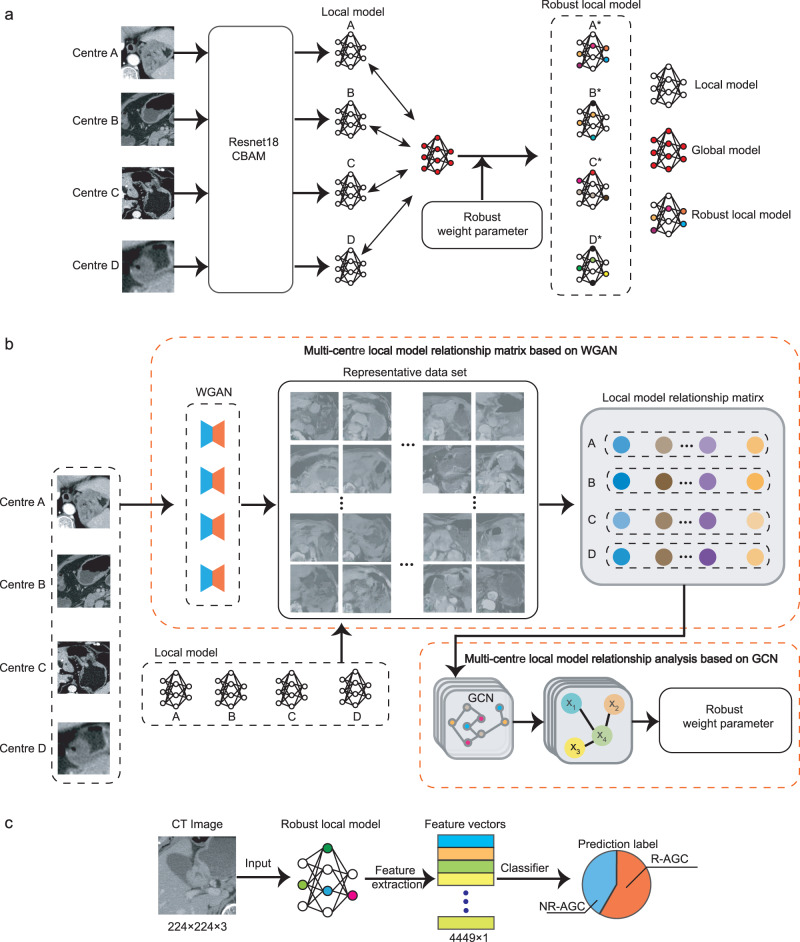
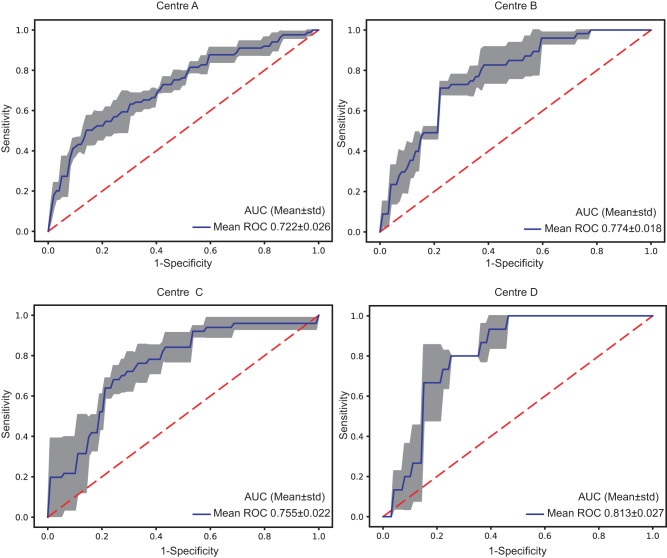
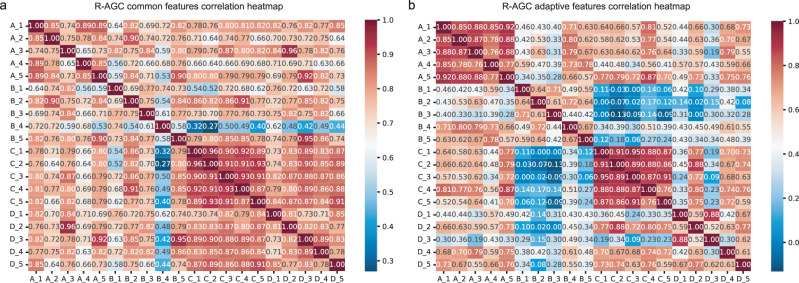
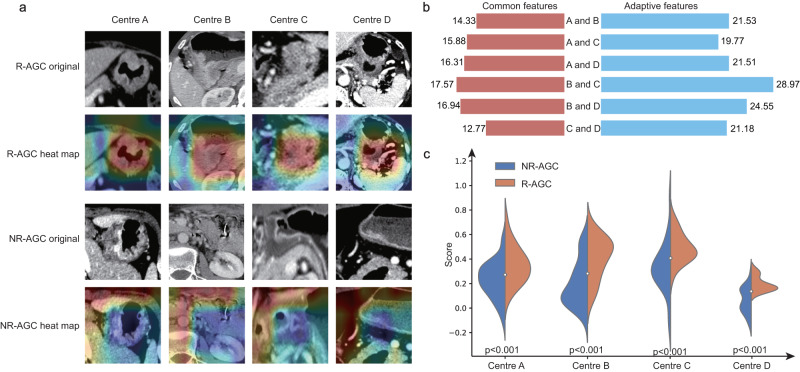
The prediction of patient disease risk via computed tomography (CT) images and artificial intelligence techniques shows great potential. However, training a robust artificial intelligence model typically requires large-scale data support. In practice, the collection of medical data faces obstacles related to privacy protection. Therefore, the present study aims to establish a robust federated learning model to overcome the data island problem and identify high-risk patients with postoperative gastric cancer recurrence in a multicentre, cross-institution setting, thereby enabling robust treatment with significant value. In the present study, we collect data from four independent medical institutions for experimentation. The robust federated learning model algorithm yields area under the receiver operating characteristic curve (AUC) values of 0.710, 0.798, 0.809, and 0.869 across four data centres. Additionally, the effectiveness of the algorithm is evaluated, and both adaptive and common features are identified through analysis.

摘要

通过计算机断层扫描(CT)图像和人工智能技术预测患者疾病风险具有巨大潜力。然而,训练一个强大的人工智能模型通常需要大规模数据支持。在实践中,医学数据的收集面临与隐私保护相关的障碍。因此,本研究旨在建立一个强大的联邦学习模型,以克服数据孤岛问题,并在多中心、跨机构环境中识别胃癌术后复发的高危患者,从而实现具有重要价值的有力治疗。在本研究中,我们从四个独立的医疗机构收集数据进行实验。强大的联邦学习模型算法在四个数据中心的受试者操作特征曲线(AUC)值分别为0.710、0.798、0.809和0.869。此外,还评估了该算法的有效性,并通过分析识别了自适应特征和共同特征。
https://cdn.ncbi.nlm.nih.gov/pmc/blobs/9941/10811238/99bf51759c87/41467_2024_44946_Fig6_HTML.jpg
https://cdn.ncbi.nlm.nih.gov/pmc/blobs/9941/10811238/fc0c5cbfd215/41467_2024_44946_Fig1_HTML.jpg
https://cdn.ncbi.nlm.nih.gov/pmc/blobs/9941/10811238/66755ef18c37/41467_2024_44946_Fig2_HTML.jpg
https://cdn.ncbi.nlm.nih.gov/pmc/blobs/9941/10811238/260ee806a7cf/41467_2024_44946_Fig3_HTML.jpg
https://cdn.ncbi.nlm.nih.gov/pmc/blobs/9941/10811238/867497bff7cc/41467_2024_44946_Fig4_HTML.jpg
https://cdn.ncbi.nlm.nih.gov/pmc/blobs/9941/10811238/ab7b7f9cad8e/41467_2024_44946_Fig5_HTML.jpg
https://cdn.ncbi.nlm.nih.gov/pmc/blobs/9941/10811238/99bf51759c87/41467_2024_44946_Fig6_HTML.jpg
https://cdn.ncbi.nlm.nih.gov/pmc/blobs/9941/10811238/fc0c5cbfd215/41467_2024_44946_Fig1_HTML.jpg
https://cdn.ncbi.nlm.nih.gov/pmc/blobs/9941/10811238/66755ef18c37/41467_2024_44946_Fig2_HTML.jpg
https://cdn.ncbi.nlm.nih.gov/pmc/blobs/9941/10811238/260ee806a7cf/41467_2024_44946_Fig3_HTML.jpg
https://cdn.ncbi.nlm.nih.gov/pmc/blobs/9941/10811238/867497bff7cc/41467_2024_44946_Fig4_HTML.jpg
https://cdn.ncbi.nlm.nih.gov/pmc/blobs/9941/10811238/ab7b7f9cad8e/41467_2024_44946_Fig5_HTML.jpg
https://cdn.ncbi.nlm.nih.gov/pmc/blobs/9941/10811238/99bf51759c87/41467_2024_44946_Fig6_HTML.jpg

相似文献

1
Robustly federated learning model for identifying high-risk patients with postoperative gastric cancer recurrence.用于识别胃癌术后复发高危患者的稳健联邦学习模型。
Nat Commun. 2024 Jan 25;15(1):742. doi: 10.1038/s41467-024-44946-4.
2
A scalable federated learning solution for secondary care using low-cost microcomputing: privacy-preserving development and evaluation of a COVID-19 screening test in UK hospitals.一种使用低成本微型计算机的二级医疗可扩展联邦学习解决方案:英国医院 COVID-19 筛查测试的隐私保护开发和评估。
Lancet Digit Health. 2024 Feb;6(2):e93-e104. doi: 10.1016/S2589-7500(23)00226-1.
3
Predicting peritoneal recurrence and disease-free survival from CT images in gastric cancer with multitask deep learning: a retrospective study.利用多任务深度学习从胃癌CT图像预测腹膜复发和无病生存期:一项回顾性研究
Lancet Digit Health. 2022 May;4(5):e340-e350. doi: 10.1016/S2589-7500(22)00040-1.
4
Development and validation of a Radiopathomics model based on CT scans and whole slide images for discriminating between Stage I-II and Stage III gastric cancer.基于 CT 扫描和全切片图像的放射组学模型的开发和验证,用于区分Ⅰ-Ⅱ期和Ⅲ期胃癌。
BMC Cancer. 2024 Mar 22;24(1):368. doi: 10.1186/s12885-024-12021-2.
5
Federated Learning for Decentralized Artificial Intelligence in Melanoma Diagnostics.联邦学习在黑色素瘤诊断中的去中心化人工智能应用。
JAMA Dermatol. 2024 Mar 1;160(3):303-311. doi: 10.1001/jamadermatol.2023.5550.
6
The FeatureCloud Platform for Federated Learning in Biomedicine: Unified Approach.FeatureCloud 平台在生物医学领域的联邦学习:统一方法。
J Med Internet Res. 2023 Jul 12;25:e42621. doi: 10.2196/42621.
7
Federated Learning in Glaucoma: A Comprehensive Review and Future Perspectives.青光眼领域的联邦学习:全面综述与未来展望
Ophthalmol Glaucoma. 2025 Jan-Feb;8(1):92-105. doi: 10.1016/j.ogla.2024.08.004. Epub 2024 Aug 29.
8
Federated learning for computational pathology on gigapixel whole slide images.基于千兆像素全切片图像的计算病理学联邦学习。
Med Image Anal. 2022 Feb;76:102298. doi: 10.1016/j.media.2021.102298. Epub 2021 Nov 25.
9
[Establishment of artificial neural network model for predicting lymph node metastasis in patients with stage Ⅱ-Ⅲ gastric cancer].[建立预测Ⅱ-Ⅲ期胃癌患者淋巴结转移的人工神经网络模型]
Zhonghua Wei Chang Wai Ke Za Zhi. 2022 Apr 25;25(4):327-335. doi: 10.3760/cma.j.cn441530-20220105-00010.
10
[Clinical significance of the deep learning algorithm based on contrast-enhanced CT in the differential diagnosis of gastric gastrointestinal stromal tumors with a diameter ≤ 5 cm].基于增强CT的深度学习算法在直径≤5cm胃胃肠道间质瘤鉴别诊断中的临床意义
Zhonghua Wei Chang Wai Ke Za Zhi. 2021 Sep 25;24(9):796-803. doi: 10.3760/cma.j.cn.441530-20210706-00267.

引用本文的文献

1
AI-Powered Insights into Drug Resistance in Gastric Cancer: A Path Toward Precision Therapy.人工智能助力洞察胃癌耐药性:精准治疗之路
Iran J Pharm Res. 2025 May 25;24(1):e159954. doi: 10.5812/ijpr-159954. eCollection 2025 Jan-Dec.
2
Collaborative assessment of the risk of postoperative progression in early-stage non-small cell lung cancer: a robust federated learning model.早期非小细胞肺癌术后进展风险的联合评估:一种稳健的联邦学习模型
Cancer Imaging. 2025 Jul 18;25(1):92. doi: 10.1186/s40644-025-00911-y.
3
Progress and challenges of artificial intelligence in lung cancer clinical translation.

本文引用的文献

1
Prognostic and predictive value of a pathomics signature in gastric cancer.胃癌中病理组学特征的预后和预测价值。
Nat Commun. 2022 Nov 12;13(1):6903. doi: 10.1038/s41467-022-34703-w.
2
Personalized Federated Few-Shot Learning.个性化联邦少样本学习
IEEE Trans Neural Netw Learn Syst. 2024 Feb;35(2):2534-2544. doi: 10.1109/TNNLS.2022.3190359. Epub 2024 Feb 5.
3
Pan-cancer computational histopathology reveals mutations, tumor composition and prognosis.泛癌计算组织病理学揭示了突变、肿瘤组成和预后。
人工智能在肺癌临床转化中的进展与挑战
NPJ Precis Oncol. 2025 Jul 1;9(1):210. doi: 10.1038/s41698-025-00986-7.
4
Federated Learning for Predicting Major Postoperative Complications.用于预测主要术后并发症的联邦学习
Ann Surg Open. 2025 May 2;6(2):e573. doi: 10.1097/AS9.0000000000000573. eCollection 2025 Jun.
5
FedOcw: optimized federated learning for cross-lingual speech-based Parkinson's disease detection.FedOcw:用于基于跨语言语音的帕金森病检测的优化联邦学习
NPJ Digit Med. 2025 Jun 13;8(1):357. doi: 10.1038/s41746-025-01763-3.
6
Federated learning with differential privacy for breast cancer diagnosis enabling secure data sharing and model integrity.用于乳腺癌诊断的具有差分隐私的联邦学习,实现安全的数据共享和模型完整性。
Sci Rep. 2025 Apr 16;15(1):13061. doi: 10.1038/s41598-025-95858-2.
7
General lightweight framework for vision foundation model supporting multi-task and multi-center medical image analysis.支持多任务和多中心医学图像分析的视觉基础模型通用轻量级框架。
Nat Commun. 2025 Mar 1;16(1):2097. doi: 10.1038/s41467-025-57427-z.
8
Applications of artificial intelligence in digital pathology for gastric cancer.人工智能在胃癌数字病理学中的应用。
Front Oncol. 2024 Oct 28;14:1437252. doi: 10.3389/fonc.2024.1437252. eCollection 2024.
9
Nomogram for predicting 10-year postoperative recurrence of stage I gastric cancer.预测Ⅰ期胃癌术后10年复发的列线图
Transl Cancer Res. 2024 Oct 31;13(10):5497-5508. doi: 10.21037/tcr-24-692. Epub 2024 Oct 28.
10
An international study presenting a federated learning AI platform for pediatric brain tumors.一项提出用于小儿脑肿瘤的联邦学习人工智能平台的国际研究。
Nat Commun. 2024 Sep 2;15(1):7615. doi: 10.1038/s41467-024-51172-5.
Nat Cancer. 2020 Aug;1(8):800-810. doi: 10.1038/s43018-020-0085-8. Epub 2020 Jul 27.
4
Deep transfer learning for COVID-19 detection and infection localization with superpixel based segmentation.基于超像素分割的深度迁移学习用于COVID-19检测与感染定位
Sustain Cities Soc. 2021 Dec;75:103252. doi: 10.1016/j.scs.2021.103252. Epub 2021 Aug 16.
5
RCoNet: Deformable Mutual Information Maximization and High-Order Uncertainty-Aware Learning for Robust COVID-19 Detection.RCoNet:用于稳健 COVID-19 检测的可变形互信息最大化和高阶不确定性感知学习。
IEEE Trans Neural Netw Learn Syst. 2021 Aug;32(8):3401-3411. doi: 10.1109/TNNLS.2021.3086570. Epub 2021 Aug 3.
6
Global Cancer Statistics 2020: GLOBOCAN Estimates of Incidence and Mortality Worldwide for 36 Cancers in 185 Countries.《全球癌症统计数据 2020:全球 185 个国家和地区 36 种癌症的发病率和死亡率估计》。
CA Cancer J Clin. 2021 May;71(3):209-249. doi: 10.3322/caac.21660. Epub 2021 Feb 4.
7
A machine learning-based predictor for the identification of the recurrence of patients with gastric cancer after operation.基于机器学习的胃癌术后患者复发预测器。
Sci Rep. 2021 Jan 15;11(1):1571. doi: 10.1038/s41598-021-81188-6.
8
Gastric cancer.胃癌。
Lancet. 2020 Aug 29;396(10251):635-648. doi: 10.1016/S0140-6736(20)31288-5.
9
A deep learning model to predict RNA-Seq expression of tumours from whole slide images.从全切片图像预测肿瘤 RNA-Seq 表达的深度学习模型。
Nat Commun. 2020 Aug 3;11(1):3877. doi: 10.1038/s41467-020-17678-4.
10
Image-based consensus molecular subtype (imCMS) classification of colorectal cancer using deep learning.基于图像的共识分子亚型(imCMS)分类用于结直肠癌的深度学习。
Gut. 2021 Mar;70(3):544-554. doi: 10.1136/gutjnl-2019-319866. Epub 2020 Jul 20.