Clinical Research Unit, Shanghai Children's Hospital, Shanghai Jiao Tong University Medical School, Shanghai, China.
Institute of Pediatric Infection, Immunity, and Critical Care Medicine, Shanghai Jiao Tong University School of Medicine, Shanghai, China.
Mol Genet Genomic Med. 2024 Jan;12(1):e2357. doi: 10.1002/mgg3.2357.
Newborn screening (NBS) aims to detect congenital anomalies, and next-generation sequencing (NGS) has shown promise in this aspect. However, the NBS strategy for monogenic inherited diseases in China remains insufficient.
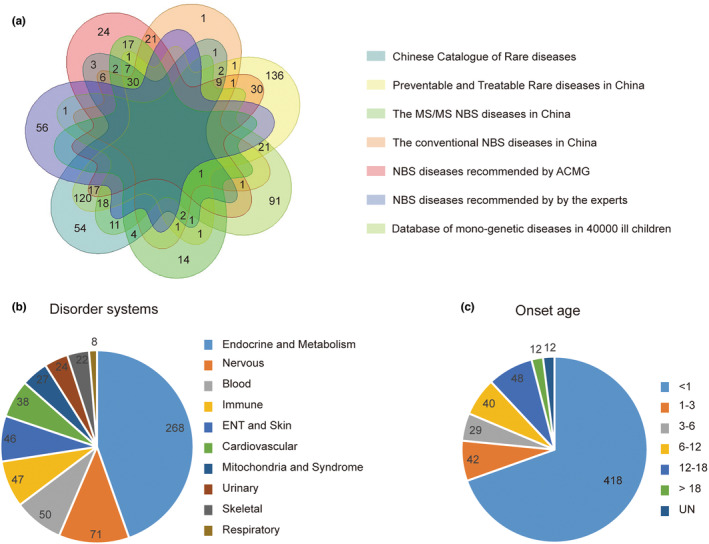
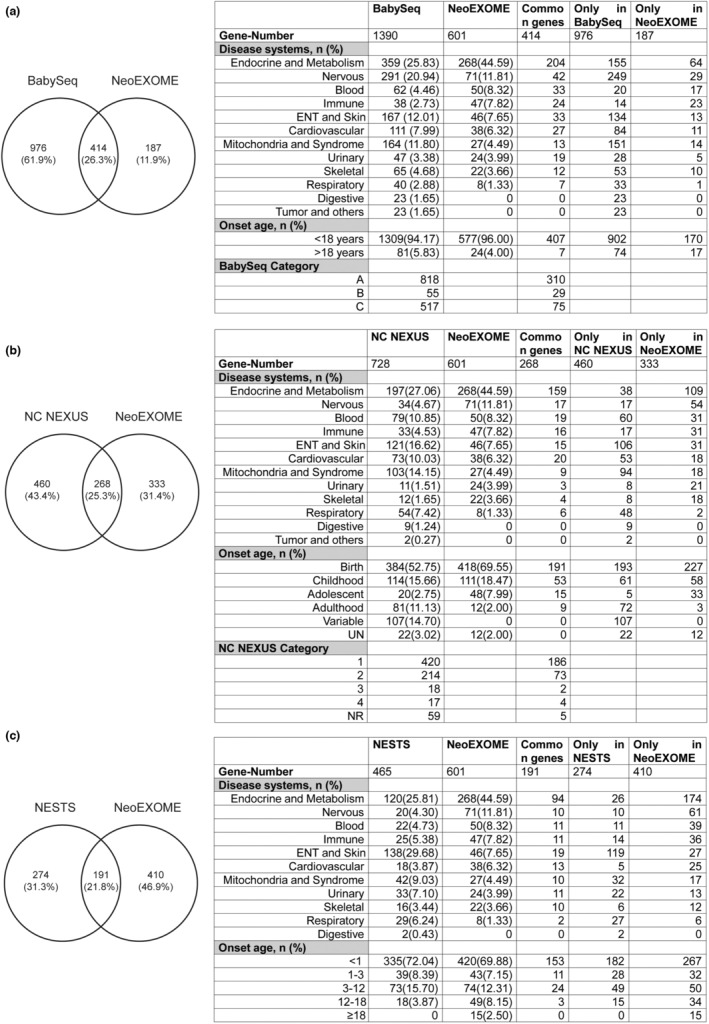
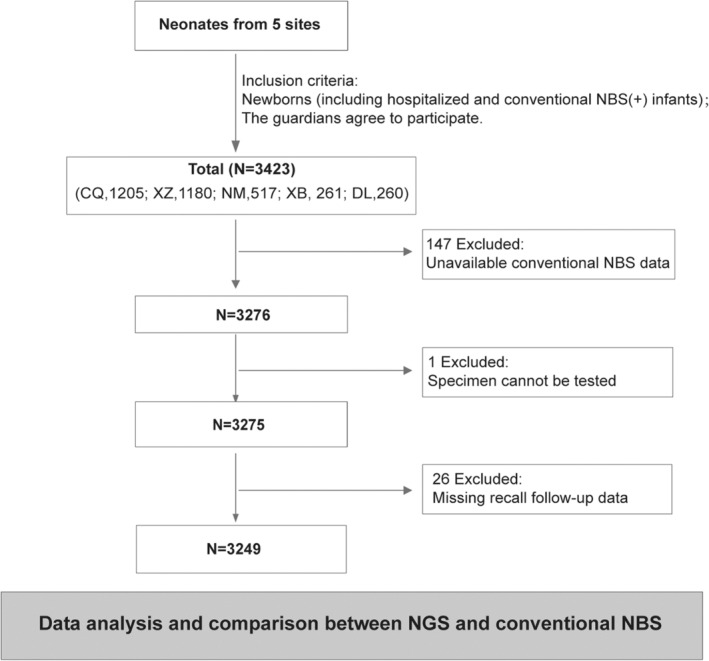
We developed a NeoEXOME panel comprising 601 genes that are relevant to the Chinese population found through extensive research on available databases. An interpretation system to grade the results into positive (high-risk, moderate-risk, and low-risk genotypes), negative, and carrier according to the American College of Medical Genetics (ACMG) guidelines was also developed. We validated the panel to evaluate its efficacy by using data from the "1000 Genomes Project" and conducted a pilot multicenter study involving 3423 neonates.
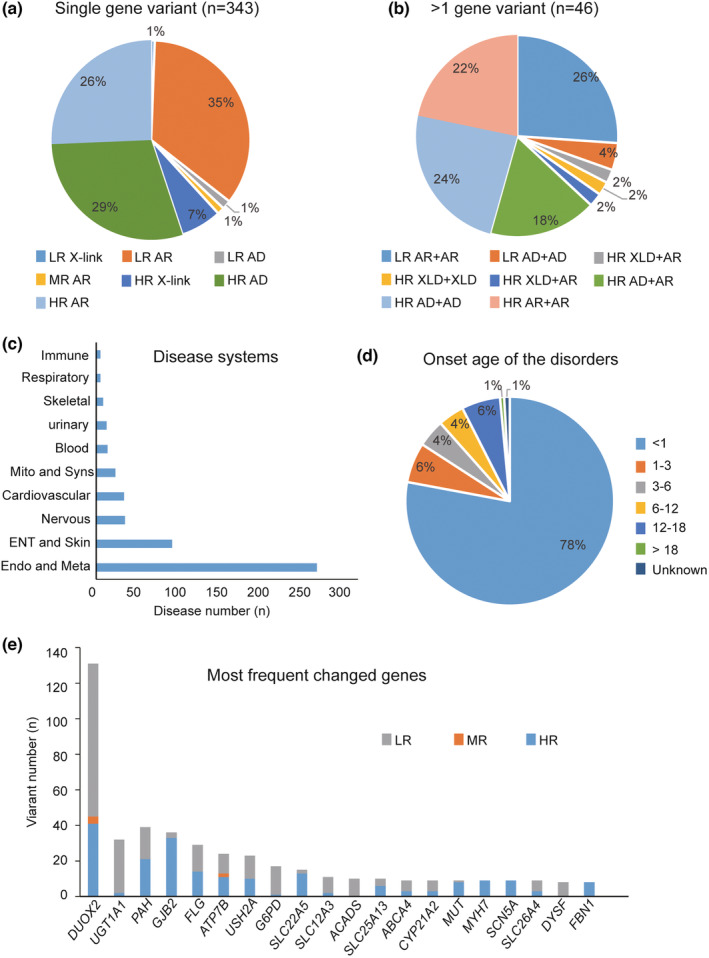
The NGS positive rate in the 1000 Genomes Project was 7.6% (23/301), whereas the rate was 12.0% in the multicenter study, including 3249 recruited neonates. Notably, in 200 neonates, positive per conventional NBS, 58.5% (69/118) showed results consistent with NGS. In the remaining 3049 neonates showing negative results in conventional NBS, 271 (8.9%) were positive per NGS, and nine of them were clinically diagnosed with diseases in the follow-up.
We successfully designed a NeoEXOME panel for targeted sequencing of monogenic inherited diseases in NBS. The panel demonstrated high performance in the Chinese population, particularly for the early detection of diseases with no biochemical markers.
新生儿筛查(NBS)旨在检测先天性异常,下一代测序(NGS)在这方面显示出了潜力。然而,中国针对单基因遗传性疾病的 NBS 策略仍然不足。
我们开发了一个包含 601 个与中国人群相关基因的 NeoEXOME 面板,这些基因是通过对现有数据库进行广泛研究发现的。我们还开发了一个解释系统,根据美国医学遗传学学院(ACMG)指南将结果分为阳性(高风险、中风险和低风险基因型)、阴性和携带者。我们通过使用“1000 基因组计划”的数据来验证该面板的有效性,并进行了一项涉及 3423 名新生儿的多中心试点研究。
在“1000 基因组计划”中,NGS 的阳性率为 7.6%(23/301),而在多中心研究中,包括 3249 名招募的新生儿,阳性率为 12.0%。值得注意的是,在 200 名常规 NBS 阳性的新生儿中,58.5%(69/118)的结果与 NGS 一致。在常规 NBS 阴性的 3049 名新生儿中,271 名(8.9%)NGS 阳性,其中 9 名在随访中被临床诊断为疾病。
我们成功设计了用于 NBS 中单基因遗传性疾病靶向测序的 NeoEXOME 面板。该面板在中国人群中表现出了较高的性能,特别是对没有生化标志物的疾病的早期检测。