Universidade Federal de Goiás, Hospital das Clínicas, Departamento de Neurologia, Goiânia GO, Brazil.
Pontifícia Universidade Católica de Goiás, Goiânia GO, Brazil.
Arq Neuropsiquiatr. 2024 Jan;82(1):1-10. doi: 10.1055/s-0044-1779051. Epub 2024 Jan 29.
Phantom limb pain (PLP) occurs after amputations and can persist in a chronic and debilitating way. Repetitive transcranial magnetic stimulation (rTMS) is a non-invasive neuromodulation method capable of influencing brain function and modulating cortical excitability. Its effectiveness in treating chronic pain is promising.
To evaluate the evidence on the efficacy and safety of using rTMS in the treatment of PLP, observing the stimulation parameters used, side effects, and benefits of the therapy.
This is a systematic review of scientific articles published in national and international literature using electronic platforms.
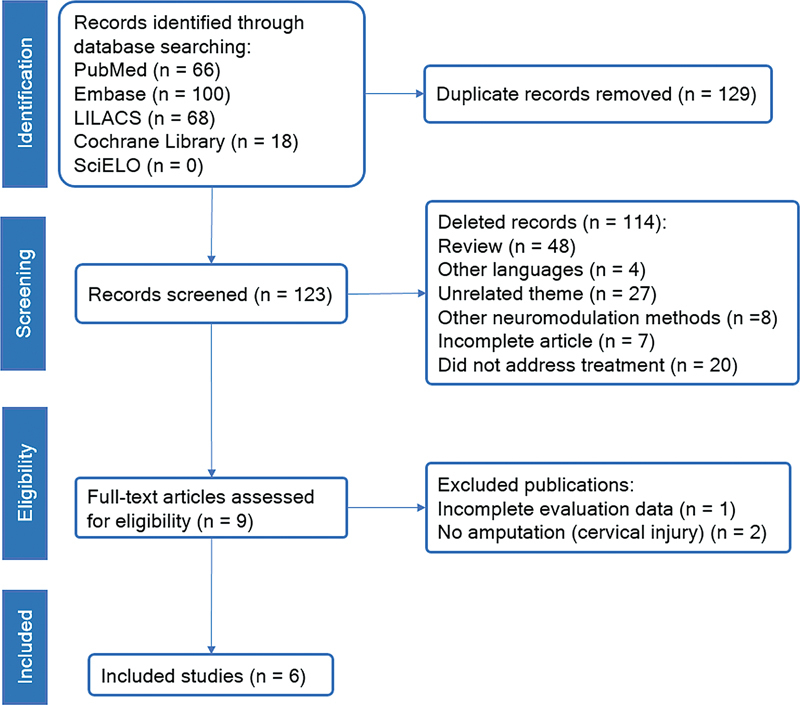
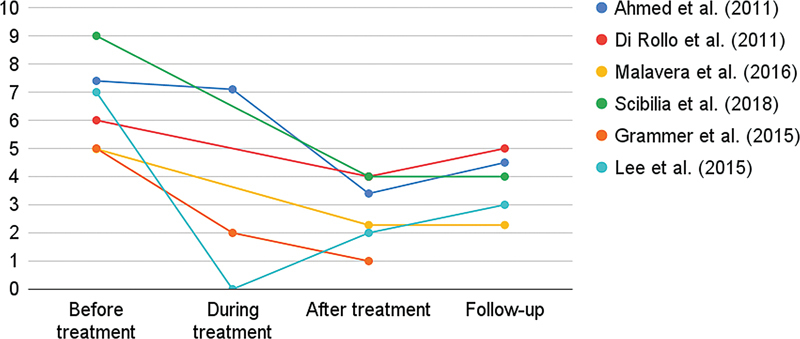
Two hundred and fifty two articles were identified. Two hundred and forty six publications were removed because they were duplicated or met the exclusion criteria. After selection, six studies were reviewed, those being two randomized clinical trials and four case reports. All evaluated studies indicated some degree of benefit of rTMS to relieve painful symptoms, even temporarily. Pain perception was lower at the end of treatment when compared to the period prior to the sessions and remained during patient follow-up. There was no standardization of the stimulation parameters used. There were no reports of serious adverse events. The effects of long-term therapy have not been evaluated.
There are some benefits, even if temporary, in the use of rTMS to relieve painful symptoms in PLP. High-frequency stimulation at M1 demonstrated a significant analgesic effect. Given the potential that has been demonstrated, but limited by the paucity of high-quality studies, further controlled studies are needed to establish and standardize the clinical use of the method.
幻肢痛(PLP)发生在截肢后,可能以慢性和衰弱的方式持续存在。重复经颅磁刺激(rTMS)是一种非侵入性的神经调节方法,能够影响大脑功能并调节皮质兴奋性。其治疗慢性疼痛的效果很有前景。
评估 rTMS 治疗 PLP 的疗效和安全性证据,观察使用的刺激参数、副作用和治疗益处。
这是一项使用电子平台对国内外文献中发表的科学文章进行的系统综述。
共确定了 252 篇文章。由于重复或符合排除标准,246 篇出版物被排除在外。经过选择,共审查了 6 项研究,其中包括 2 项随机临床试验和 4 项病例报告。所有评估的研究都表明 rTMS 在缓解疼痛症状方面具有一定程度的益处,甚至是暂时的。与治疗前相比,治疗结束时疼痛感知降低,并且在患者随访期间仍然存在。使用的刺激参数没有标准化。没有报告严重不良事件。尚未评估长期治疗的效果。
rTMS 用于缓解 PLP 中的疼痛症状具有一定的益处,即使是暂时的。M1 处的高频刺激显示出显著的镇痛效果。鉴于已经证明的潜力,但由于高质量研究的缺乏,需要进一步的对照研究来建立和规范该方法的临床应用。