UNINPSI, Dpto. de Psicología, Universidad Pontificia Comillas, Madrid, Spain.
Eur J Psychotraumatol. 2024;15(1):2306747. doi: 10.1080/20008066.2024.2306747. Epub 2024 Jan 30.
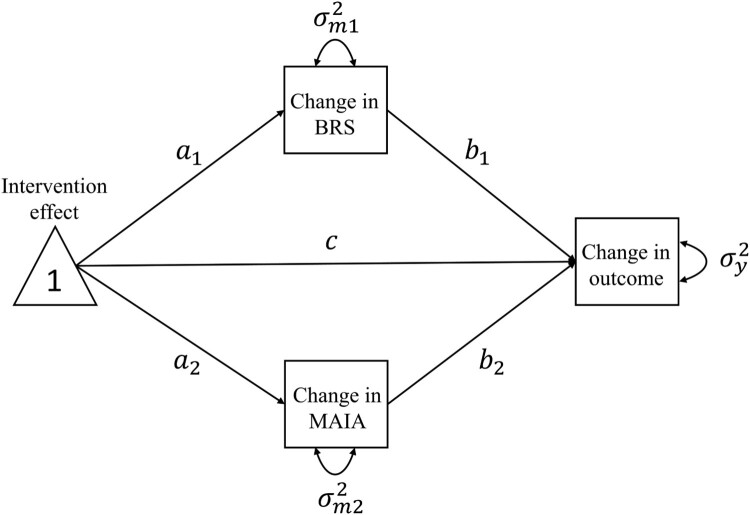
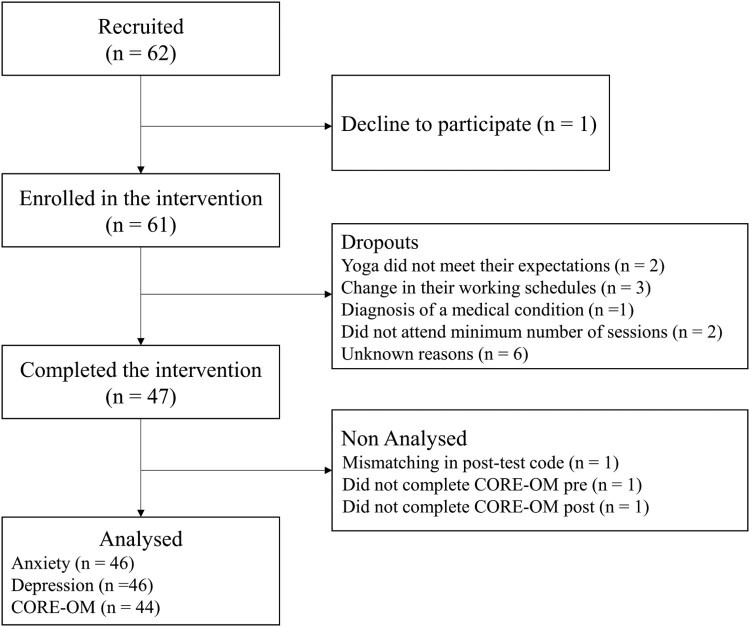
Altered interoception plays an important role in chronic stress and posttraumatic stress disorder. The aim of this study was to evaluate the feasibility of a Trauma Sensitive Yoga (TSY) intervention for improving emotional distress and psychological discomfort in women living under circumstances of social and gender vulnerability. We assessed the effect of the treatment on the interoceptive mechanisms, and whether the psychological improvements were mediated by the changes in these mechanisms. The study involved a sample of 62 women who attended public community centres dedicated to supporting women victims of gender-based violence or who were socially and economically disadvantaged because of their gender. Participants underwent a six-week TSY programme. We evaluated dropout rate, adherence, and intervention satisfaction. We measured emotional distress, psychological discomfort, interoceptive mechanisms, and two nonequivalent dependent variables to enhance internal validity. We compared pre-post differences using paired samples -test and a structural equation model (SEM) analysis was performed to compare the changes in the outcomes with the changes in the nonequivalent dependent variables. Mediation models were adjusted to evaluate the role of changes in interoception on outcome changes. Fourteen (23%) women dropped out, mainly after the first intervention session. Intervention adherence (mean attendance 5.3 over 6 sessions) and acceptability were high (mean satisfaction 3.4 over 4). We observed post-intervention improvements in anxiety, depression, psychological discomfort, body responsiveness, and interoceptive awareness. The changes in the outcomes were larger than the changes in the nonequivalent dependent variables. Additionally, we found that the changes in body responsiveness partially mediated the change in anxiety and psychological discomfort but not in depression. TSY could be an interesting therapeutic approach for women experiencing chronic posttraumatic stress symptomatology. Our findings underscore the role of interoceptive mechanisms in traumatic stress and emphasize the importance of addressing these aspects.
内脏感知改变在慢性应激和创伤后应激障碍中起着重要作用。本研究旨在评估创伤敏感瑜伽(TSY)干预对于改善处于社会和性别弱势环境中的女性的情绪困扰和心理不适的可行性。我们评估了治疗对内脏感知机制的影响,以及这些机制的变化是否介导了心理改善。该研究涉及 62 名女性,她们参加了专门为性别暴力受害妇女或因性别而处于社会和经济弱势地位的妇女提供支持的公共社区中心。参与者接受了为期六周的 TSY 方案。我们评估了辍学率、依从性和干预满意度。我们测量了情绪困扰、心理不适、内脏感知机制,以及两个不等效的因变量,以提高内部有效性。我们使用配对样本 t 检验比较了前后差异,并进行了结构方程模型(SEM)分析,以比较结果的变化与不等效因变量的变化。调整了中介模型,以评估内脏感知变化对结果变化的作用。14 名(23%)女性辍学,主要是在第一次干预后。干预依从性(6 次干预中平均出席 5.3 次)和可接受性很高(4 分中平均满意度为 3.4 分)。我们观察到干预后焦虑、抑郁、心理不适、身体反应性和内脏感知意识的改善。结果的变化大于不等效因变量的变化。此外,我们发现身体反应性的变化部分中介了焦虑和心理不适的变化,但对抑郁没有影响。TSY 可能是一种治疗慢性创伤后应激症状女性的有趣方法。我们的研究结果强调了内脏感知机制在创伤性应激中的作用,并强调了解决这些方面的重要性。