Royapuram Parthasarathy Parameswari, E Ilammaran Varshan, Shanmugam Rajeshkumar
Pharmacology, Centre for Transdisciplinary Research, Saveetha Dental College and Hospitals, Saveetha Institute of Medical and Technical Sciences, Saveetha University, Chennai, IND.
Pharmacology, Centre for Global Health Research, Saveetha Medical College and Hospitals, Saveetha Institute of Medical and Technical Sciences, Saveetha University, Chennai, IND.
Cureus. 2023 Dec 30;15(12):e51356. doi: 10.7759/cureus.51356. eCollection 2023 Dec.
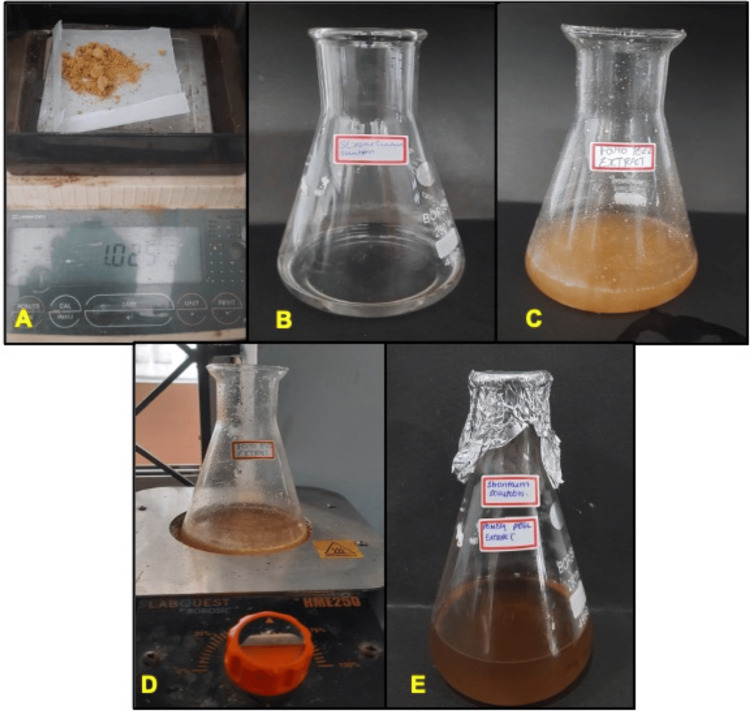
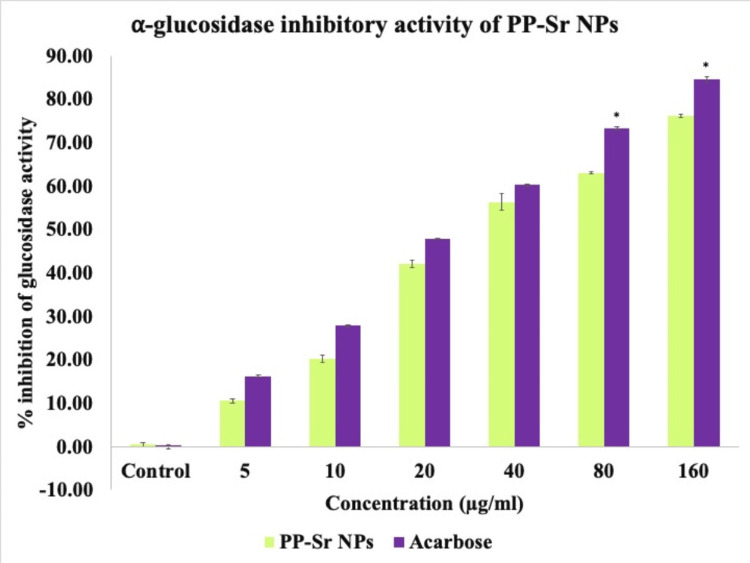
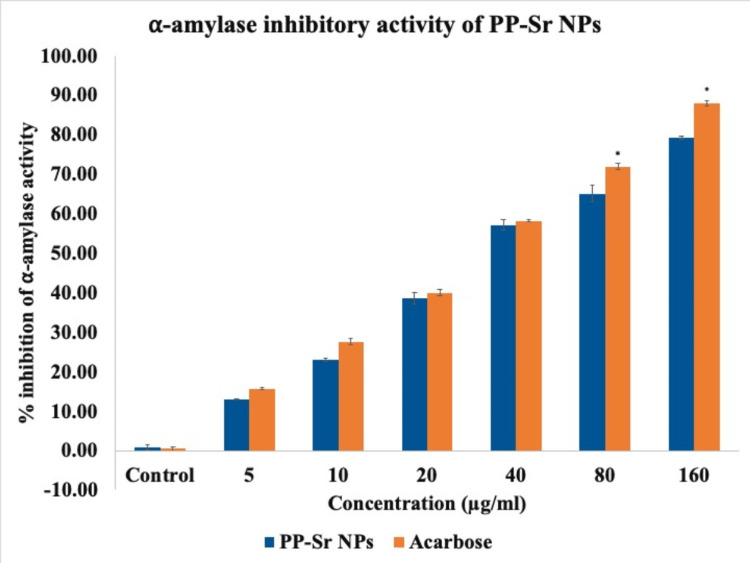
Introduction Type 2 diabetes mellitus and its associated health complications represent a significant public health issue due to its wide prevalence. The primary disadvantages of current oral anti-diabetic drugs are their limited bio-availability and their quick release, which necessitates more frequent dosing. Similar limitations are encountered when using natural products for the management of type 2 diabetes. Consequently, nanoparticles have been developed with the goal of enhancing the physicochemical stability of the drugs, thereby improving their bio-availability. In view of the given background, the present study aimed to explore the efficacy of strontium nanoparticles derived from pomegranate peel extract in managing type 2 diabetes mellitus. Materials and methods The aqueous extract of pomegranate peel was prepared using standard protocol and the strontium nanoparticles were prepared by green synthesis method using pomegranate peel extract. The prepared aqueous extract of pomegranate peel and the nanoparticles were assessed for their inhibitory potential against α-amylase and α-glucosidase enzymes activity by 3,5-dinitrosalicylic acid (DNSA) and p-nitro-phenyl-ɑ-D glucopyranoside (p-NPG) assays, respectively. Results The pomegranate peel-mediated strontium nanoparticles (PP-Sr NPs) and standard acarbose were assessed for their inhibitory effect against diabetic enzymes, α-amylase, and α-glucosidase at different concentrations range of 5-160 μg/ml. The results showed that PP-Sr NPs exhibited a maximum inhibition of 79.28% and 76.17% against α-amylase and α-glucosidase respectively at the highest concentration of 160 μg/ml. Acarbose showed a maximum inhibition of 88.02% and 84.47% against α-amylase and α-glucosidase respectively at 160 μg/ml. The inhibitory effect of the PP-Sr NPs and standard acarbose was found to be concentration-dependent. Conclusion From the results, it is concluded that the PP-Sr NPs may be useful for decreasing postprandial glucose levels. Further studies using in vitro cell lines and in vivo diabetic models may substantiate the antidiabetic potential of PP-Sr NPs.
引言 2型糖尿病及其相关健康并发症因其广泛流行而成为一个重大的公共卫生问题。当前口服抗糖尿病药物的主要缺点是其生物利用度有限且释放迅速,这就需要更频繁地给药。在使用天然产物治疗2型糖尿病时也会遇到类似的局限性。因此,人们开发了纳米颗粒,目的是提高药物的物理化学稳定性,从而提高其生物利用度。鉴于上述背景,本研究旨在探讨石榴皮提取物衍生的锶纳米颗粒治疗2型糖尿病的疗效。
材料与方法 采用标准方案制备石榴皮水提取物,并采用绿色合成法利用石榴皮提取物制备锶纳米颗粒。分别通过3,5-二硝基水杨酸(DNSA)法和对硝基苯基-α-D-吡喃葡萄糖苷(p-NPG)法评估所制备的石榴皮水提取物和纳米颗粒对α-淀粉酶和α-葡萄糖苷酶活性的抑制潜力。
结果 在5-160μg/ml的不同浓度范围内,评估了石榴皮介导的锶纳米颗粒(PP-Sr NPs)和标准阿卡波糖对糖尿病酶α-淀粉酶和α-葡萄糖苷酶的抑制作用。结果表明,在最高浓度160μg/ml时,PP-Sr NPs对α-淀粉酶和α-葡萄糖苷酶的最大抑制率分别为79.28%和76.17%。阿卡波糖在160μg/ml时对α-淀粉酶和α-葡萄糖苷酶的最大抑制率分别为88.02%和84.47%。发现PP-Sr NPs和标准阿卡波糖的抑制作用呈浓度依赖性。
结论 从结果可以得出结论,PP-Sr NPs可能有助于降低餐后血糖水平。使用体外细胞系和体内糖尿病模型的进一步研究可能会证实PP-Sr NPs的抗糖尿病潜力。