Department of Pharmacy, Southeast University, 252, Tejgaon Industrial Area, Dhaka, 1208, Bangladesh.
Department of Pharmacy, School of Pharmaceutical Sciences, State University of Bangladesh, South Purbachal, Kanchan, Dhaka, 1461, Bangladesh.
BMC Complement Med Ther. 2024 Feb 1;24(1):69. doi: 10.1186/s12906-024-04337-0.
Litsea glutinosa (Lour.) C. B. Rob. belongs to the Litsea genus and is categorized under the family of Lauraceae. The study aimed to investigate the phytoconstituents and pharmacological properties of methanol extract of leaves of Litsea glutinosa, focusing on antidiabetic activity via in vivo and in silico techniques.
Extensive chromatographic and spectroscopic techniques were applied to isolate and characterize the constituents from the L. glutinosa plant species. The antidiabetic activity was studied in streptozotocin-induced diabetes mice, and the computational study of the isolated compounds was carried out by utilizing AutoDock Vina programs. In addition, the pharmacokinetic properties in terms of absorption, distribution, metabolism and excretion (ADME) and toxicological profiles of the isolated compounds were examined via in silico techniques.
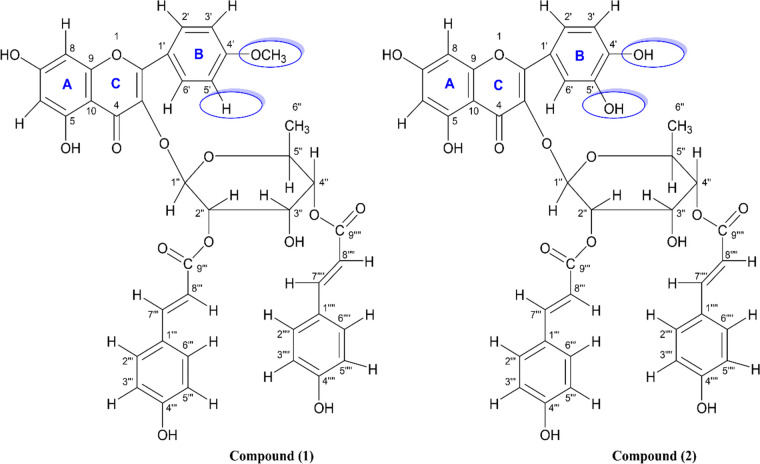
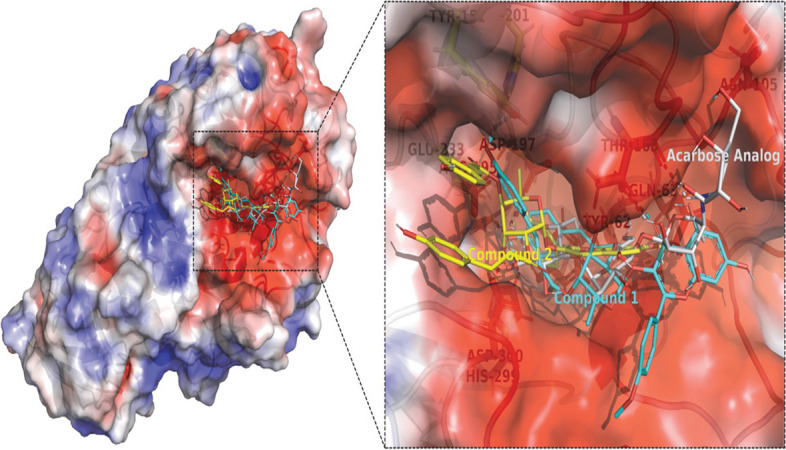
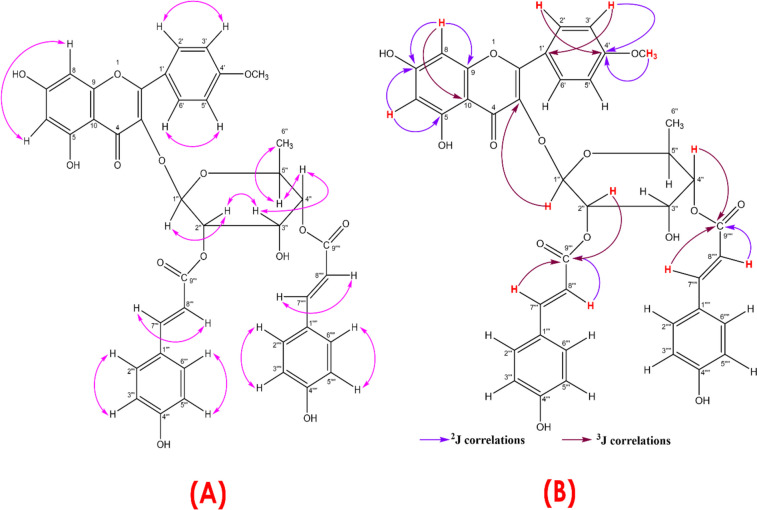
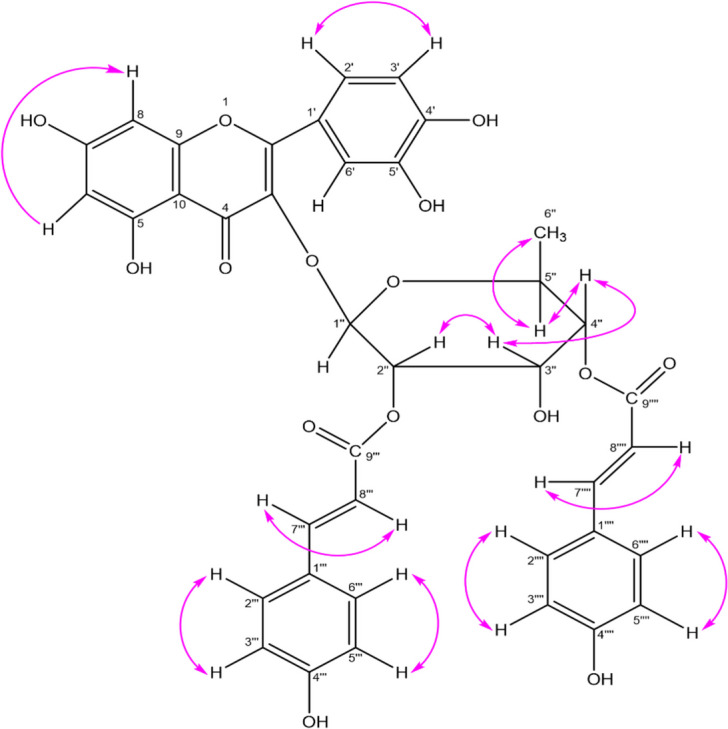
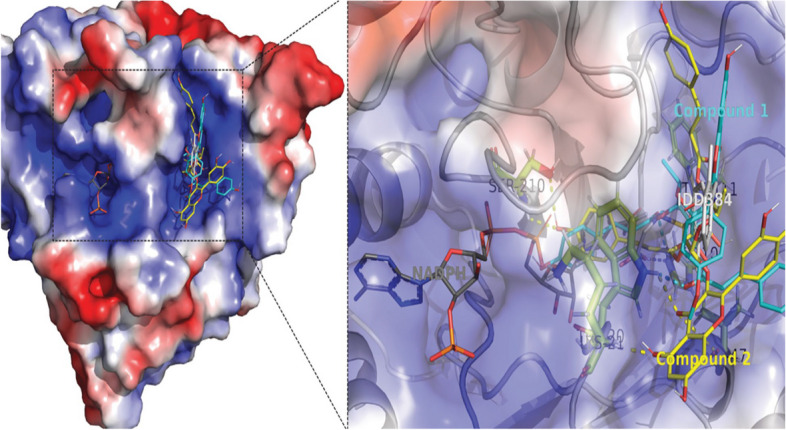
In the present study, two flavonoid glycosides 4΄-O-methyl (2 ̋,4 ̋-di-E-p-coumaroyl) afzelin (1) and quercetin 3-O-(2 ̋,4 ̋-di-E-p-coumaroyl)-α-L-rhamnopyranoside (2) were isolated from the leaves of L. glutinosa and characterized by H and C NMR, COSY, HSQC, HMBC, and mass spectral data. Although compounds 1 and 2 have been reported twice from Machilis litseifolia and Lindera akoensis, and Machilis litseifolia and Mammea longifolia, respectively, this is the first report of this isolation from a Litsea species. Administering the methanolic extract of L. glutinosa at doses of 300 and 500 mg/kg/day to mice with diabetes induced by streptozotocin led to a significant decrease in fasting blood glucose levels (p < 0.05) starting from the 7th day of treatment. Besides, the computational study and PASS analysis endorsed the current in vivo findings that the both isolated compounds exerted higher binding affinities to human pancreatic α-amylase and aldose reductase than the conventional drugs. The in silico ADMET analysis revealed that the both isolated compounds have a favorable pharmacokinetic and safety profile suitable for human consumption.
According to the current outcomes obtained from in vivo and in silico techniques, the leaf extract of L. glutinosa could be a natural remedy for treating diabetes, and the isolated phytoconstituents could be applied against various illnesses, mainly hyperglycemia. However, more investigations are required for extensive phytochemical isolation and pharmacological activities of these phytoconstituents against broader targets with exact mechanisms of action.
山鸡椒(Litsea glutinosa(Lour.)C. B. Rob.)属于山鸡椒属,归樟科。本研究旨在通过体内和体外技术研究山鸡椒甲醇叶提取物的植物化学成分和药理活性,重点研究其抗糖尿病活性。
采用广泛的色谱和光谱技术从山鸡椒植物中分离和鉴定成分。在链脲佐菌素诱导的糖尿病小鼠中研究抗糖尿病活性,并利用 AutoDock Vina 程序对分离得到的化合物进行计算研究。此外,通过计算机技术评估分离化合物的吸收、分布、代谢和排泄(ADME)的药代动力学特性和毒理学特征。
本研究从山鸡椒叶中分离得到两种黄酮糖苷化合物 4΄-O-甲基(2 ̋,4 ̋-二 E-对香豆酰基)afzelin(1)和槲皮素 3-O-(2 ̋,4 ̋-二 E-对香豆酰基)-α-L-鼠李吡喃糖苷(2),并通过 1H 和 13C NMR、COSY、HSQC、HMBC 和质谱数据进行了表征。虽然化合物 1 和 2 曾两次从 Machilis litseifolia 和 Lindera akoensis 以及 Machilis litseifolia 和 Mammea longifolia 中报道过,但这是首次从山鸡椒属植物中分离得到。从第 7 天开始,给予链脲佐菌素诱导糖尿病的小鼠 300 和 500mg/kg/天的山鸡椒甲醇提取物,可显著降低空腹血糖水平(p<0.05)。此外,计算研究和 PASS 分析支持了当前的体内发现,即这两种分离化合物对人胰腺α-淀粉酶和醛糖还原酶的结合亲和力均高于常规药物。计算机 ADMET 分析表明,这两种分离化合物具有良好的药代动力学和安全性特征,适合人类使用。
根据体内和体外技术获得的当前结果,山鸡椒叶提取物可能是治疗糖尿病的天然药物,分离的植物化学成分可用于治疗各种疾病,主要是高血糖症。然而,需要进行更广泛的植物化学分离和这些植物化学成分对更广泛靶点的药理活性研究,以明确其作用机制。