Brooks-Russell Ashley, Wrobel Julia, Brown Tim, Bidwell L Cinnamon, Wang George Sam, Steinhart Benjamin, Dooley Gregory, Kosnett Michael J
Injury and Violence Prevention Center, Colorado School of Public Health, University of Colorado Anschutz Medical Campus, 13001 E. 17Th Place, Aurora, CO, 80045, USA.
Department of Biostatistics and Informatics, Colorado School of Public Health, University of Colorado Anschutz Medical Campus, Aurora, CO, USA.
J Cannabis Res. 2024 Feb 3;6(1):3. doi: 10.1186/s42238-024-00215-1.
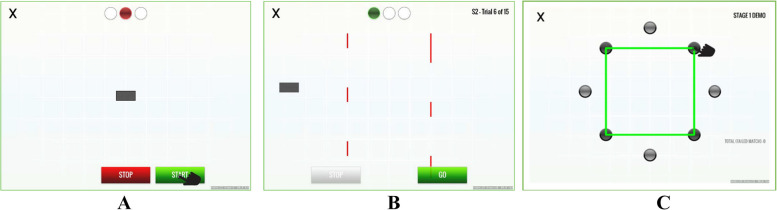
Acute cannabis use has been demonstrated to slow reaction time and affect decision-making and short-term memory. These effects may have utility in identifying impairment associated with recent use. However, these effects have not been widely investigated among individuals with a pattern of daily use, who may have acquired tolerance. The purpose of this study was to examine the impact of tolerance to cannabis on the acute effects as measured by reaction time, decision-making (gap acceptance), and short-term memory.
Participants (ages 25-45) completed a tablet-based (iPad) test battery before and approximately 60 min after smoking cannabis flower. The change in performance from before to after cannabis use was compared across three groups of cannabis users: (1) occasional use (n = 23); (2) daily use (n = 31); or (3) no current use (n = 32). Participants in the occasional and daily use group self-administered ad libitum, by smoking or vaping, self-supplied cannabis flower with a high concentration of total THC (15-30%).
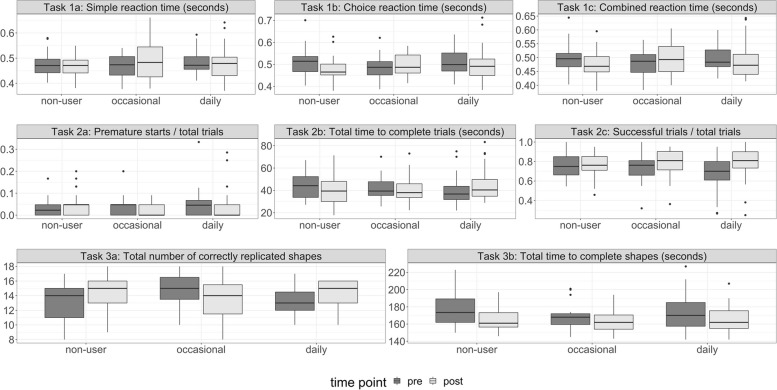
The occasional use group exhibited decrements in reaction time (slowed) and short-term memory (replicated fewer shapes) from before to after cannabis use, as compared to the no-use group. In the gap acceptance task, daily use participants took more time to complete the task post-smoking cannabis as compared to those with no use or occasional use; however, the level of accuracy did not significantly change.
The findings are consistent with acquired tolerance to certain acute psychomotor effects with daily cannabis use. The finding from the gap acceptance task which showed a decline in speed but not accuracy may indicate a prioritization of accuracy over response time. Cognitive and psychomotor assessments may have utility for identifying impairment associated with recent cannabis use.
急性大麻使用已被证明会减慢反应时间,影响决策和短期记忆。这些影响可能有助于识别与近期使用相关的功能损害。然而,在可能已产生耐受性的日常使用者中,这些影响尚未得到广泛研究。本研究的目的是检验大麻耐受性对通过反应时间、决策(间隙接受)和短期记忆测量的急性影响。
参与者(年龄25 - 45岁)在吸食大麻花之前和之后约60分钟完成基于平板电脑(iPad)的测试组。比较了三组大麻使用者在使用大麻前后的表现变化:(1)偶尔使用组(n = 23);(2)每日使用组(n = 31);或(3)当前不使用者(n = 32)。偶尔使用组和每日使用组的参与者通过吸烟或吸电子烟自由服用自行提供的总THC浓度高(15 - 30%)的大麻花。
与不使用组相比,偶尔使用组在使用大麻前后反应时间(减慢)和短期记忆(复制的形状减少)出现下降。在间隙接受任务中,与不使用或偶尔使用的参与者相比,每日使用的参与者在吸食大麻后完成任务花费的时间更多;然而,准确性水平没有显著变化。
研究结果与日常使用大麻对某些急性精神运动效应产生耐受性一致。间隙接受任务的结果显示速度下降但准确性未下降,这可能表明准确性优先于反应时间。认知和精神运动评估可能有助于识别与近期大麻使用相关的功能损害。