Ferreira Leonardo Z, Wehrmeister Fernando C, Dirksen Jakob, Vidaletti Luis Paulo, Pinilla-Roncancio Monica, Kirkby Katherine, Ricardo Luiza Ic, Barros Aluisio Jd, Hosseinpoor Ahmad Reza
International Center for Equity in Health, Universidade Federal de Pelotas, R. Marechal Deodoro 1160, Centro, Pelotas, Brazil.
Oxford Poverty and Human Development Initiative, University of Oxford, Oxford, England.
Bull World Health Organ. 2024 Feb 1;102(2):105-116. doi: 10.2471/BLT.23.290866. Epub 2023 Dec 8.
To examine inequalities in the coverage of reproductive and maternal health interventions in low- and middle-income countries and territories using a composite index of socioeconomic deprivation status.
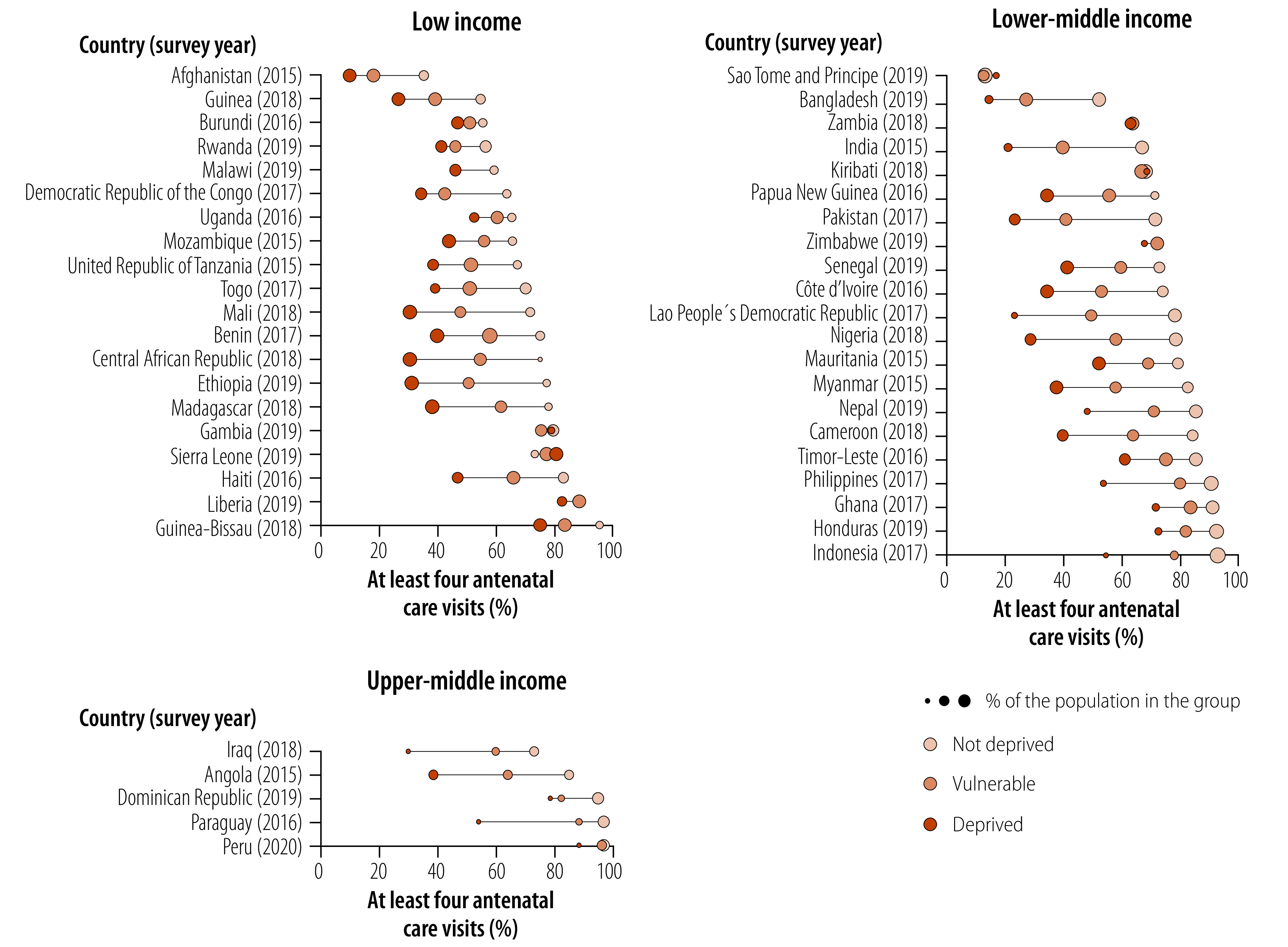
We obtained data on education and living standards from national household surveys conducted between 2015 and 2019 to calculate socioeconomic deprivation status. We assessed the coverage of reproductive and maternal health interventions, using three indicators: (i) demand for family planning satisfied with modern methods; (ii) women who received antenatal care in at least four visits; and (iii) the presence of a skilled attendant at delivery. Absolute and relative inequalities were evaluated both directly and using the slope index of inequality and the concentration index.
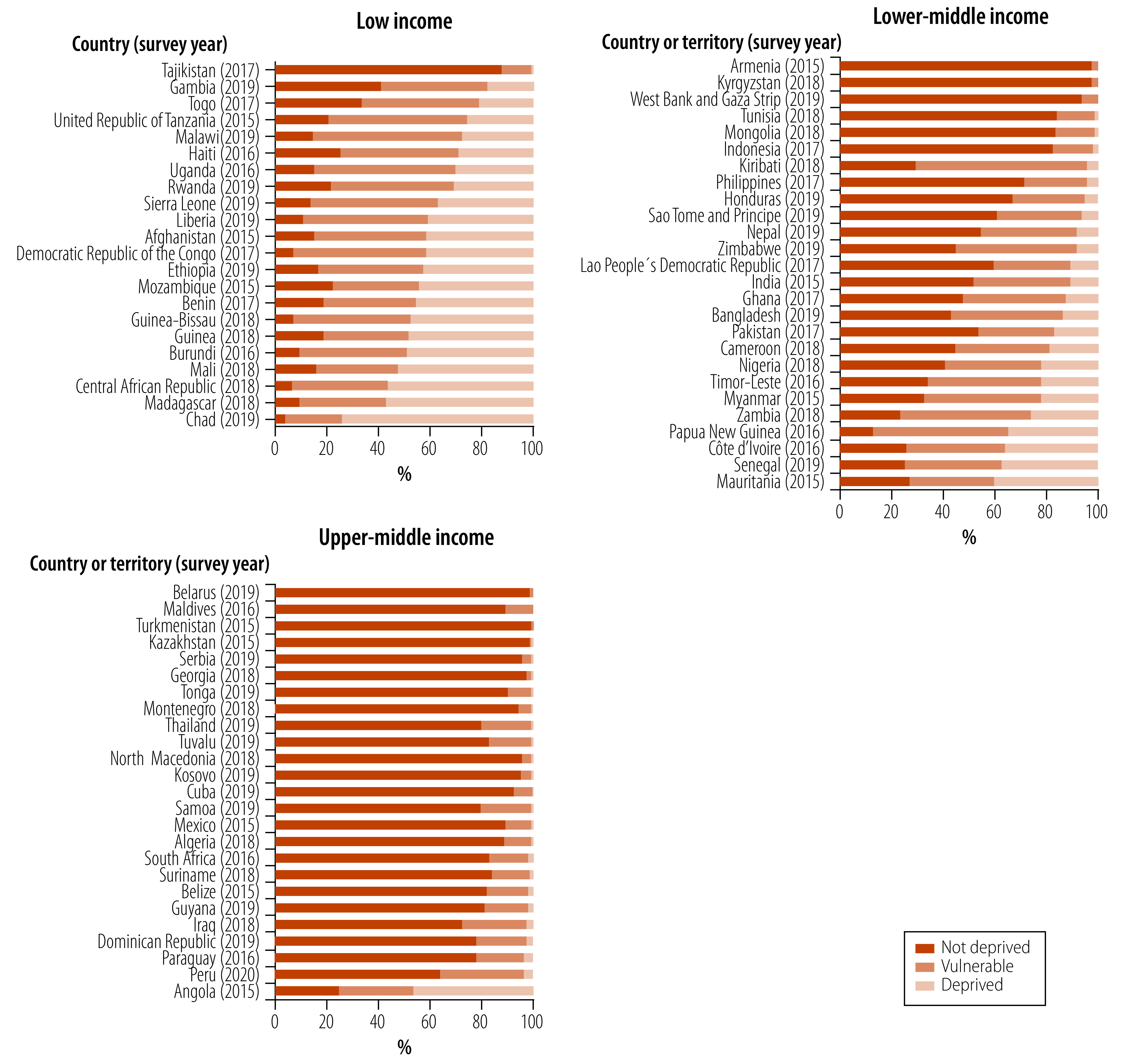
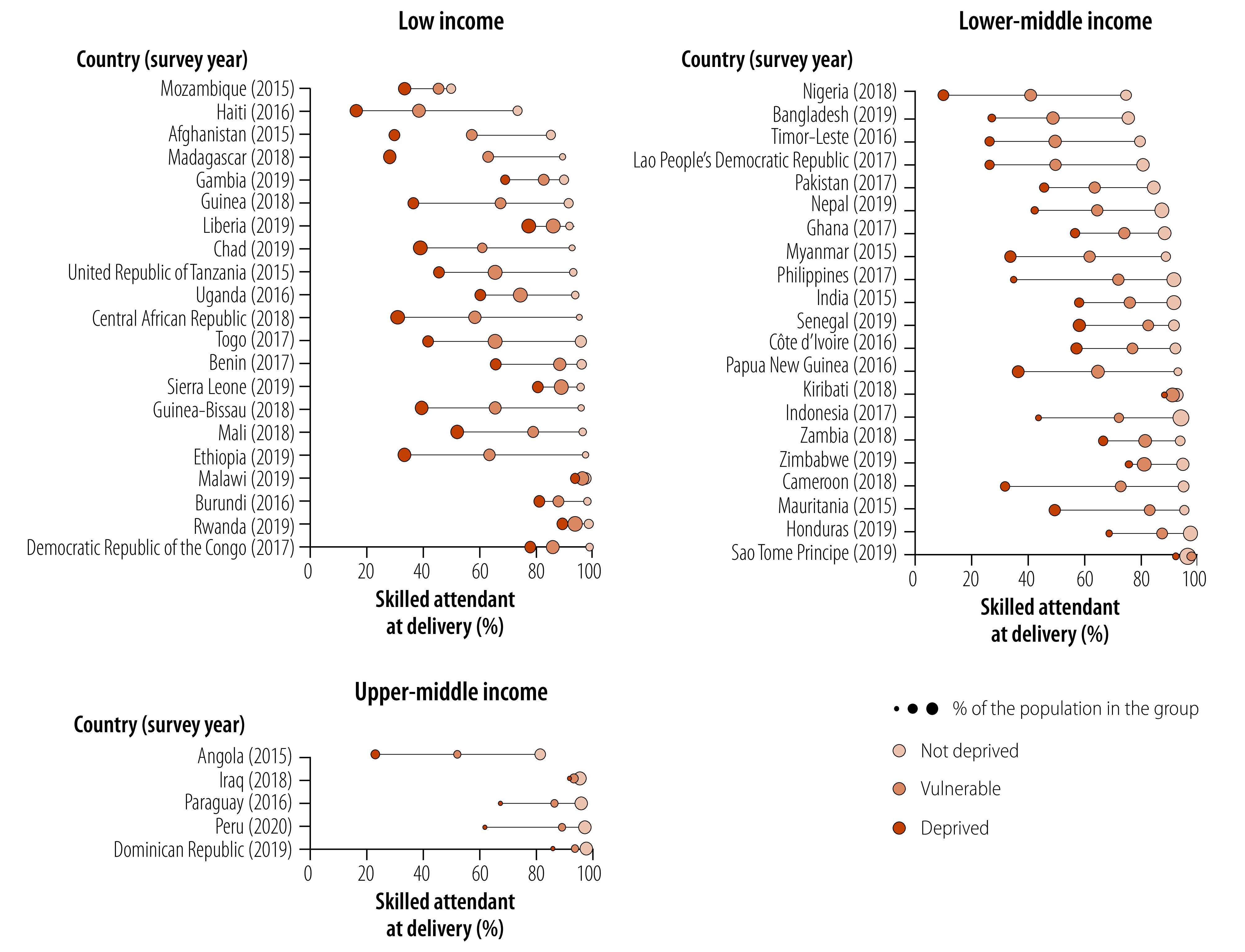
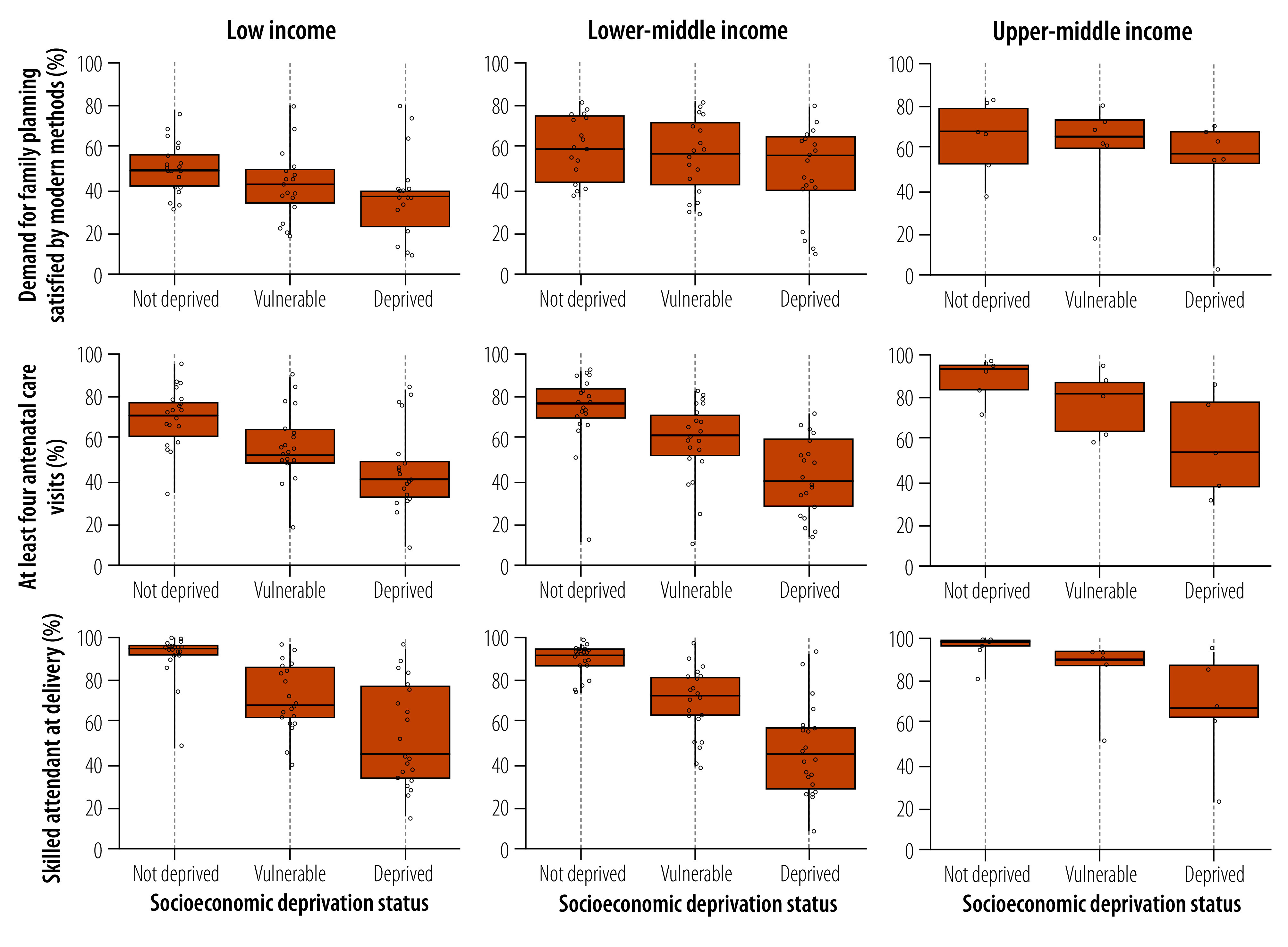
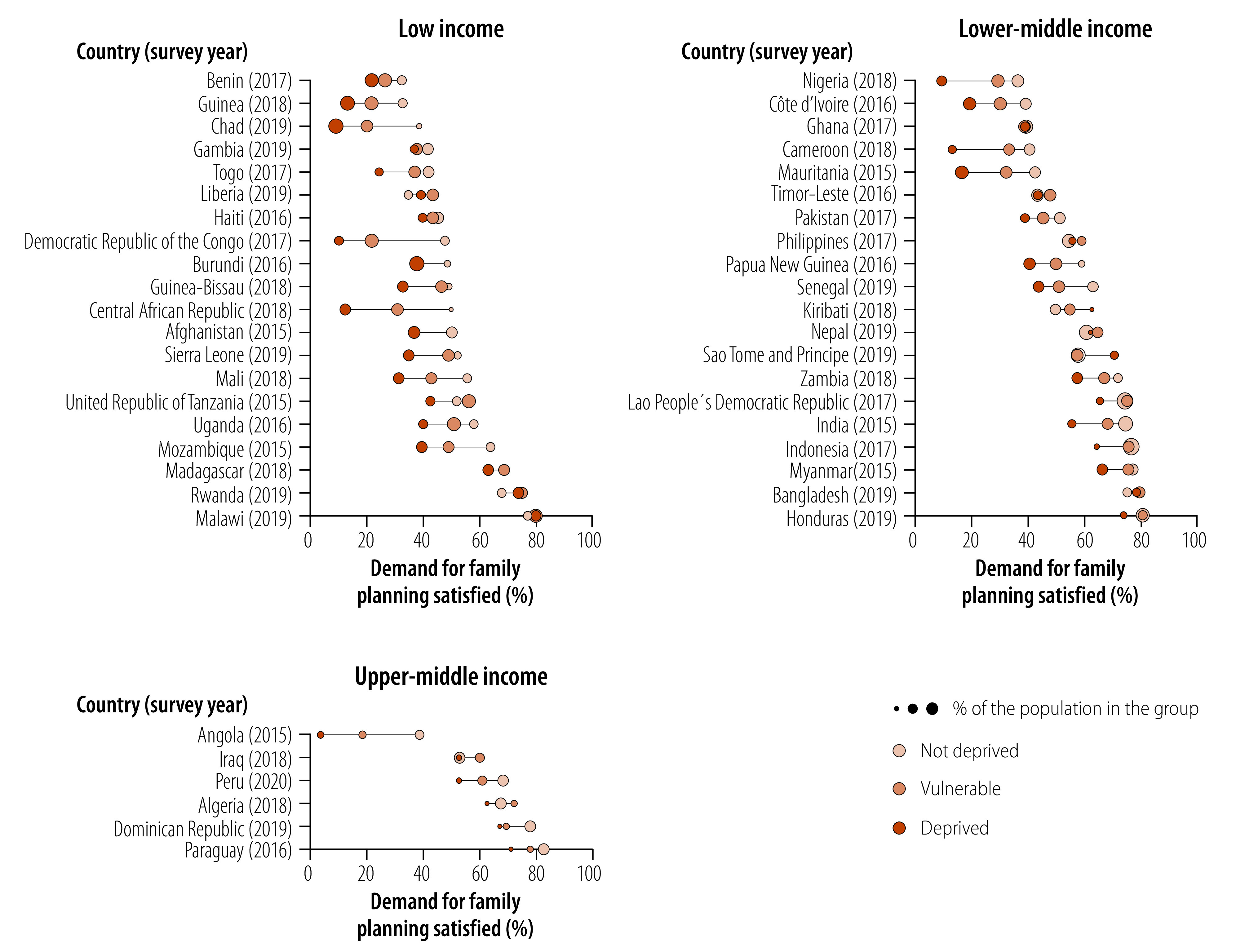
In the 73 countries and territories with available data, the median proportions of deprivation were 41% in the low-income category, 11% in the lower-middle-income category and less than 1% in the upper-middle-income category. The coverage analysis, conducted for 48 countries with sufficient data, showed consistently lower median coverage among deprived households across all health indicators. The coverage of skilled attendant at delivery showed the largest inequalities, where coverage among the socioeconomically deprived was substantially lower in almost all countries. Antenatal care visits and demand for family planning satisfied with modern methods also showed significant disparities, favouring the less deprived population.
The findings highlight persistent disparities in the coverage of reproductive and maternal health interventions, requiring efforts to reduce those disparities and improve coverage, particularly for skilled attendant at delivery.
利用社会经济剥夺状况综合指数,研究低收入和中等收入国家及地区生殖健康和孕产妇健康干预措施覆盖情况的不平等现象。
我们从2015年至2019年期间开展的全国家庭调查中获取教育和生活水平数据,以计算社会经济剥夺状况。我们使用三个指标评估生殖健康和孕产妇健康干预措施的覆盖情况:(i)采用现代方法满足计划生育需求;(ii)至少接受四次产前检查的妇女;(iii)分娩时有熟练医护人员在场。直接以及使用不平等斜率指数和集中指数评估绝对和相对不平等情况。
在有数据可用的73个国家和地区中,低收入类别中剥夺的中位数比例为41%,中低收入类别为11%,中高收入类别低于1%。对48个有足够数据的国家进行的覆盖情况分析表明,在所有健康指标方面,贫困家庭的中位数覆盖水平始终较低。分娩时有熟练医护人员在场这一指标的覆盖情况显示出最大的不平等,几乎在所有国家,社会经济贫困人群的覆盖水平都大幅较低。产前检查次数以及采用现代方法满足计划生育需求也存在显著差异,惠及贫困程度较低的人群。
研究结果凸显了生殖健康和孕产妇健康干预措施覆盖情况方面持续存在的差距,需要努力缩小这些差距并提高覆盖水平,特别是分娩时有熟练医护人员在场这一指标的覆盖水平。