School of Psychology (A18), University of Sydney, Sydney, NSW, 2006, Australia.
Learn Behav. 2024 Sep;52(3):272-284. doi: 10.3758/s13420-024-00626-3. Epub 2024 Feb 8.
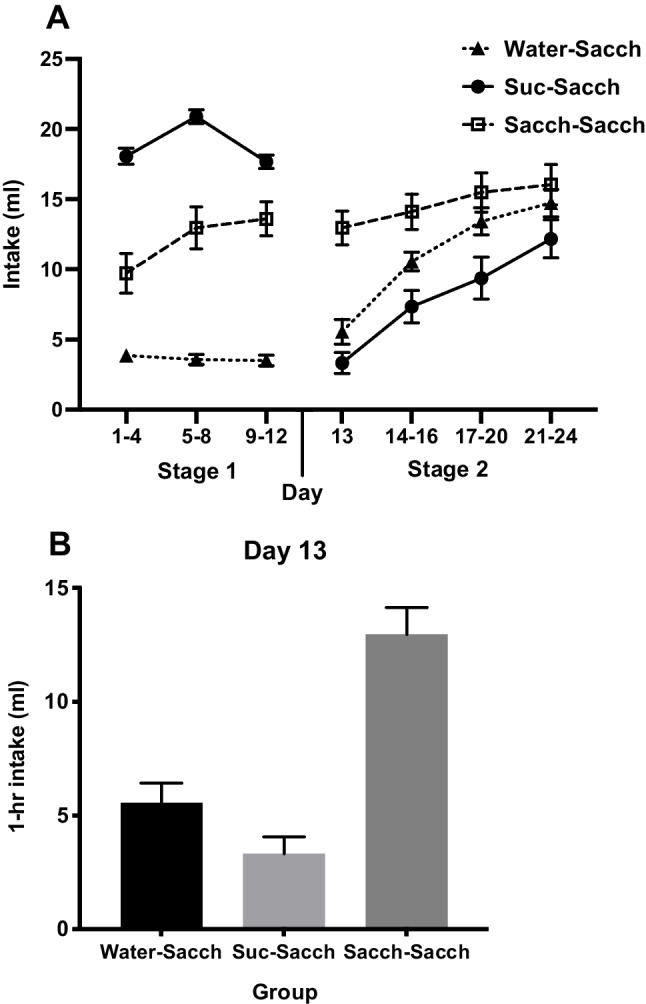
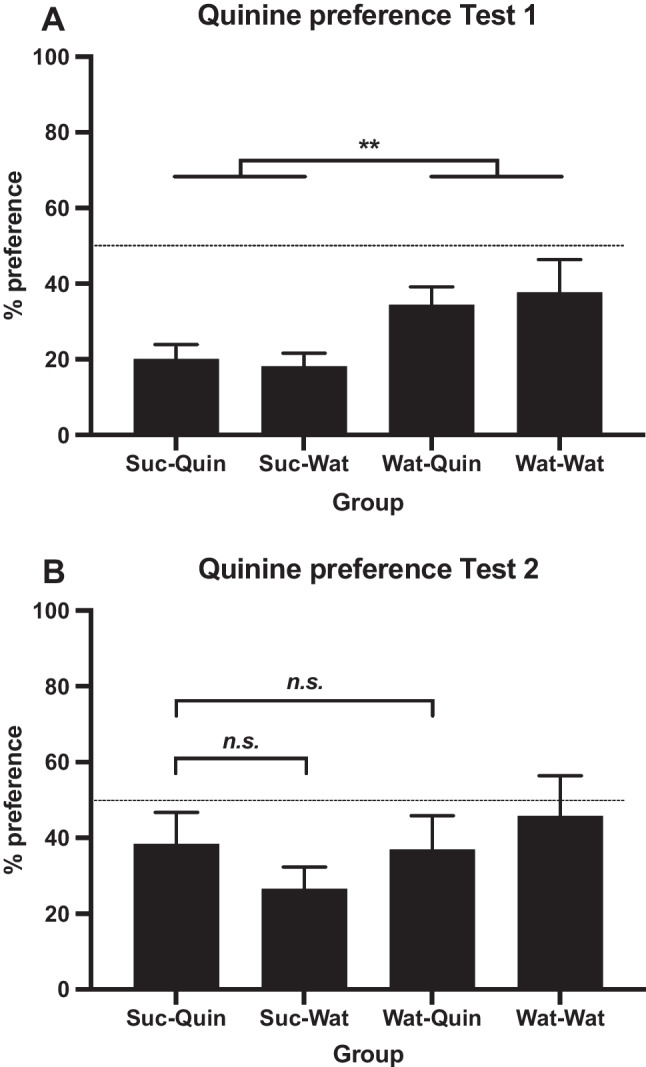
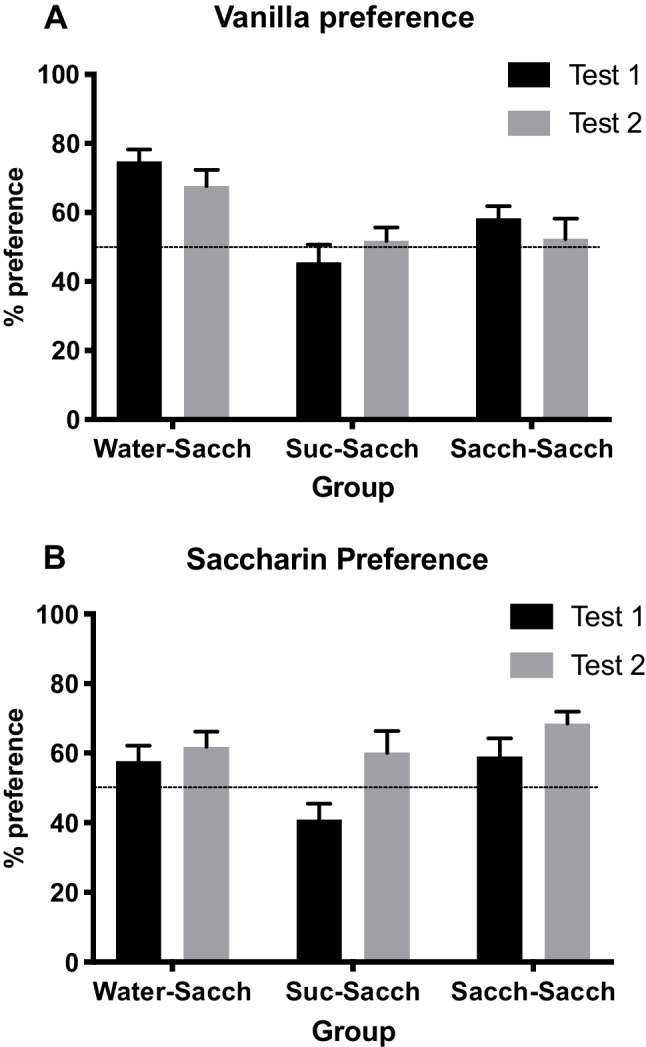
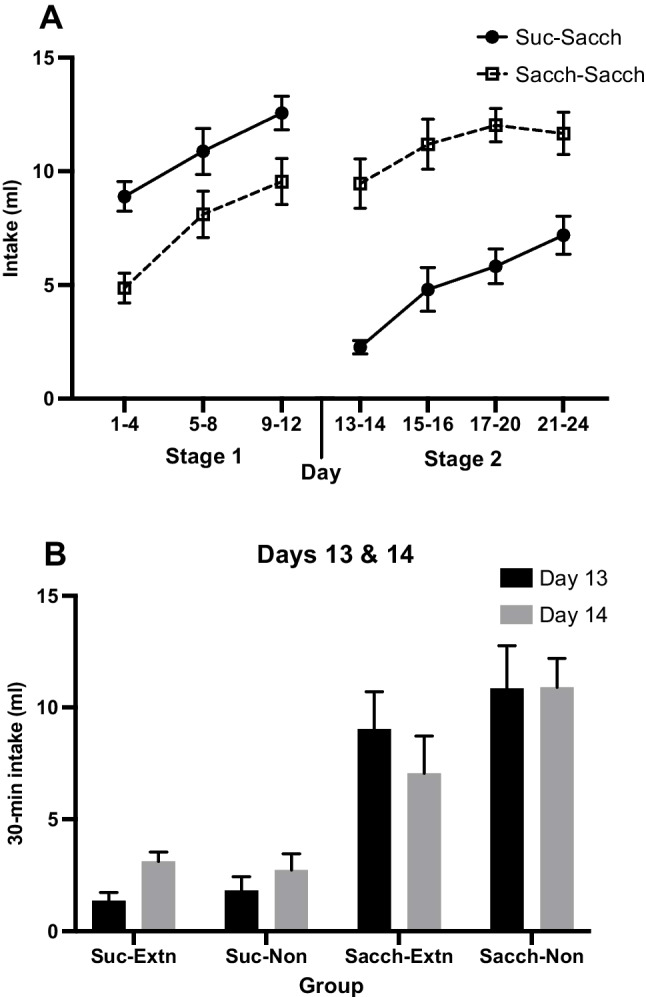
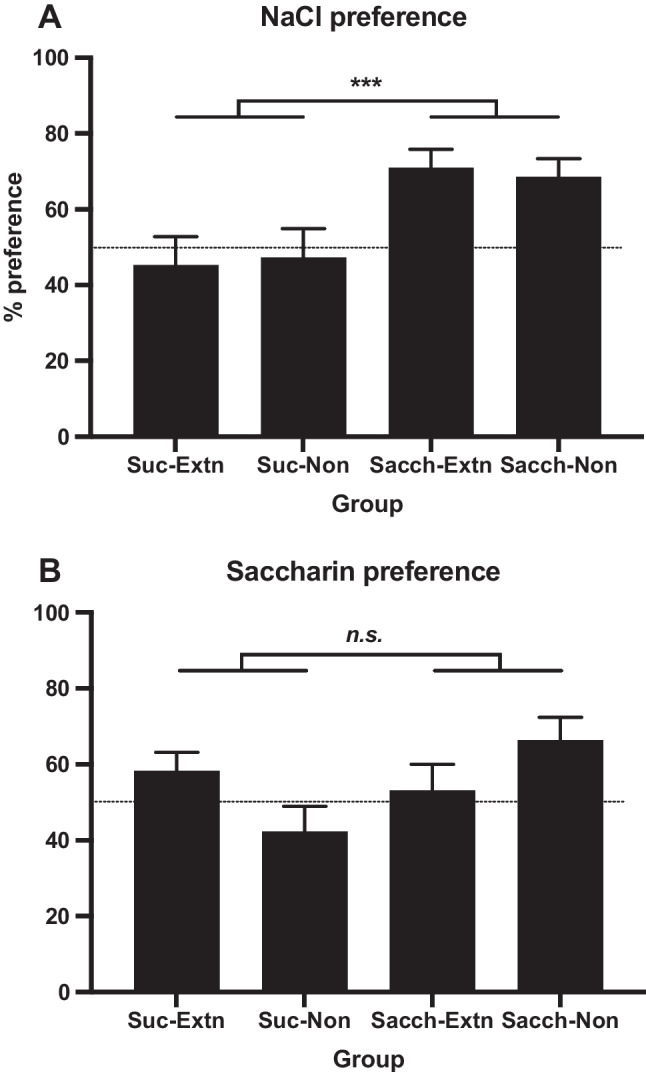
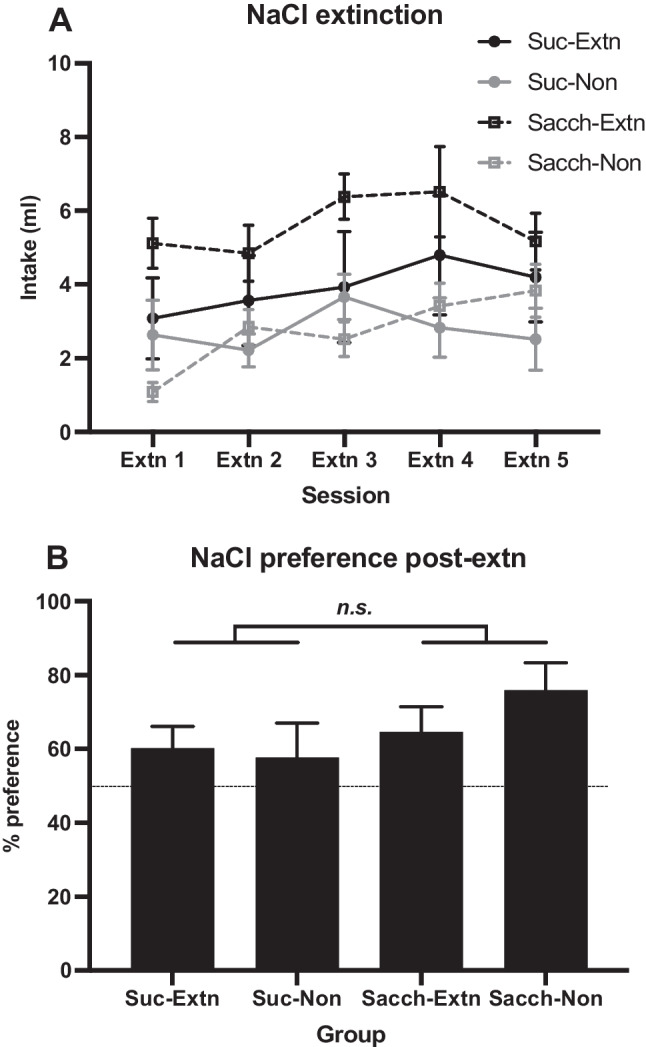
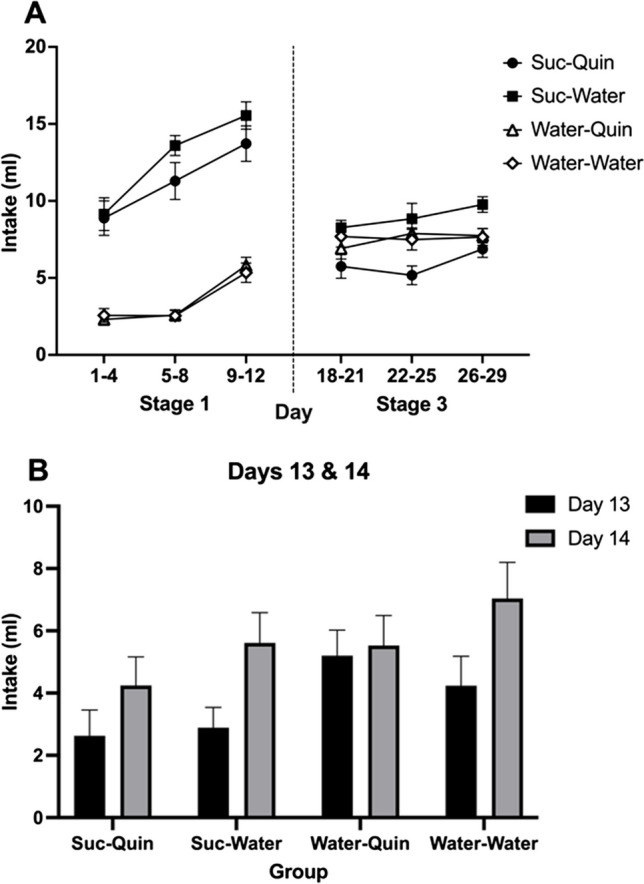
Previous experiments found that acceptance of saccharin by rats was reduced if they had prior experience of sucrose or some other highly palatable solution. This study tested whether such successive negative contrast (SNC) effects involve acquisition of an aversion to the new taste. In three experiments, rats were switched from sucrose exposure in Stage 1 to a less palatable solution containing a new taste in Stage 2. In Experiments 1 and 2, a novel flavor was added to a saccharin solution at the start of Stage 2. In Experiment 1, preference tests revealed a weak aversion to the added vanilla flavor in the Suc-Sacch group, while in Experiment 2 an aversion was found in the Suc-Sacch group to the salty flavor that was used, compared with controls given access either saccharin or water in Stage 1. In Experiment 3, the Suc-Quin group, given quinine solution in Stage 2, displayed a greater aversion to quinine than a Water-Quin control group. These results support the suggestion that taste aversion learning plays a role in the initial suppression of intakes in a qualitative consummatory SNC effect. However, in the light of other evidence, it seems that the unusual persistence of successive negative contrast when rats are switched from sucrose to saccharin is not due to a long-lasting reduction in the value of saccharin.
先前的实验发现,如果大鼠先前有蔗糖或其他高可口溶液的体验,它们对糖精的接受度会降低。本研究测试了这种连续负对比(SNC)效应是否涉及对新味道的厌恶感的获得。在三个实验中,大鼠在第一阶段从蔗糖暴露切换到第二阶段含有新味道的较不可口溶液。在实验 1 和 2 中,在第二阶段开始时向糖精溶液中添加了一种新的味道。在实验 1 中,偏好测试显示,Suc-Sacch 组对添加的香草味有轻微的厌恶感,而在实验 2 中,与在第一阶段给予蔗糖或水的对照组相比,Suc-Sacch 组对所用的咸味有厌恶感。在实验 3 中,在第二阶段给予奎宁溶液的 Suc-Quin 组对奎宁的厌恶感大于 Water-Quin 对照组。这些结果支持了味觉厌恶学习在初始抑制定性饱足 SNC 效应中的摄入量中起作用的观点。然而,鉴于其他证据,当大鼠从蔗糖切换到糖精时,连续负对比的异常持续存在似乎并不是由于糖精的价值长期降低所致。