Qiu Qiaohua, Wang Zhengkai, Lan Liying
College of Textile Science and Engineering, Zhejiang Sci-Tech University, Hangzhou 310018, China.
Polymers (Basel). 2024 Feb 1;16(3):414. doi: 10.3390/polym16030414.
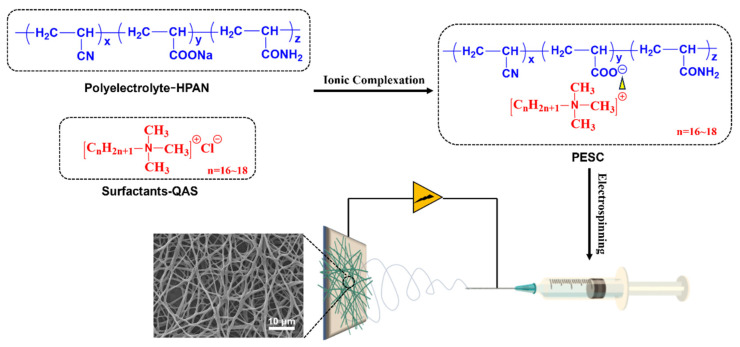
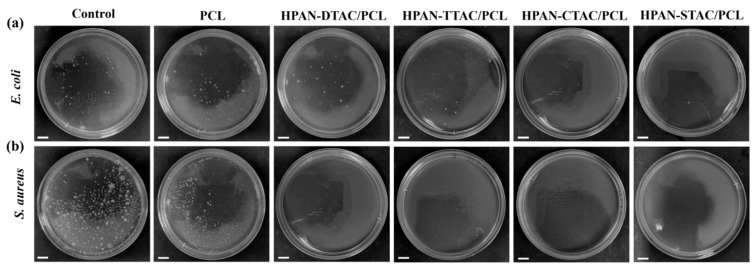
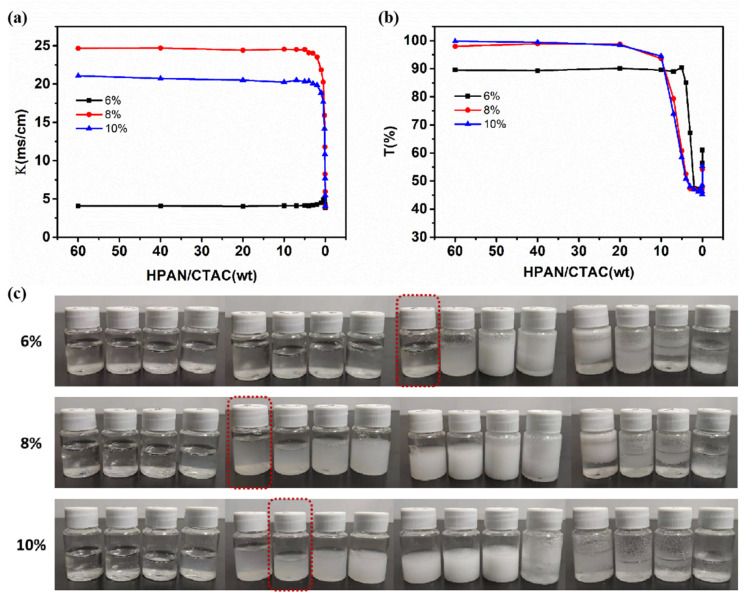
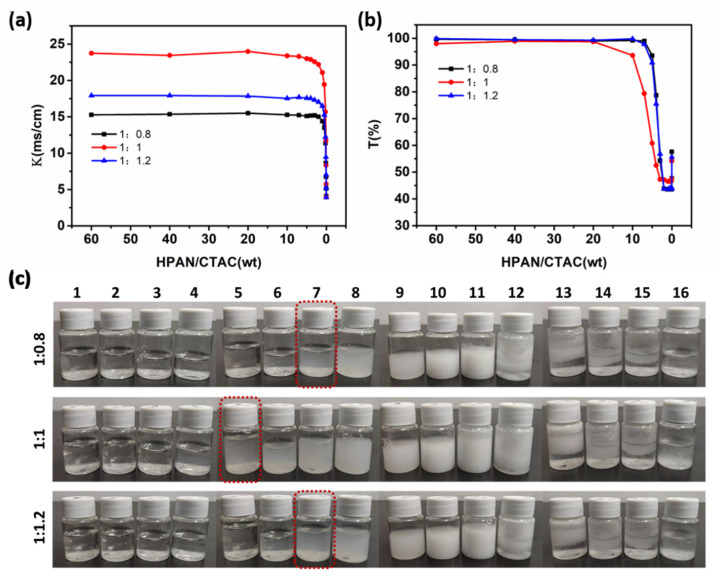
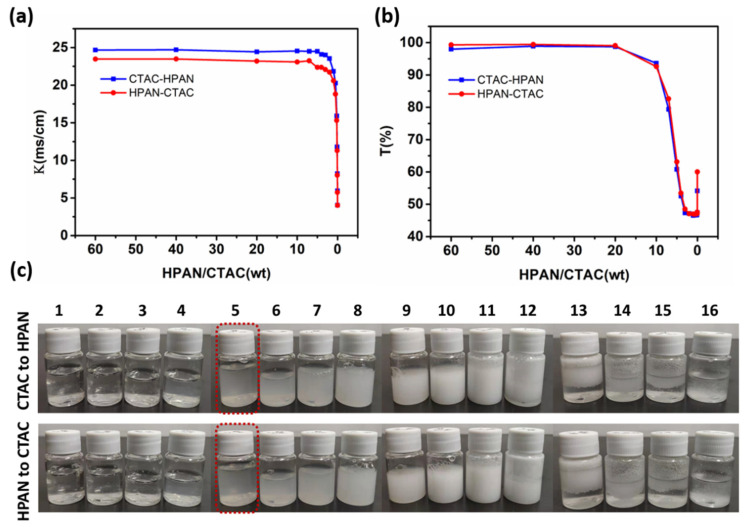
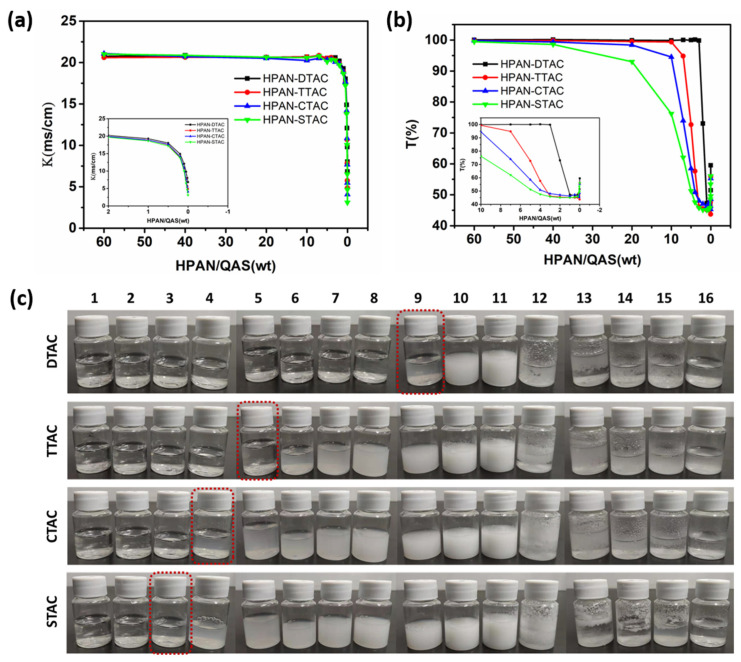
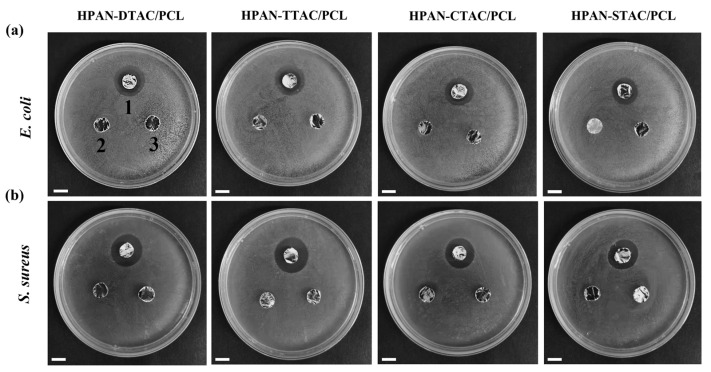
Polyelectrolyte-surfactant complexes (PESCs) have garnered significant attention due to their extensive range of biological and industrial applications. Most present applications are predominantly used in liquid or emulsion states, which limits their efficacy in solid material-based applications. Herein, pre-hydrolyzed polyacrylonitrile (HPAN) and quaternary ammonium salts (QAS) are employed to produce PESC electrospun membranes via electrospinning. The formation process of PESCs in a solution is observed. The results show that the degree of PAN hydrolysis and the varying alkyl chain lengths of surfactants affect the rate of PESC formation. Moreover, PESCs/PCL hybrid electrospun membranes are fabricated, and their antibacterial activities against both Gram-negative Escherichia coli () and Gram-positive Staphylococcus aureus () are investigated. The resulting electrospun membranes exhibit high bactericidal efficacy, which enables them to serve as candidates for future biomedical and filtration applications.
聚电解质 - 表面活性剂复合物(PESCs)因其广泛的生物和工业应用而备受关注。目前大多数应用主要用于液体或乳液状态,这限制了它们在基于固体材料的应用中的功效。在此,采用预水解聚丙烯腈(HPAN)和季铵盐(QAS)通过静电纺丝制备PESCs静电纺丝膜。观察了溶液中PESCs的形成过程。结果表明,PAN的水解程度和表面活性剂不同的烷基链长度会影响PESCs的形成速率。此外,制备了PESCs/PCL复合静电纺丝膜,并研究了它们对革兰氏阴性大肠杆菌()和革兰氏阳性金黄色葡萄球菌()的抗菌活性。所得静电纺丝膜表现出高杀菌功效,使其能够作为未来生物医学和过滤应用的候选材料。