Uzun Davut D, Salatzki Janek, Xynogalos Panagiotis, Frey Norbert, Debus Juergen, Lang Kristin
Department of Anesthesiology, Heidelberg University Hospital, 69120 Heidelberg, Germany.
Heidelberg Center for Heart Rhythm Disorders (HCR), 69120 Heidelberg, Germany.
Cancers (Basel). 2024 Jan 28;16(3):555. doi: 10.3390/cancers16030555.
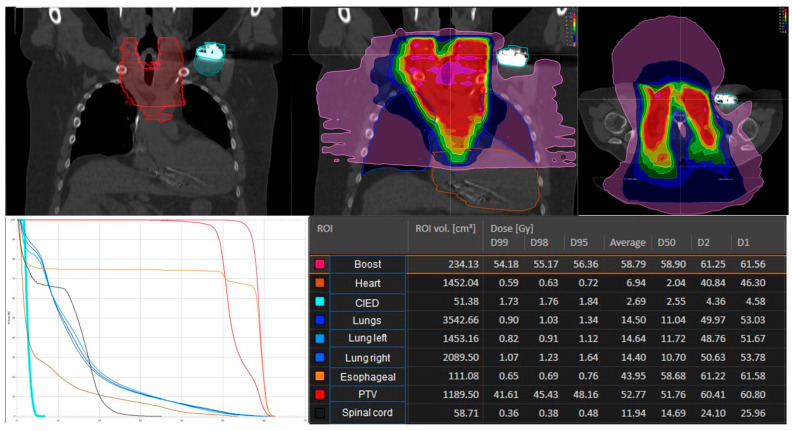
(1) Background: The prevalence of cancer patients relying on cardiac implantable electronic device (CIED) is steadily rising. The aim of this study was to evaluate RT-related malfunctions of CIEDs. (2) Methods: We retrospectively analyze sixteen patients with esophageal cancer who were treated with radiotherapy between 2012 and 2022 at the University Hospital Heidelberg. All patients underwent systemic evaluation including pre-therapeutic cardiological examinations of the CIED functionality and after every single irradiation. (3) Results: Sixteen patients, predominantly male (14) with a mean age of 77 (range: 56-85) years were enrolled. All patients received 28 fractions of radiotherapy with a cumulative total dose 58.8 Gy. The mean maximum dose at the CIEDs was 1.8 Gy. Following radiotherapy and during the one-year post-radiation follow-up period, there were no registered events associated with the treatment in this evaluation. (4) Conclusion: The study did not observe any severe CIED malfunctions following each radiation fraction or after completion of RT. Strict selection of photon energy and alignment with manufacturer-recommended dose limits appear to be important. Our study showed no major differences in the measured values of the pacing threshold, sensing threshold and lead impedance after RT.
(1) 背景:依赖心脏植入式电子设备(CIED)的癌症患者患病率正在稳步上升。本研究的目的是评估放疗相关的CIED故障。(2) 方法:我们回顾性分析了2012年至2022年在海德堡大学医院接受放疗的16例食管癌患者。所有患者均接受了包括CIED功能的治疗前心脏检查以及每次放疗后的全身评估。(3) 结果:纳入了16例患者,以男性为主(14例),平均年龄77岁(范围:56 - 85岁)。所有患者均接受了28次放疗,累积总剂量为58.8 Gy。CIED处的平均最大剂量为1.8 Gy。在放疗后及放疗后一年的随访期内,本次评估中未记录到与治疗相关的事件。(4) 结论:本研究未观察到每次放疗分次后或放疗完成后出现任何严重的CIED故障。严格选择光子能量并符合制造商推荐的剂量限制似乎很重要。我们的研究显示放疗后起搏阈值、感知阈值和导线阻抗的测量值无重大差异。