• 文献检索
  • 文档翻译
  • 深度研究
  • 学术资讯
  • Suppr Zotero 插件Zotero 插件
  • 邀请有礼
  • 套餐&价格
  • 历史记录
应用&插件
Suppr Zotero 插件Zotero 插件浏览器插件Mac 客户端Windows 客户端微信小程序
定价
高级版会员购买积分包购买API积分包
服务
文献检索文档翻译深度研究API 文档MCP 服务
关于我们
关于 Suppr公司介绍联系我们用户协议隐私条款
关注我们

Suppr 超能文献

核心技术专利:CN118964589B侵权必究
粤ICP备2023148730 号-1Suppr @ 2026

文献检索

告别复杂PubMed语法,用中文像聊天一样搜索,搜遍4000万医学文献。AI智能推荐,让科研检索更轻松。

立即免费搜索

文件翻译

保留排版,准确专业,支持PDF/Word/PPT等文件格式,支持 12+语言互译。

免费翻译文档

深度研究

AI帮你快速写综述,25分钟生成高质量综述,智能提取关键信息,辅助科研写作。

立即免费体验

美国气候变化否认论的社会剖析。

The social anatomy of climate change denial in the United States.

机构信息

School for Environment and Sustainability, University of Michigan, Ann Arbor, MI, 48109, USA.

出版信息

Sci Rep. 2024 Mar 8;14(1):2097. doi: 10.1038/s41598-023-50591-6.

DOI:10.1038/s41598-023-50591-6
PMID:38355774
原文链接:https://pmc.ncbi.nlm.nih.gov/articles/PMC10866916/
Abstract

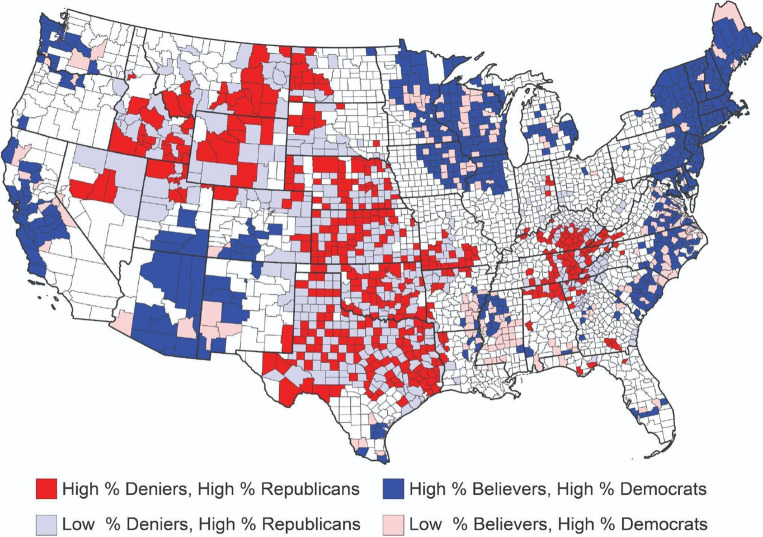
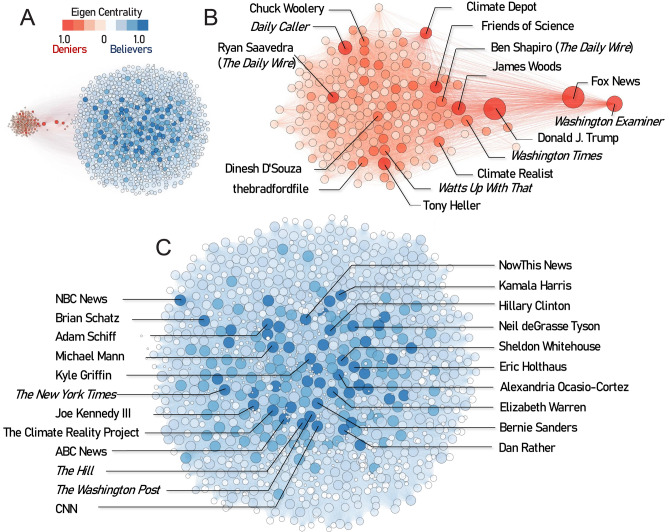
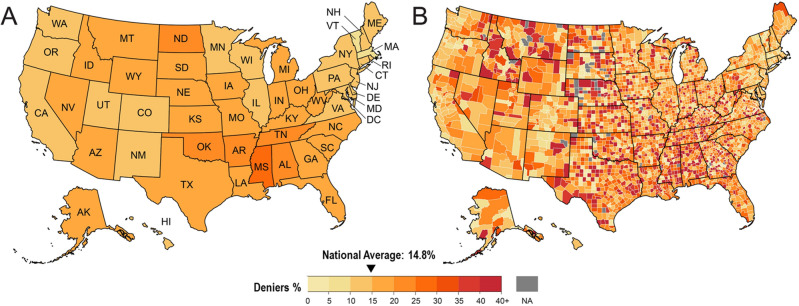
Using data from Twitter (now X), this study deploys artificial intelligence (AI) and network analysis to map and profile climate change denialism across the United States. We estimate that 14.8% of Americans do not believe in climate change. This denialism is highest in the central and southern U.S. However, it also persists in clusters within states (e.g., California) where belief in climate change is high. Political affiliation has the strongest correlation, followed by level of education, COVID-19 vaccination rates, carbon intensity of the regional economy, and income. The analysis reveals how a coordinated social media network uses periodic events, such as cold weather and climate conferences, to sow disbelief about climate change and science, in general. Donald Trump was the strongest influencer in this network, followed by conservative media outlets and right-wing activists. As a form of knowledge vulnerability, climate denialism renders communities unprepared to take steps to increase resilience. As with other forms of misinformation, social media companies (e.g., X, Facebook, YouTube, TikTok) should flag accounts that spread falsehoods about climate change and collaborate on targeted educational campaigns.

摘要

利用来自 Twitter(现更名为 X)的数据,本研究运用人工智能(AI)和网络分析来描绘和描绘美国各地的气候变化否认论者的特征。我们估计,有 14.8%的美国人不相信气候变化。这种否认论在美国中部和南部最为强烈。然而,它也在一些州(如加利福尼亚州)的集群中持续存在,这些州的人们对气候变化的置信度较高。政治派别关联性最强,其次是教育程度、COVID-19 疫苗接种率、区域经济的碳强度和收入。分析揭示了一个协调一致的社交媒体网络如何利用周期性事件(如寒冷天气和气候会议)来散布对气候变化和科学的怀疑。唐纳德·特朗普是该网络中最具影响力的人物,其次是保守派媒体和右翼活动人士。作为一种知识脆弱性,气候变化否认论使社区无法采取措施增强韧性。与其他形式的错误信息一样,社交媒体公司(如 X、Facebook、YouTube、TikTok)应该标记传播气候变化虚假信息的账户,并合作开展有针对性的教育活动。
https://cdn.ncbi.nlm.nih.gov/pmc/blobs/4139/10866916/4a48b8f4bfbe/41598_2023_50591_Fig4_HTML.jpg
https://cdn.ncbi.nlm.nih.gov/pmc/blobs/4139/10866916/216e6d02cbc3/41598_2023_50591_Fig1_HTML.jpg
https://cdn.ncbi.nlm.nih.gov/pmc/blobs/4139/10866916/adbba5318ebf/41598_2023_50591_Fig2_HTML.jpg
https://cdn.ncbi.nlm.nih.gov/pmc/blobs/4139/10866916/02b1416e0cc0/41598_2023_50591_Fig3_HTML.jpg
https://cdn.ncbi.nlm.nih.gov/pmc/blobs/4139/10866916/4a48b8f4bfbe/41598_2023_50591_Fig4_HTML.jpg
https://cdn.ncbi.nlm.nih.gov/pmc/blobs/4139/10866916/216e6d02cbc3/41598_2023_50591_Fig1_HTML.jpg
https://cdn.ncbi.nlm.nih.gov/pmc/blobs/4139/10866916/adbba5318ebf/41598_2023_50591_Fig2_HTML.jpg
https://cdn.ncbi.nlm.nih.gov/pmc/blobs/4139/10866916/02b1416e0cc0/41598_2023_50591_Fig3_HTML.jpg
https://cdn.ncbi.nlm.nih.gov/pmc/blobs/4139/10866916/4a48b8f4bfbe/41598_2023_50591_Fig4_HTML.jpg

相似文献

1
The social anatomy of climate change denial in the United States.美国气候变化否认论的社会剖析。
Sci Rep. 2024 Mar 8;14(1):2097. doi: 10.1038/s41598-023-50591-6.
2
COVID-19 Vaccine Hesitancy on Social Media: Building a Public Twitter Data Set of Antivaccine Content, Vaccine Misinformation, and Conspiracies.社交媒体上对 COVID-19 疫苗的犹豫:构建一个关于反疫苗内容、疫苗错误信息和阴谋论的公共 Twitter 数据集。
JMIR Public Health Surveill. 2021 Nov 17;7(11):e30642. doi: 10.2196/30642.
3
Fuelling the climate and science 'denial machine' on social media: A case study of the Great Barrier Reef's 2021 'in danger' recommendation on Twitter, YouTube and Facebook.在社交媒体上为气候和科学“否认论”提供燃料:以 2021 年推特、YouTube 和脸书上有关大堡礁“处于危险之中”的推荐为例。
Public Underst Sci. 2024 Apr;33(3):270-289. doi: 10.1177/09636625231202117. Epub 2023 Oct 26.
4
Medical and Health-Related Misinformation on Social Media: Bibliometric Study of the Scientific Literature.社交媒体上的医疗健康相关错误信息:科学文献的文献计量研究。
J Med Internet Res. 2022 Jan 25;24(1):e28152. doi: 10.2196/28152.
5
HPV and COVID-19 vaccines:  Social media use, confidence, and intentions among parents living in different community types in the United States.人乳头瘤病毒(HPV)和 COVID-19 疫苗:美国不同社区类型的父母在社交媒体使用、信心和意愿方面的情况。
J Behav Med. 2023 Apr;46(1-2):212-228. doi: 10.1007/s10865-022-00316-3. Epub 2022 Jun 7.
6
Climate denial in Canada and the United States.加拿大和美国的气候否认论。
Can Rev Sociol. 2022 Aug;59(3):369-394. doi: 10.1111/cars.12388. Epub 2022 Jun 21.
7
Climate Communication, Public Health, and Social Media: Examining the Role of Health Agencies in Addressing the Impacts of Climate Change on Human Health.气候传播、公共卫生与社交媒体:探讨卫生机构在应对气候变化对人类健康影响方面的作用。
J Health Commun. 2024 Jun 3;29(sup1):68-76. doi: 10.1080/10810730.2024.2360021. Epub 2024 May 27.
8
Online politicizations of science: Contestation versus denialism at the convergence between COVID-19 and climate science on Twitter.科学的网络政治化:新冠疫情与气候科学在推特上交汇点处的争议与否认主义
Public Underst Sci. 2024 May;33(4):396-413. doi: 10.1177/09636625231216054. Epub 2024 Jan 17.
9
Artificial Intelligence-Enabled Social Media Analysis for Pharmacovigilance of COVID-19 Vaccinations in the United Kingdom: Observational Study.英国利用人工智能进行社交媒体分析以监测新冠疫苗接种的药物警戒:观察性研究
JMIR Public Health Surveill. 2022 May 27;8(5):e32543. doi: 10.2196/32543.
10
Exploring Coronavirus Disease 2019 Vaccine Hesitancy on Twitter Using Sentiment Analysis and Natural Language Processing Algorithms.利用情感分析和自然语言处理算法探索推特上对 2019 年冠状病毒病疫苗的犹豫态度。
Clin Infect Dis. 2022 May 15;74(Suppl_3):e4-e9. doi: 10.1093/cid/ciac141.

引用本文的文献

1
A methodological approach for inferring causal relationships from opinions and news-derived events with an application to climate change.一种从观点和新闻衍生事件中推断因果关系并应用于气候变化的方法。
PeerJ Comput Sci. 2025 Jun 19;11:e2964. doi: 10.7717/peerj-cs.2964. eCollection 2025.
2
Digital solutions for migrant and refugee health: a framework for analysis and action.移民与难民健康的数字解决方案:分析与行动框架
Lancet Reg Health Eur. 2024 Dec 26;50:101190. doi: 10.1016/j.lanepe.2024.101190. eCollection 2025 Mar.
3
Decolonizing climate change response: African indigenous knowledge and sustainable development.

本文引用的文献

1
Platform-controlled social media APIs threaten open science.平台控制的社交媒体应用程序编程接口威胁着开放科学。
Nat Hum Behav. 2023 Dec;7(12):2054-2057. doi: 10.1038/s41562-023-01750-2.
2
Flood exposure and poverty in 188 countries.188 个国家的洪水暴露和贫困情况。
Nat Commun. 2022 Jun 28;13(1):3527. doi: 10.1038/s41467-022-30727-4.
3
Combining interventions to reduce the spread of viral misinformation.结合干预措施以减少病毒错误信息的传播。
去殖民化的气候变化应对:非洲本土知识与可持续发展
Front Sociol. 2024 Nov 20;9:1456871. doi: 10.3389/fsoc.2024.1456871. eCollection 2024.
4
Evaluating the usefulness of Protection Motivation Theory for predicting climate change mitigation behavioral intentions among a US sample of climate change deniers and acknowledgers.评估保护动机理论在美国气候变化否认者和承认者样本中预测气候变化缓解行为意向的有用性。
BMC Psychol. 2024 Oct 30;12(1):605. doi: 10.1186/s40359-024-02088-8.
Nat Hum Behav. 2022 Oct;6(10):1372-1380. doi: 10.1038/s41562-022-01388-6. Epub 2022 Jun 23.
4
Science skepticism reduced compliance with COVID-19 shelter-in-place policies in the United States.科学怀疑论降低了美国人对 COVID-19 就地避难政策的遵守度。
Nat Hum Behav. 2021 Nov;5(11):1519-1527. doi: 10.1038/s41562-021-01227-0. Epub 2021 Oct 13.
5
TweepFake: About detecting deepfake tweets.TweepFake:关于检测深度伪造推文。
PLoS One. 2021 May 13;16(5):e0251415. doi: 10.1371/journal.pone.0251415. eCollection 2021.
6
Anti-intellectualism and the mass public's response to the COVID-19 pandemic.反智主义与大众对新冠疫情的反应。
Nat Hum Behav. 2021 Jun;5(6):706-715. doi: 10.1038/s41562-021-01112-w. Epub 2021 Apr 28.
7
Shifting attention to accuracy can reduce misinformation online.将注意力转移到准确性上可以减少网络上的错误信息。
Nature. 2021 Apr;592(7855):590-595. doi: 10.1038/s41586-021-03344-2. Epub 2021 Mar 17.
8
Tracking QAnon: how Trump turned conspiracy-theory research upside down.追踪“匿名者Q”:特朗普如何颠覆阴谋论研究
Nature. 2021 Feb;590(7845):192-193. doi: 10.1038/d41586-021-00257-y.
9
Political partisanship influences behavioral responses to governors' recommendations for COVID-19 prevention in the United States.政治党派偏见影响美国民众对州长新冠防疫建议的行为反应。
Proc Natl Acad Sci U S A. 2020 Sep 29;117(39):24144-24153. doi: 10.1073/pnas.2007835117. Epub 2020 Sep 15.
10
Political storms: Emergent partisan skepticism of hurricane risks.政治风暴:新兴党派对手飓风风险的怀疑。
Sci Adv. 2020 Sep 11;6(37). doi: 10.1126/sciadv.abb7906. Print 2020 Sep.