Ma Jianlong, Yang Dongsheng
Chongqing Finance and Economics College, China.
Heliyon. 2024 Feb 2;10(3):e25335. doi: 10.1016/j.heliyon.2024.e25335. eCollection 2024 Feb 15.
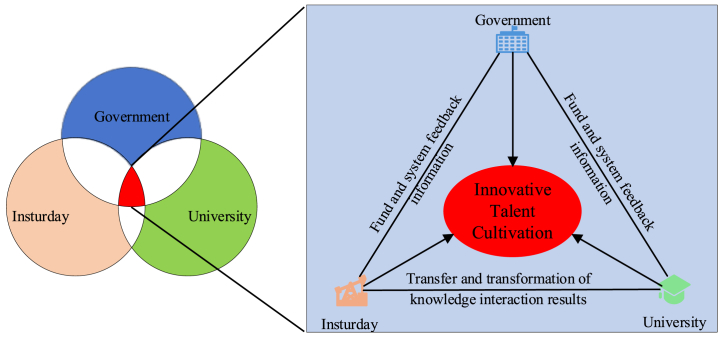
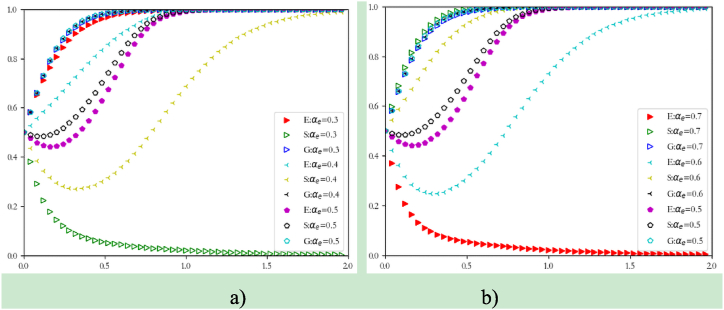
The assessment of colleges' effectiveness heavily relies on the employment status of graduates. Government-industry-university-research (GIUR) collaboration in cultivation talent is the key to improving the employment rate of college graduates. Based on the theoretical framework of the triple helix, this study develops a tripartite evolutionary game model that encompasses government, enterprises, and university research institutions. The research findings indicate (1) the evolutionary convergence of strategies among the subjects of the three-party game. (2) The attainment of a stable ideal evolution state for (1,1,1) is possible when the requisite conditions are met. This suggests that the cultivation of aligned talent in GIUR collaborations should coordinate the interests of various stakeholders. (3) Drawing inspiration from parameter-sensitive simulation, the problem of mismatch between talent cultivation and social demand can be effectively addressed through measures such as reducing the cost of cooperation, balancing the distribution of benefits, and implementing appropriate reward and punishment mechanisms. In response to these implications, we put forward some management insights and suggestions.
高校效能评估在很大程度上依赖于毕业生的就业状况。政产学研(GIUR)协同育人是提高高校毕业生就业率的关键。基于三螺旋理论框架,本研究构建了一个包含政府、企业和高校科研机构的三方演化博弈模型。研究结果表明:(1)三方博弈主体之间策略的演化收敛;(2)在满足必要条件时,(1,1,1)稳定理想演化状态是可以实现的,这表明政产学研协同育人应协调好各利益相关者的利益;(3)从参数敏感性模拟得到启示,通过降低合作成本、平衡利益分配、实施适当奖惩机制等措施,可有效解决人才培养与社会需求不匹配问题。针对这些启示,我们提出了一些管理见解和建议。