Anesthesia and Intensive Care, Fondazione IRCCS Policlinico S. Matteo, Rianimazione I, Viale Golgi 19, 27100, Pavia, Italy.
Department of Health Professions, Fondazione IRCCS Policlinico S. Matteo, Pavia, Italy.
BMC Med Educ. 2024 Feb 21;24(1):166. doi: 10.1186/s12909-024-05148-0.
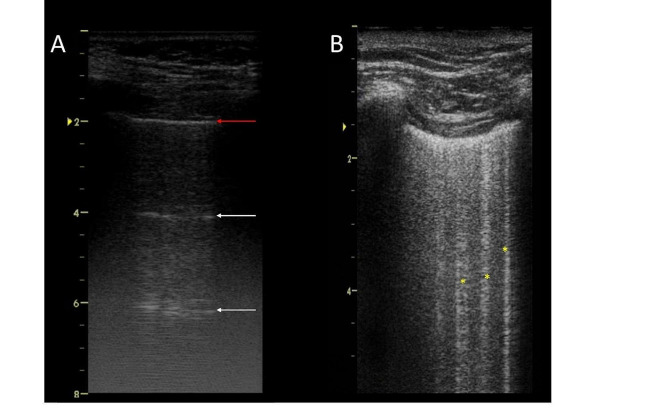
Lung ultrasound has been increasingly used in the last years for the assessment of patients with respiratory diseases; it is considered a simple technique, now spreading from physicians to other healthcare professionals as nurses and physiotherapists, as well as to medical students. These providers may require a different training to acquire lung ultrasound skills, since they are expected to have no previous experience with ultrasound. The aim of the study was to assess the impact of a short theoretical training focused on lung ultrasound pattern recognition in a population of novice nurse learners with no previous experience with ultrasound.
We included the nurses attending a critical care advanced course for nurses performed at the University of Pavia. Images' interpretation skills were tested on two slide sets (a 25-clip set focused on B-pattern recognition and a 25-clip set focused on identification of pleural movement as lung sliding, lung pulse, lung point, no movement) before and after three 30-minute teaching modules dedicated to general ultrasound principles, B-lines assessment and lung sliding assessment. A cut off of 80% was considered acceptable for correctly interpreted images after this basic course.
22 nurses were enrolled (age 26.0 [24.0-28.0] years; men 4 (18%)); one nurse had previous experience with other ultrasound techniques, none of them had previous experience with lung ultrasound. After the training, the number of correctly interpreted clips improved from 3.5 [0.0-13.0] to 22.0 [19.0-23.0] (p < 0.0001) for B-pattern and from 0.5 [0.0-2.0] to 8.5 [6.0-12.0] (p < 0.0001) for lung sliding assessment. The number of correct answers for B-pattern recognition was significantly higher than for lung sliding assessment, both before (3.5 [0.0-13.0] vs. 0.5 [0.0-2.0]; p = 0.0036) and after (22.0 [19.0-23.0] vs. 8.5 [6.0-12.0]; p < 0.0001) the training. After the training, nurses were able to correctly recognize the presence or the absence of a B-pattern in 84.2 ± 10.3% of cases; lung sliding was correctly assessed in 37.1 ± 15.3% of cases.
Lung ultrasound is considered a simple technique; while a short, focused training significantly improves B-pattern recognition, lung sliding assessment may require a longer training for novice learners.
Not applicable.
近年来,肺部超声在评估呼吸系统疾病患者方面得到了越来越多的应用;它被认为是一种简单的技术,现在已经从医生扩展到护士和物理治疗师等其他医疗保健专业人员,以及医学生。这些提供者可能需要不同的培训来获得肺部超声技能,因为他们预计以前没有使用过超声。本研究的目的是评估在没有超声经验的新手护士学习者群体中,进行专注于肺部超声模式识别的短期理论培训的效果。
我们纳入了在帕维亚大学参加护士高级重症监护课程的护士。在进行了三个 30 分钟的教学模块(分别是关于一般超声原理、B 线评估和肺滑动评估的 25 个剪辑的幻灯片集)之后,对两组幻灯片(25 个剪辑的幻灯片集,一组聚焦于 B 模式识别,另一组聚焦于识别胸膜运动,如肺滑动、肺脉冲、肺点、无运动)进行解读技能测试。在这个基础课程之后,将 80%的正确解释图像作为可接受的标准。
共纳入 22 名护士(年龄 26.0[24.0-28.0]岁;男性 4 名[18%]);一名护士有其他超声技术的经验,没有人有肺部超声经验。培训后,B 模式的正确解读剪辑数从 3.5[0.0-13.0]增加到 22.0[19.0-23.0](p<0.0001),肺滑动评估的正确解读剪辑数从 0.5[0.0-2.0]增加到 8.5[6.0-12.0](p<0.0001)。B 模式识别的正确答案数量明显高于肺滑动评估,无论是在培训之前(3.5[0.0-13.0]与 0.5[0.0-2.0];p=0.0036)还是培训之后(22.0[19.0-23.0]与 8.5[6.0-12.0];p<0.0001)。培训后,护士能够正确识别 B 模式的存在或不存在,正确率为 84.2±10.3%;肺滑动的正确评估率为 37.1±15.3%。
肺部超声被认为是一种简单的技术;虽然短期的、有针对性的培训显著提高了 B 模式识别能力,但对于新手学习者来说,肺滑动评估可能需要更长的培训。
不适用。