Inserm, University of Lille, U1003, F-59000, Lille, France.
R&D Division, Miyarisan Pharmaceutical Co., Ltd, Saitama, Japan.
Gut Microbes. 2024 Jan-Dec;16(1):2315631. doi: 10.1080/19490976.2024.2315631. Epub 2024 Feb 22.
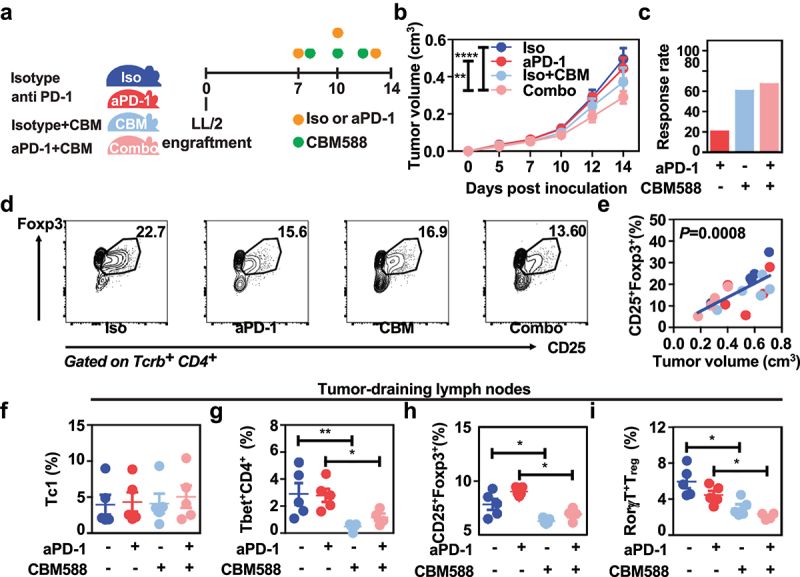
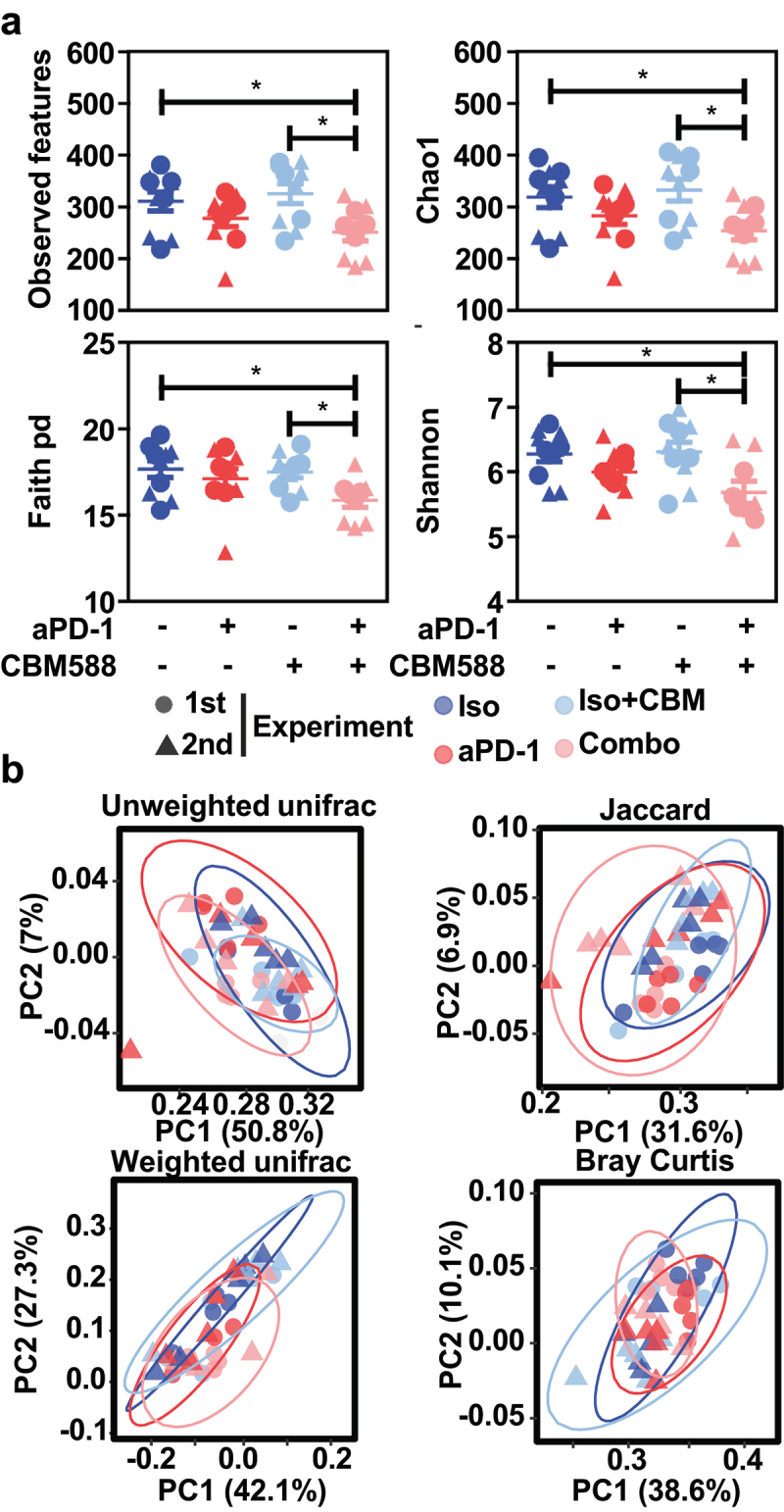
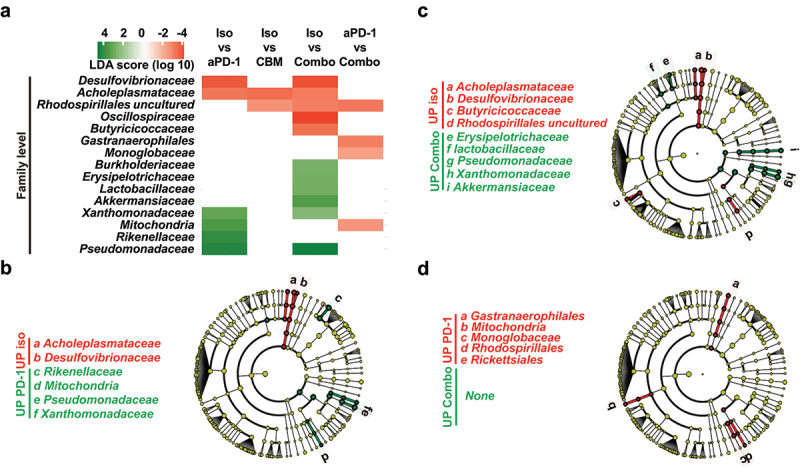
Immune checkpoint inhibitors (ICI) have been positioned as a standard of care for patients with advanced non-small-cell lung carcinomas (NSCLC). A pilot clinical trial has reflected optimistic association between supplementation with MIYAIRI 588 (CBM588) and ICI efficacy in NSCLC. However, it remains to be established whether this biotherapeutic strain may be sufficient to heighten the immunogenicity of the tumor draining lymph nodes to overcome resistance to ICI. Herein, we report that supplementation with CBM588 led to an improved responsiveness to antibody targeting programmed cell death protein 1 (aPD-1). This was statistically associated with a significant decrease in α-diversity of gut microbiota from CBM588-treated mice upon PD-1 blockade. At the level of the tumor-draining lymph node, such combination of treatment significantly lowered the frequency of microbiota-modulated subset of regulatory T cells that express Retinoic Orphan Receptor gamma t (Rort Treg). Specifically, this strongly immunosuppressive was negatively correlated with the abundance of bacteria that belong to the family of . Accordingly, the colonic expression of both indoleamine 2,3-Dioxygenase 1 (IDO-1) and interleukin-10 (IL-10) were heightened in mice with greater PD-1 blockade efficacy. The CBM588-induced ability to secrete Interleukin-10 of lamina propria mononuclear cells was heightened in tumor bearers when compared with cancer-free mice. Conversely, blockade of interleukin-10 signaling preferentially enhanced the capacity of CD8 T cells to secrete Interferon gamma when being cocultured with CBM588-primed lamina propria mononuclear cells of tumor-bearing mice. Our results demonstrate that CBM588-centered intervention can adequately improve intestinal homeostasis and efficiently overcome resistance to PD-1 blockade in mice.
免疫检查点抑制剂(ICI)已被定位为晚期非小细胞肺癌(NSCLC)患者的标准治疗方法。一项试点临床试验反映了 MIYAIRI 588(CBM588)补充与 NSCLC 中 ICI 疗效之间存在乐观关联。然而,尚需确定这种生物治疗菌株是否足以提高肿瘤引流淋巴结的免疫原性,以克服对 ICI 的耐药性。在这里,我们报告称,CBM588 的补充导致对针对程序性细胞死亡蛋白 1(aPD-1)的抗体的反应性提高。这与 PD-1 阻断后 CBM588 治疗的小鼠肠道微生物组的 α-多样性显着下降统计学相关。在肿瘤引流淋巴结水平,这种联合治疗显着降低了表达视黄酸孤儿受体γ t(Rort Treg)的调节性 T 细胞的菌群调节亚群的频率。具体而言,这种强烈的免疫抑制作用与属于科的细菌丰度呈负相关。因此,具有更高 PD-1 阻断功效的小鼠的结肠表达吲哚胺 2,3-双加氧酶 1(IDO-1)和白细胞介素 10(IL-10)均升高。与无癌症小鼠相比,携带肿瘤的小鼠的固有层单核细胞分泌白细胞介素 10 的能力在 CBM588 诱导下增强。相反,当与 CBM588 启动的携带肿瘤的小鼠的固有层单核细胞共培养时,阻断白细胞介素 10 信号传导会优先增强 CD8 T 细胞分泌干扰素 γ 的能力。我们的研究结果表明,以 CBM588 为中心的干预措施可以充分改善肠道内稳态,并有效地克服小鼠对 PD-1 阻断的耐药性。