Sun Shengchuan, Chen Changzhou
School of Physical Education, Shanghai University of Sport, Shanghai 200438, China.
Children (Basel). 2024 Feb 16;11(2):254. doi: 10.3390/children11020254.
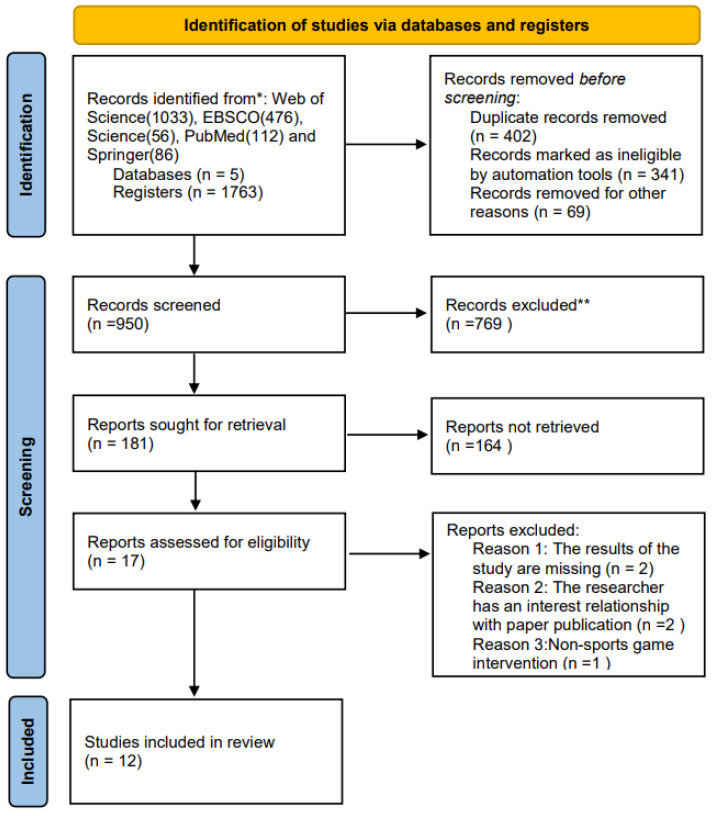
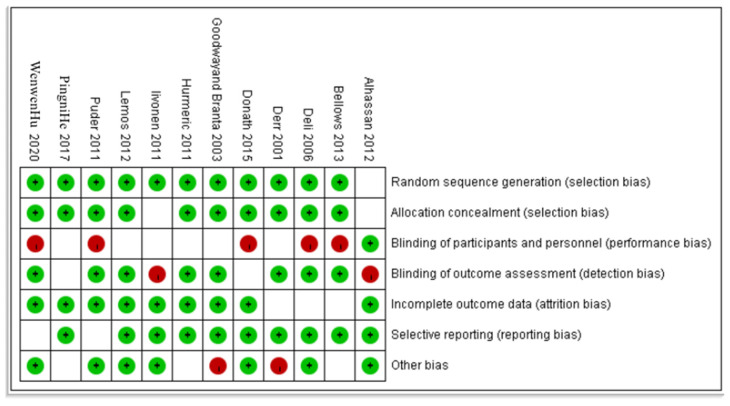
The purpose of the present study was to carry out a systematic review and a meta-analysis determining the effects of sports game intervention on fundamental motor skills in children. This paper presented a systematic review from 2001 to 2020, including the databases of Web of Science, EBSCO, Science, PubMed and Springer. (1) Participants comprised 1701 children age 3-12 years; (2) sports game interventions were investigated; (3) only studies using a Test of Gross Motor Skills assessment were included; (4) RCT were chosen as the study design to assess the impact of sports game interventions on children's motor skills; (5) only culture-based sports game studies in the English and Chinese language were included. Two researchers independently reviewed and assessed the eligibility criteria. Out of the initial 1826 references, 12 studies with a total of 1608 participants were included in the meta-analysis. All interventions were implemented in preschool (kindergarten) or primary school populations, and all studies followed a randomized controlled trial design. The results demonstrated significantly superior development of fundamental motor skills in the intervention groups compared to the control groups (standardized mean difference = 0.30, < 0.0001). The methodological quality of the included studies ranged from fair to excellent, and no evidence of publication bias was observed. Among them, the 12-week sports game intervention of 35 min each time three to four times a week had a better intervention effect, promoting children's physical health and fundamental motor skills.
本研究的目的是进行一项系统评价和荟萃分析,以确定体育游戏干预对儿童基本运动技能的影响。本文呈现了一项2001年至2020年的系统评价,涵盖了科学引文索引、EBSCO、科学、医学期刊数据库和施普林格等数据库。(1)参与者包括1701名3至12岁的儿童;(2)对体育游戏干预进行了调查;(3)仅纳入使用大肌肉运动技能测试评估的研究;(4)选择随机对照试验作为研究设计,以评估体育游戏干预对儿童运动技能的影响;(5)仅纳入英文和中文的基于文化的体育游戏研究。两名研究人员独立审查并评估了纳入标准。在最初的1826篇参考文献中,共有12项研究、1608名参与者被纳入荟萃分析。所有干预措施均在学前(幼儿园)或小学人群中实施,所有研究均采用随机对照试验设计。结果表明,与对照组相比,干预组的基本运动技能发展显著更优(标准化平均差 = 0.30,< 0.0001)。纳入研究的方法学质量从一般到优秀不等,未观察到发表偏倚的证据。其中,每周进行三到四次、每次35分钟的12周体育游戏干预具有更好的干预效果,可促进儿童的身体健康和基本运动技能。