
模拟人体肠道管腔和黏膜微生物生态系统的M批次:咖啡和绿茶影响的案例研究
M-Batches to Simulate Luminal and Mucosal Human Gut Microbial Ecosystems: A Case Study of the Effects of Coffee and Green Tea.
作者信息
Goya-Jorge Elizabeth, Gonza Irma, Douny Caroline, Scippo Marie-Louise, Delcenserie Véronique
机构信息
Laboratory of Food Quality Management, Department of Food Sciences, FARAH-Veterinary Public Health, University of Liège, B43b, 4000 Liège, Belgium.
Intestinal Regenerative Medicine Laboratory, Department of Clinical Sciences, College of Veterinary Medicine, North Carolina State University, Raleigh, NC 27606, USA.
出版信息
Microorganisms. 2024 Jan 23;12(2):236. doi: 10.3390/microorganisms12020236.
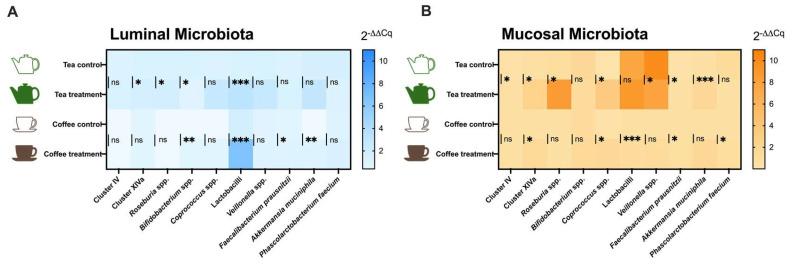
Gastrointestinal simulations in vitro have only limited approaches to analyze the microbial communities inhabiting the mucosal compartment. Understanding and differentiating gut microbial ecosystems is crucial for a more comprehensive and accurate representation of the gut microbiome and its interactions with the host. Herein is suggested, in a short-term and static set-up (named "M-batches"), the analysis of mucosal and luminal populations of inhabitants of the human colon. After varying several parameters, such as the fermentation volume and the fecal inoculum (single or pool), only minor differences in microbial composition and metabolic production were identified. However, the pool created with feces from five donors and cultivated in a smaller volume (300 mL) seemed to provide a more stable luminal ecosystem. The study of commercially available coffee and green tea in the M-batches suggested some positive effects of these worldwide known beverages, including the increase in butyrate-producing bacteria and lactobacilli populations. We hope that this novel strategy can contribute to future advances in the study of intestinal ecosystems and host-microbe relationships and help elucidate roles of the microbiome in health and disease.
体外胃肠道模拟对于分析栖息在黏膜区室的微生物群落只有有限的方法。理解和区分肠道微生物生态系统对于更全面、准确地呈现肠道微生物群及其与宿主的相互作用至关重要。本文建议在短期静态设置(称为“M批次”)下,分析人类结肠内栖息的黏膜和管腔菌群。在改变几个参数(如发酵体积和粪便接种物(单一或混合))后,仅发现微生物组成和代谢产物有微小差异。然而,用来自五个供体的粪便制成并在较小体积(300毫升)中培养的混合样本似乎能提供更稳定的管腔生态系统。在M批次中对市售咖啡和绿茶的研究表明,这些全球知名饮品有一些积极作用,包括产丁酸细菌和乳酸菌数量的增加。我们希望这种新策略能为肠道生态系统和宿主-微生物关系研究的未来进展做出贡献,并有助于阐明微生物群在健康和疾病中的作用。


 Zotero 插件