Laboratory of Phytopathology, Wageningen University and Research, Droevendaalsesteeg 1, 6708 PB, Wageningen, The Netherlands.
Theoretical Biology & Bioinformatics Group, Department of Biology, Utrecht University, Utrecht, The Netherlands.
Nat Commun. 2024 Feb 24;15(1):1701. doi: 10.1038/s41467-024-45884-x.
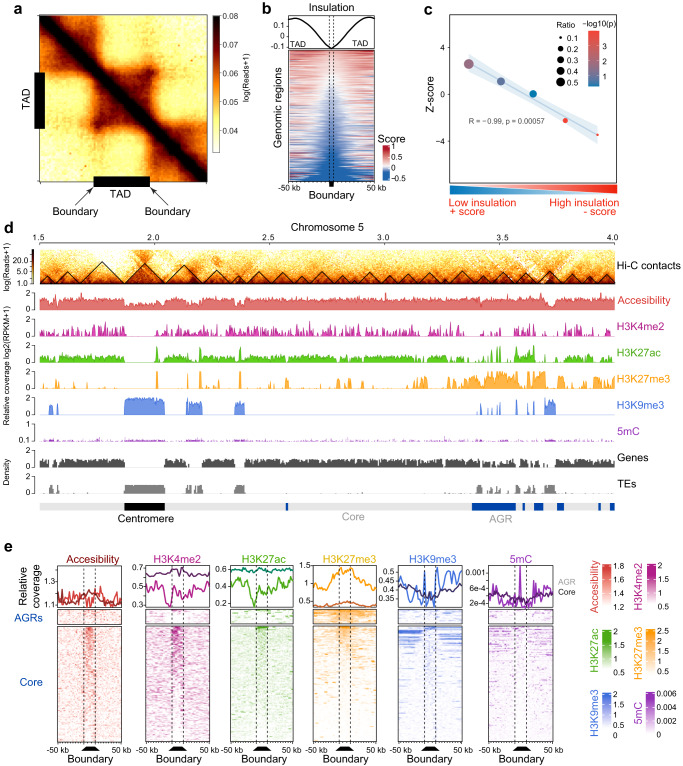
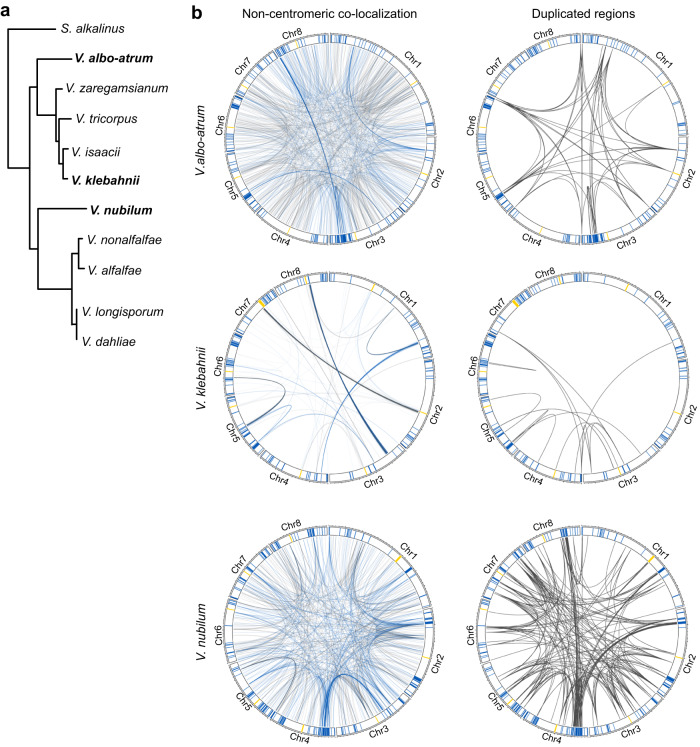
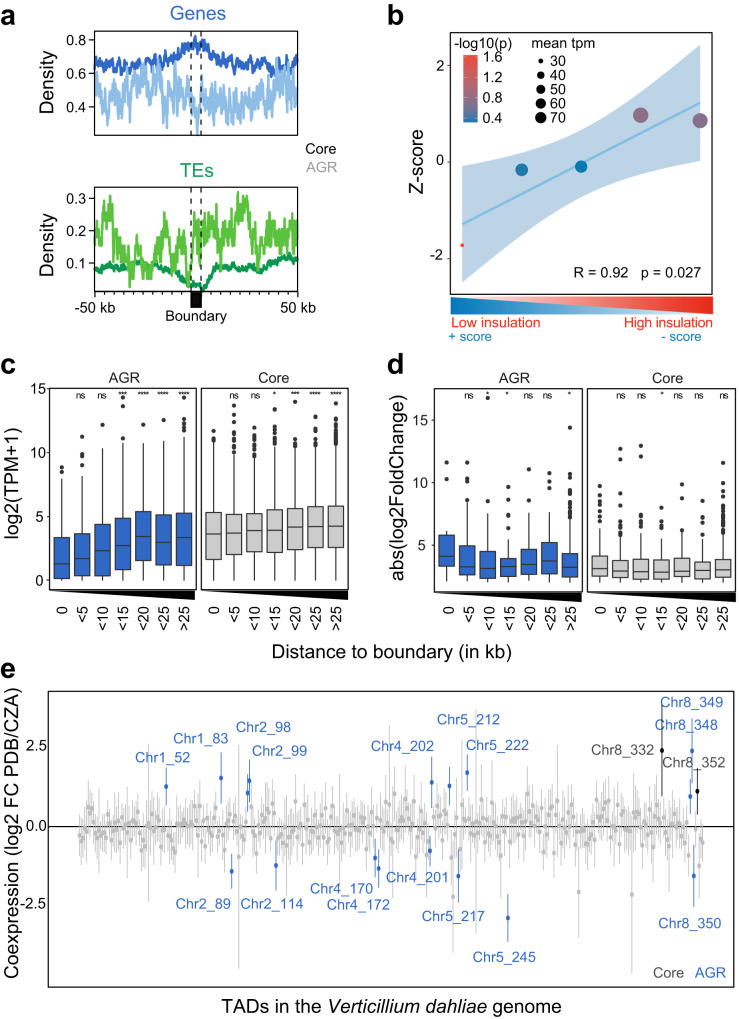
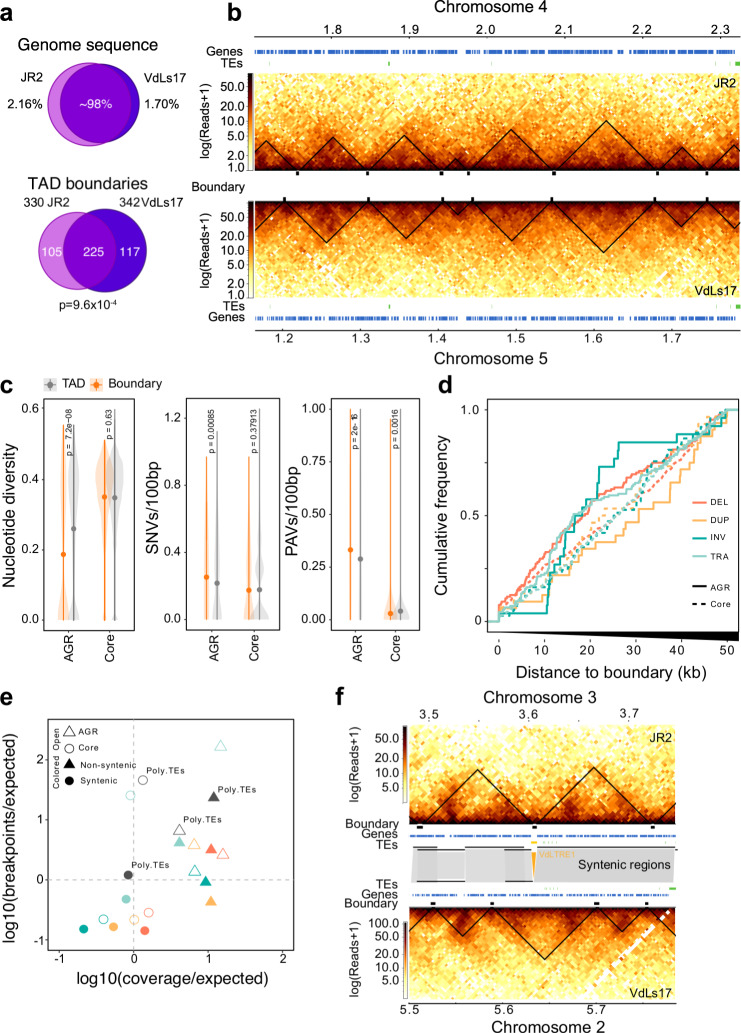
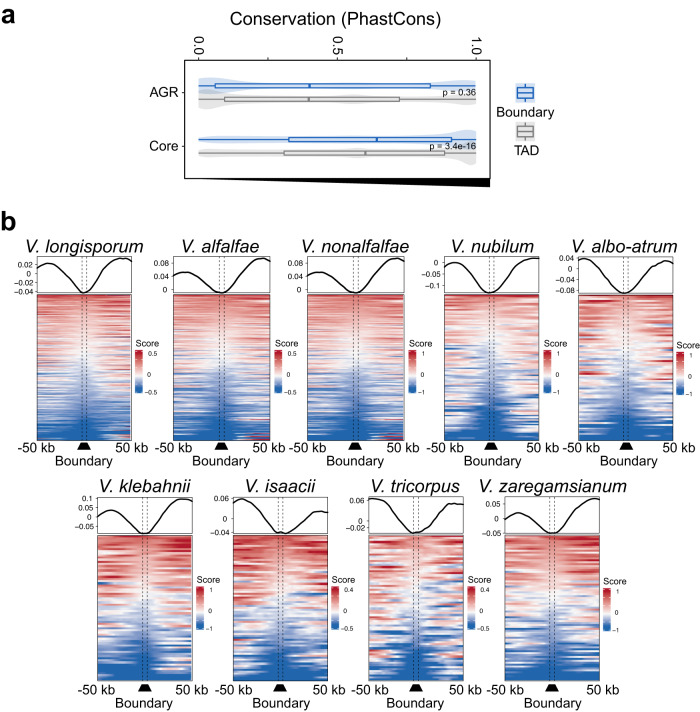
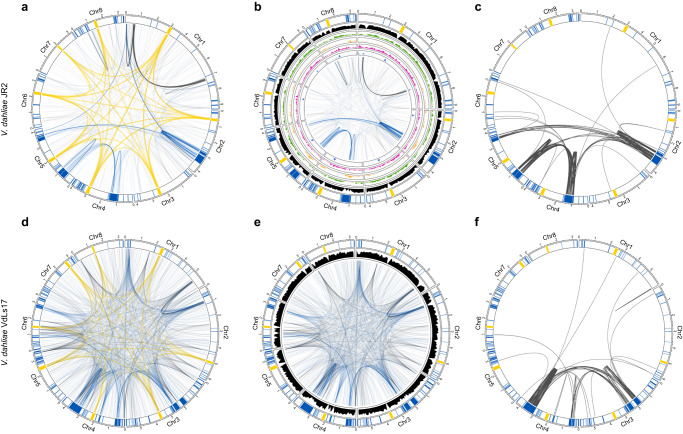
The spatial organization of eukaryotic genomes is linked to their biological functions, although it is not clear how this impacts the overall evolution of a genome. Here, we uncover the three-dimensional (3D) genome organization of the phytopathogen Verticillium dahliae, known to possess distinct genomic regions, designated adaptive genomic regions (AGRs), enriched in transposable elements and genes that mediate host infection. Short-range DNA interactions form clear topologically associating domains (TADs) with gene-rich boundaries that show reduced levels of gene expression and reduced genomic variation. Intriguingly, TADs are less clearly insulated in AGRs than in the core genome. At a global scale, the genome contains bipartite long-range interactions, particularly enriched for AGRs and more generally containing segmental duplications. Notably, the patterns observed for V. dahliae are also present in other Verticillium species. Thus, our analysis links 3D genome organization to evolutionary features conserved throughout the Verticillium genus.
真核生物基因组的空间组织与其生物学功能相关,尽管其如何影响基因组的整体进化尚不清楚。在这里,我们揭示了已知具有独特基因组区域的植物病原体轮枝孢菌的三维(3D)基因组组织,这些区域被指定为适应性基因组区域(AGRs),富含转座元件和介导宿主感染的基因。短距离 DNA 相互作用形成具有基因丰富边界的清晰拓扑关联结构域(TADs),这些边界表现出降低的基因表达水平和降低的基因组变异。有趣的是,与核心基因组相比,AGRs 中的 TAD 隔离程度较低。在全局范围内,基因组包含二分体长距离相互作用,特别是富含 AGRs,并且更普遍地包含片段重复。值得注意的是,在其他轮枝孢菌中也观察到了与 V. dahliae 相同的模式。因此,我们的分析将 3D 基因组组织与整个轮枝孢属中保守的进化特征联系起来。