Das Poushali, Marvi Parham Khoshbakht, Ganguly Sayan, Tang Xiaowu Shirley, Wang Bo, Srinivasan Seshasai, Rajabzadeh Amin Reza, Rosenkranz Andreas
School of Biomedical Engineering, McMaster University, 1280 Main Street West, Hamilton, ON, L8S 4L8, Canada.
Department of Chemistry and Waterloo Institute for Nanotechnology (WIN), University of Waterloo, 200 University Ave West, Waterloo, ON, Canada.
Nanomicro Lett. 2024 Feb 27;16(1):135. doi: 10.1007/s40820-024-01349-w.
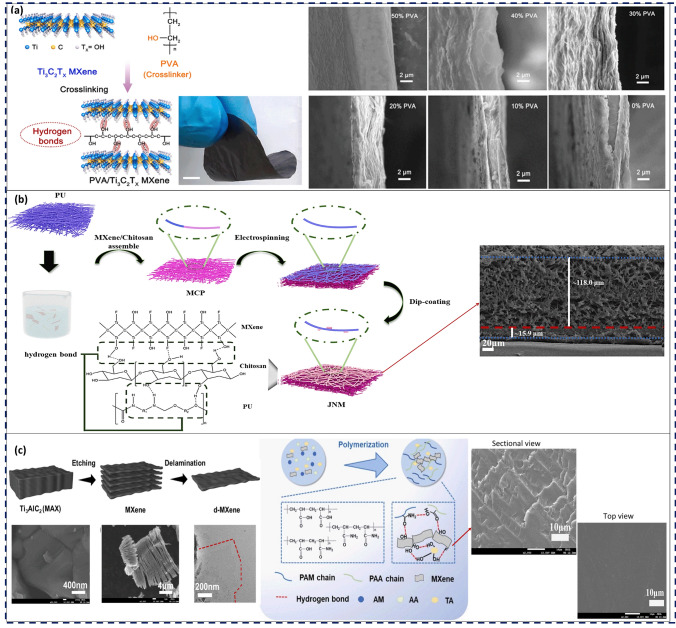
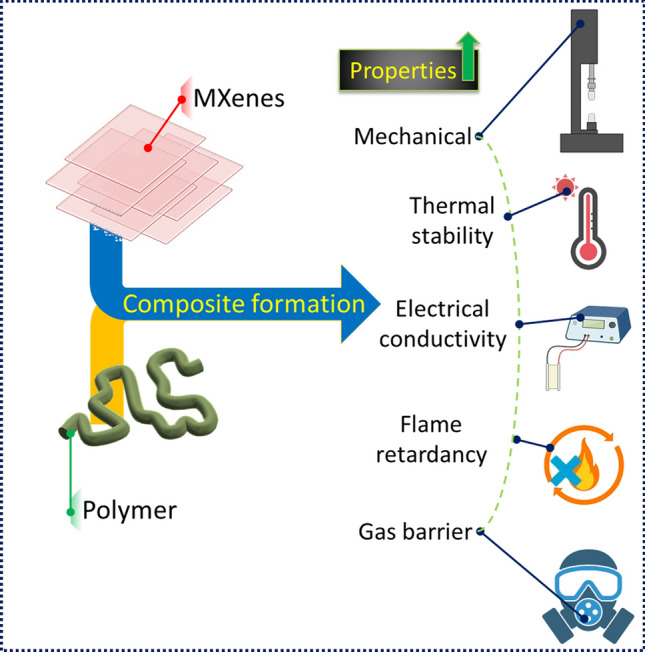
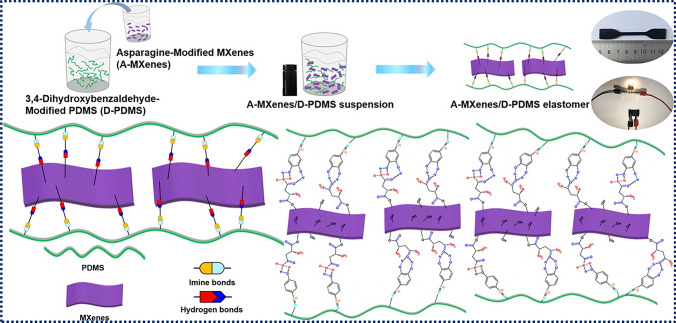
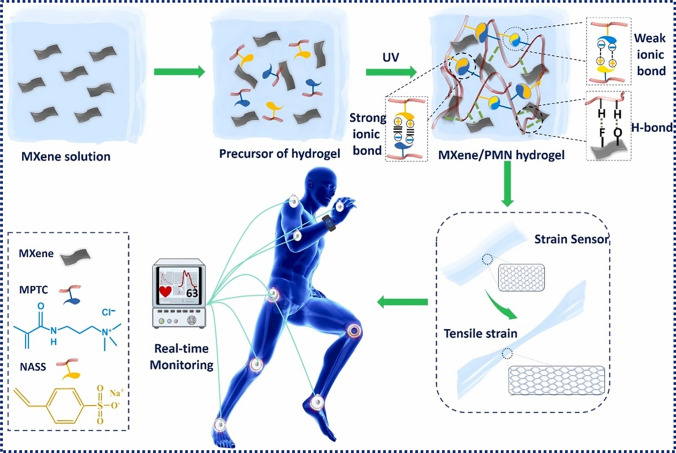
Flexible sensors based on MXene-polymer composites are highly prospective for next-generation wearable electronics used in human-machine interfaces. One of the motivating factors behind the progress of flexible sensors is the steady arrival of new conductive materials. MXenes, a new family of 2D nanomaterials, have been drawing attention since the last decade due to their high electronic conductivity, processability, mechanical robustness and chemical tunability. In this review, we encompass the fabrication of MXene-based polymeric nanocomposites, their structure-property relationship, and applications in the flexible sensor domain. Moreover, our discussion is not only limited to sensor design, their mechanism, and various modes of sensing platform, but also their future perspective and market throughout the world. With our article, we intend to fortify the bond between flexible matrices and MXenes thus promoting the swift advancement of flexible MXene-sensors for wearable technologies.
基于MXene-聚合物复合材料的柔性传感器在用于人机界面的下一代可穿戴电子产品方面具有很高的前景。柔性传感器发展背后的一个推动因素是新型导电材料的不断出现。MXenes是二维纳米材料的一个新家族,自上一个十年以来,因其高电子导电性、可加工性、机械坚固性和化学可调性而备受关注。在这篇综述中,我们涵盖了基于MXene的聚合物纳米复合材料的制备、它们的结构-性能关系以及在柔性传感器领域的应用。此外,我们的讨论不仅限于传感器设计、其机制和传感平台的各种模式,还包括它们的未来前景和全球市场。通过我们的文章,我们旨在加强柔性基体与MXenes之间的联系,从而推动用于可穿戴技术的柔性MXene传感器的迅速发展。