Department of Critical Care Medicine, University of Calgary, Alberta, Canada.
Divisions of Infectious Diseases & Medical Microbiology, McGill University Health Center, McGill's Interdisciplinary Initiative in Infection and Immunity, Montreal, PQ, Canada.
Crit Care. 2024 Feb 27;28(1):63. doi: 10.1186/s13054-024-04843-0.
Acute respiratory distress syndrome (ARDS) is a life-threatening critical care syndrome commonly associated with infections such as COVID-19, influenza, and bacterial pneumonia. Ongoing research aims to improve our understanding of ARDS, including its molecular mechanisms, individualized treatment options, and potential interventions to reduce inflammation and promote lung repair.
To map and compare metabolic phenotypes of different infectious causes of ARDS to better understand the metabolic pathways involved in the underlying pathogenesis.
We analyzed metabolic phenotypes of 3 ARDS cohorts caused by COVID-19, H1N1 influenza, and bacterial pneumonia compared to non-ARDS COVID-19-infected patients and ICU-ventilated controls. Targeted metabolomics was performed on plasma samples from a total of 150 patients using quantitative LC-MS/MS and DI-MS/MS analytical platforms.
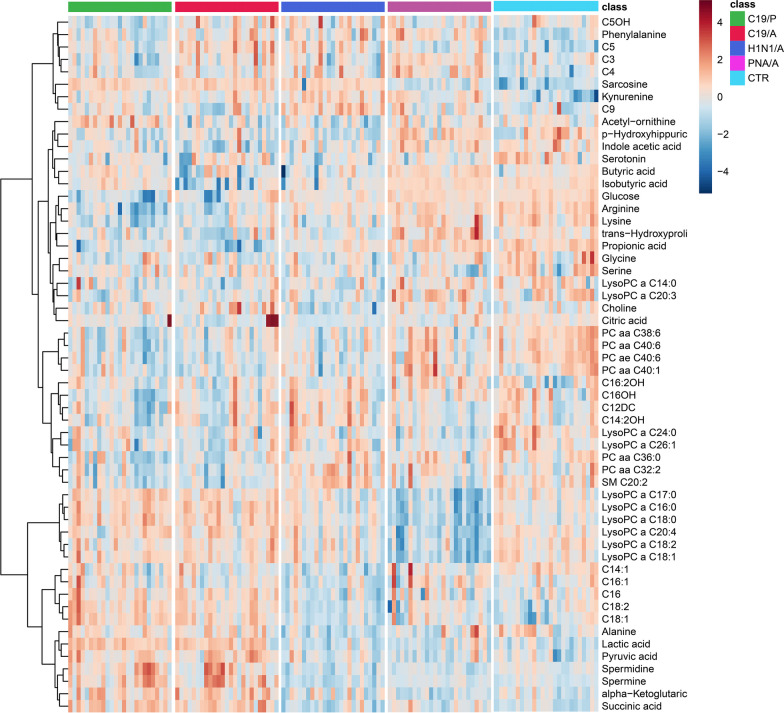
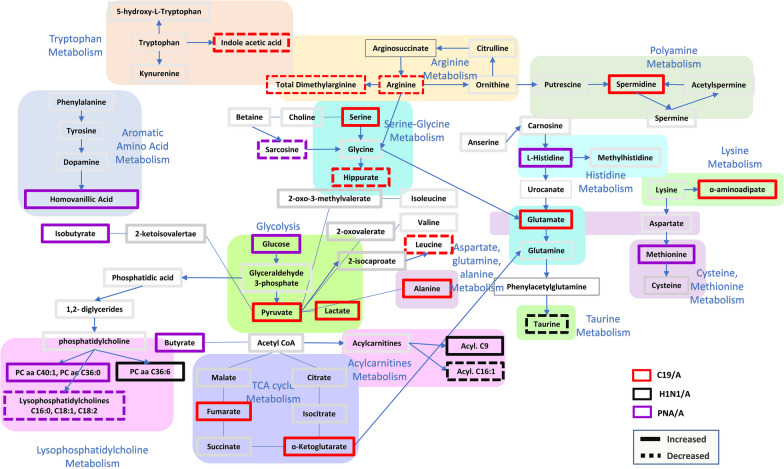
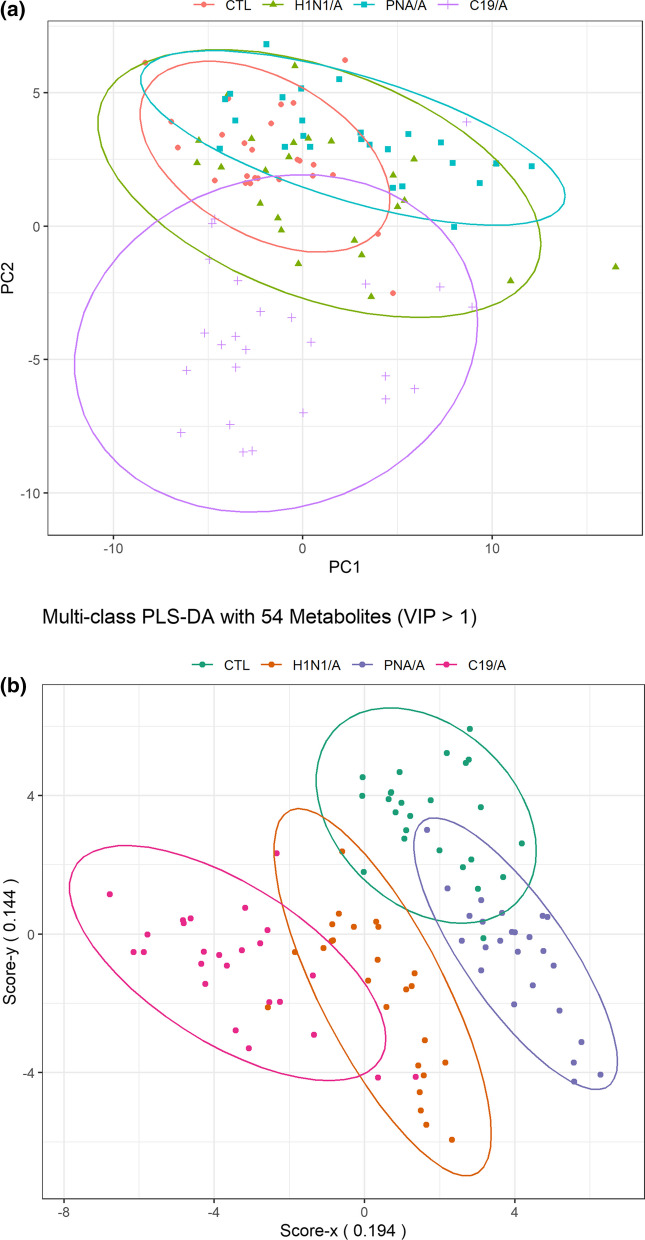
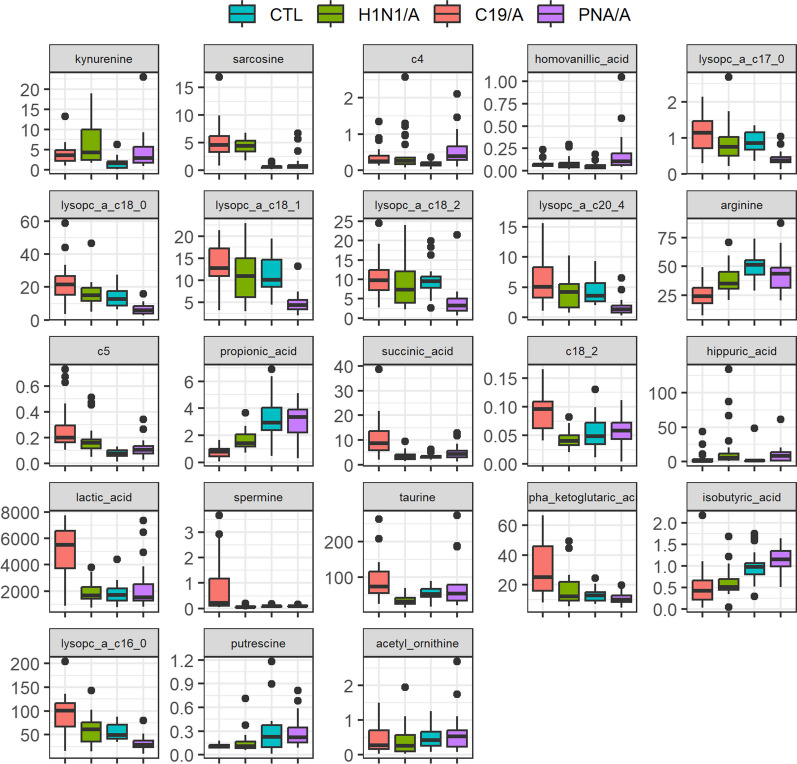
Distinct metabolic phenotypes were detected between different infectious causes of ARDS. There were metabolomics differences between ARDSs associated with COVID-19 and H1N1, which include metabolic pathways involving taurine and hypotaurine, pyruvate, TCA cycle metabolites, lysine, and glycerophospholipids. ARDSs associated with bacterial pneumonia and COVID-19 differed in the metabolism of D-glutamine and D-glutamate, arginine, proline, histidine, and pyruvate. The metabolic profile of COVID-19 ARDS (C19/A) patients admitted to the ICU differed from COVID-19 pneumonia (C19/P) patients who were not admitted to the ICU in metabolisms of phenylalanine, tryptophan, lysine, and tyrosine. Metabolomics analysis revealed significant differences between C19/A, H1N1/A, and PNA/A vs ICU-ventilated controls, reflecting potentially different disease mechanisms.
Different metabolic phenotypes characterize ARDS associated with different viral and bacterial infections.
急性呼吸窘迫综合征(ARDS)是一种危及生命的重症监护综合征,通常与 COVID-19、流感和细菌性肺炎等感染有关。目前的研究旨在提高我们对 ARDS 的认识,包括其分子机制、个体化治疗选择以及减少炎症和促进肺修复的潜在干预措施。
绘制和比较不同感染性 ARDS 病因的代谢表型,以更好地了解潜在发病机制中涉及的代谢途径。
我们分析了由 COVID-19、H1N1 流感和细菌性肺炎引起的 3 个 ARDS 队列与非 ARDS COVID-19 感染患者和 ICU 通气对照组的代谢表型。使用定量 LC-MS/MS 和 DI-MS/MS 分析平台对总共 150 例患者的血浆样本进行了靶向代谢组学分析。
不同感染性 ARDS 病因之间存在明显的代谢表型差异。COVID-19 和 H1N1 相关 ARDS 之间存在代谢组学差异,包括涉及牛磺酸和次牛磺酸、丙酮酸、TCA 循环代谢物、赖氨酸和甘油磷脂的代谢途径。细菌性肺炎和 COVID-19 相关 ARDS 在 D-谷氨酰胺和 D-谷氨酸、精氨酸、脯氨酸、组氨酸和丙酮酸的代谢方面存在差异。入住 ICU 的 COVID-19 ARDS(C19/A)患者的代谢谱与未入住 ICU 的 COVID-19 肺炎(C19/P)患者在苯丙氨酸、色氨酸、赖氨酸和酪氨酸的代谢方面存在差异。代谢组学分析表明,C19/A、H1N1/A 和 PNA/A 与 ICU 通气对照组之间存在显著差异,反映了潜在的不同疾病机制。
不同的代谢表型特征描述了与不同病毒和细菌感染相关的 ARDS。