Lucas Kane D, Figula Bryan C, Balaraman Kaluvu, Bertke Jeffery A, Wolf Christian
Georgetown University, Chemistry Department, Washington, DC, 20057, USA.
Nat Commun. 2024 Feb 29;15(1):1866. doi: 10.1038/s41467-024-45756-4.
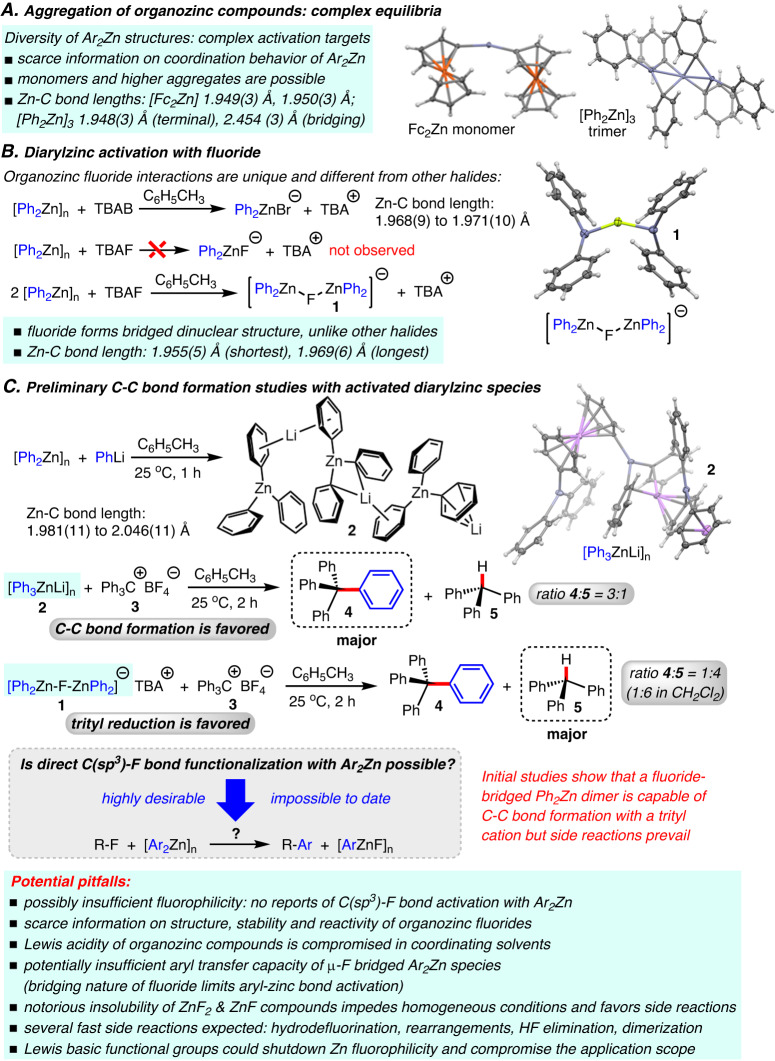
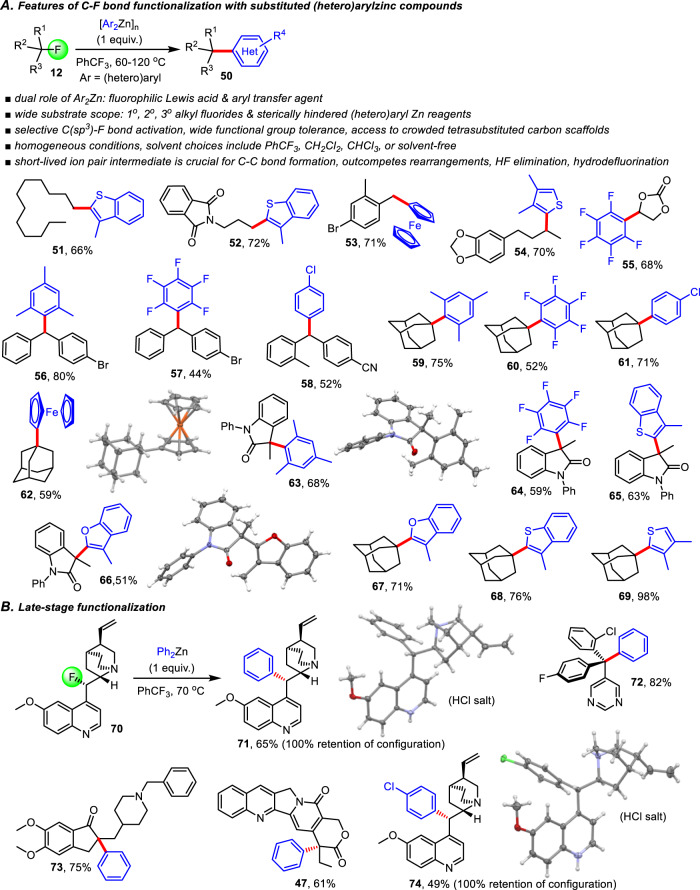
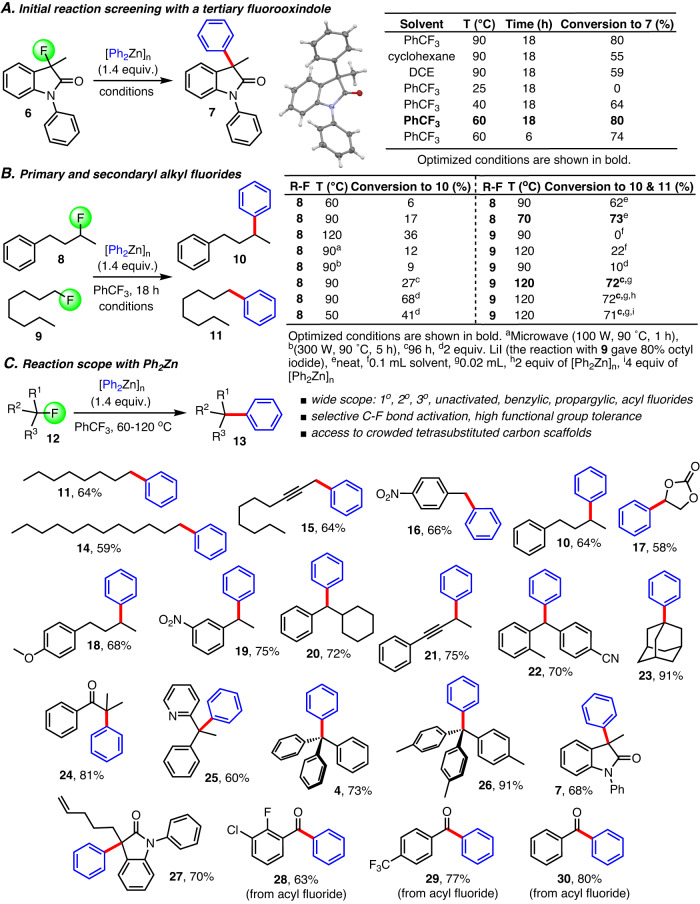
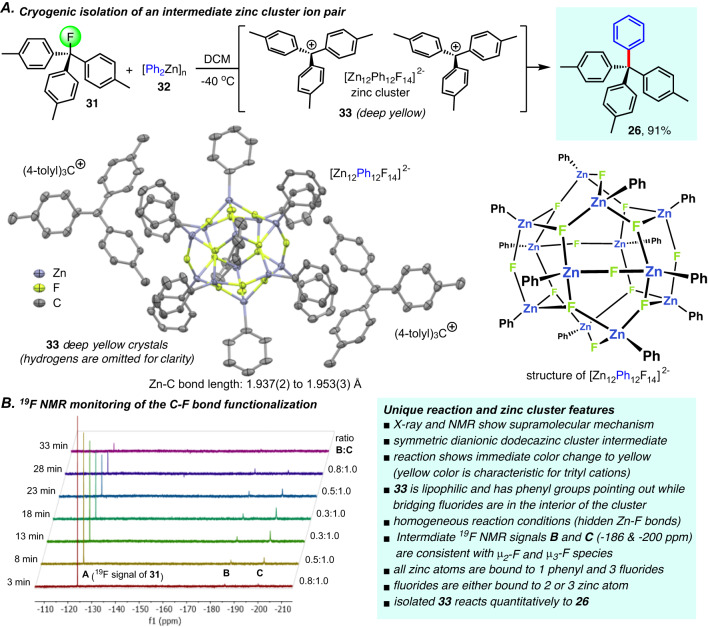
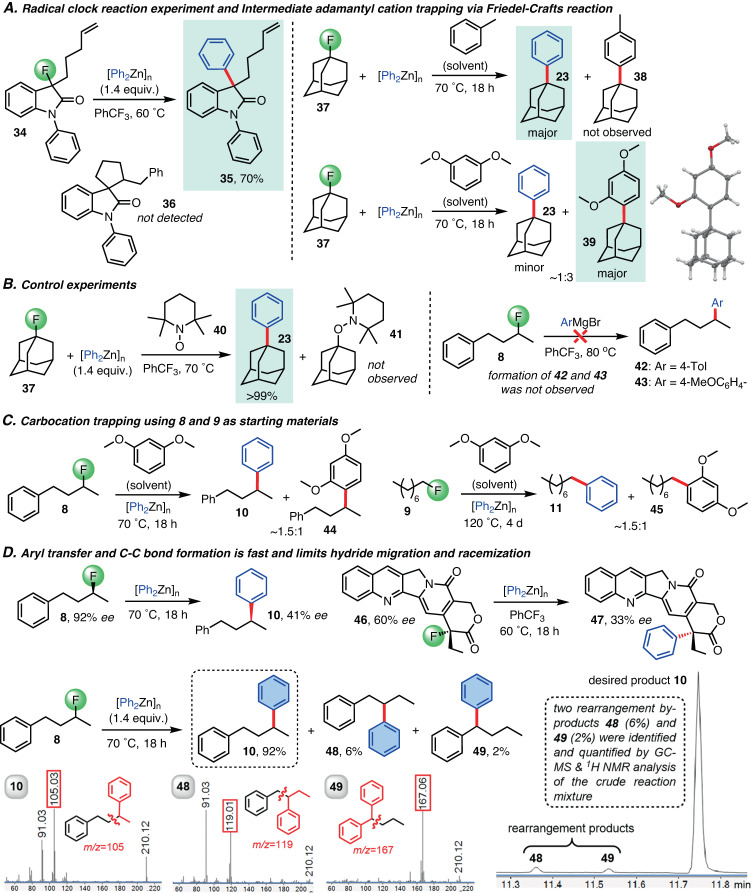
Fluorinated organic compounds are frequently used across the chemical and life sciences. Although a large, structurally diverse pool of alkyl fluorides is nowadays available, synthetic applications trail behind the widely accepted utility of other halides. We envisioned that C(sp)-C(sp) cross-coupling reactions of alkyl fluorides with fluorophilic organozinc compounds should be possible through a heterolytic mechanism that involves short-lived ion pairs and uses the stability of the Zn-F bond as the thermodynamic driving force. This would be mechanistically different from previously reported radical reactions and overcome long-standing limitations of organometallic cross-coupling methodology, including competing β-hydride elimination, homodimerization and hydrodefluorination. Here, we show a practical C-F bond functionalization method that expands the currently restricted synthetic space of unactivated primary, secondary and tertiary C(sp)-F bonds but also uses benzylic, propargylic and acyl fluorides. Many functional groups and sterically demanding substrates are tolerated, which allows practical carbon-carbon bond formation and late-stage functionalization.
含氟有机化合物在化学和生命科学领域中被广泛使用。尽管如今已有大量结构多样的烷基氟化物,但与其他卤化物被广泛认可的用途相比,其合成应用仍相对滞后。我们设想,烷基氟化物与亲氟有机锌化合物之间的C(sp)-C(sp)交叉偶联反应应该可以通过一种涉及短寿命离子对的异裂机制实现,并利用Zn-F键的稳定性作为热力学驱动力。这在机理上与先前报道的自由基反应不同,并且克服了有机金属交叉偶联方法长期存在的局限性,包括竞争性的β-氢消除、同二聚化和加氢脱氟。在此,我们展示了一种实用的C-F键官能团化方法,该方法不仅扩展了目前未活化的伯、仲和叔C(sp)-F键受限的合成空间,还使用了苄基、炔丙基和酰基氟化物。该方法能够耐受许多官能团和空间位阻较大的底物,从而实现实用碳-碳键的形成和后期官能团化。