Zacher Christoph, Schönfelder Kristina, Rohn Hana, Siffert Winfried, Möhlendick Birte
Institute of Pharmacogenetics, University Hospital Essen, University of Duisburg-Essen, Essen, Germany.
Department of Nephrology, University Hospital Essen, University of Duisburg-Essen, Essen, Germany.
Front Immunol. 2024 Feb 16;15:1355193. doi: 10.3389/fimmu.2024.1355193. eCollection 2024.
Several factors, such as hypertension and diabetes mellitus, are known to influence the course of coronavirus disease 2019 (COVID-19). However, there is currently little information on genetic markers that influence the severity of COVID-19. In this study, we specifically investigated the single nucleotide polymorphism (SNP) rs4986790 in the gene to identify a universal marker for preclinical prediction of COVID-19 disease progression.
We analyzed the influence of demographics, pre-existing conditions, inflammatory parameters at the time of hospitalization, and rs4986790 genotype on the outcome of COVID-19 in a comprehensive cohort (N = 1570). We performed multivariable analysis to investigate the impact of each factor.
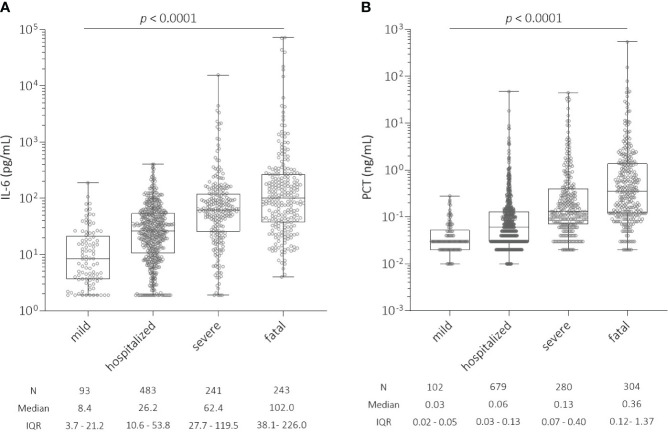
We confirmed that younger patient age and absence of pre-existing conditions were protective factors against disease progression. Furthermore, when comparing patients with mild SARS-CoV-2 infection with patients who required hospitalization or intensive care or even died due to COVID-19, the AG/GG genotype of rs4986790 was found to be a protective factor against COVID-19 disease progression (OR: 0.51, 95% CI: 0.34 - 0.77, = 0.001). In addition, we demonstrated that low levels of interleukin-6 (IL-6) and procalcitonin (PCT) had a favorable effect on COVID-19 disease severity. In the subsequent multivariable analysis, we confirmed the absence of cardiovascular disease, low levels of IL-6 and PCT, and rs4986790 AG/GG genotypes as independent predictors of potential hospitalization and reduction of severe or fatal disease course.
In this study, we identified an additional genetic factor that may serve as an invariant predictor of COVID-19 outcome. The rs4986790 AG/GG genotype reduced by half the risk of COVID-19 patients requiring hospitalization, intensive care or to have a fatal outcome. In addition, we were able to confirm the influence of previously known factors such as pre-existing conditions and inflammatory markers upon the onset of disease on the course of COVID-19. Based on these observations, we hereby provide another prognostic biomarker that could be used in routine diagnostics as a predictive factor for the severity of COVID-19 prior to SARS-CoV-2 infection.
已知高血压和糖尿病等多种因素会影响2019冠状病毒病(COVID-19)的病程。然而,目前关于影响COVID-19严重程度的基因标志物的信息很少。在本研究中,我们专门研究了该基因中的单核苷酸多态性(SNP)rs4986790,以确定一个用于临床前预测COVID-19疾病进展的通用标志物。
我们在一个综合队列(N = 1570)中分析了人口统计学特征、既往疾病状况、住院时的炎症参数以及rs4986790基因型对COVID-19结局的影响。我们进行了多变量分析以研究每个因素的影响。
我们证实年轻患者年龄和无既往疾病是预防疾病进展的保护因素。此外,在比较轻度SARS-CoV-2感染患者与因COVID-19需要住院、重症监护甚至死亡的患者时,发现rs4986790的AG/GG基因型是预防COVID-19疾病进展的保护因素(OR:0.51,95%CI:0.34 - 0.77,P = 0.001)。此外,我们证明低水平的白细胞介素-6(IL-6)和降钙素原(PCT)对COVID-19疾病严重程度有有利影响。在随后的多变量分析中,我们证实无心血管疾病、低水平的IL-6和PCT以及rs4986790的AG/GG基因型是潜在住院和减少严重或致命病程的独立预测因素。
在本研究中我们确定了另一个可能作为COVID-19结局不变预测指标的遗传因素。rs4986790的AG/GG基因型使COVID-19患者需要住院、重症监护或出现致命结局的风险降低了一半。此外,我们能够证实既往已知因素如既往疾病状况和炎症标志物对疾病发作在COVID-19病程中的影响。基于这些观察结果,我们在此提供另一种预后生物标志物,可在常规诊断中用作SARS-CoV-2感染前COVID-19严重程度的预测因素。