He Shan, Shi Junhe, Chai Hua, Ma Lina, Pei Hui, Zhang Ping, Shi Dazhuo, Li Hao
Wangjing Hospital, China Academy of Chinese Medical Sciences, Beijing, China.
Xiyuan Hospital, China Academy of Chinese Medical Sciences, Beijing, China.
Heliyon. 2024 Feb 19;10(5):e26642. doi: 10.1016/j.heliyon.2024.e26642. eCollection 2024 Mar 15.
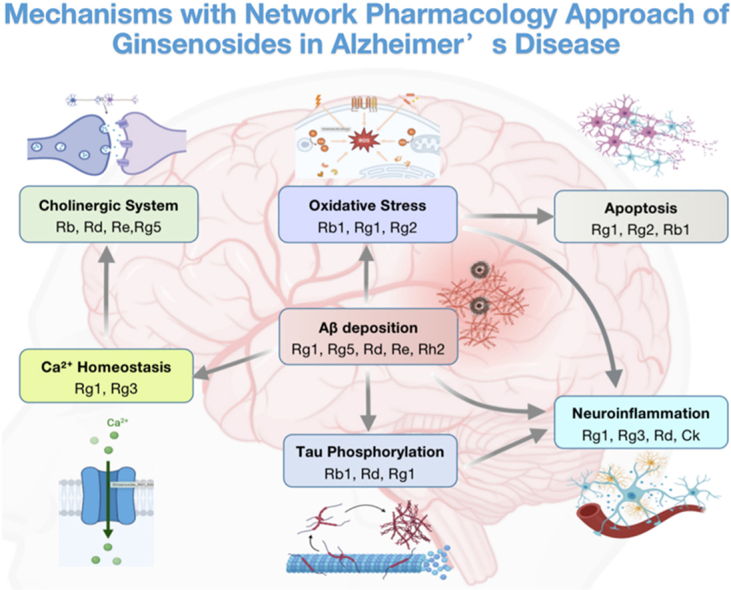
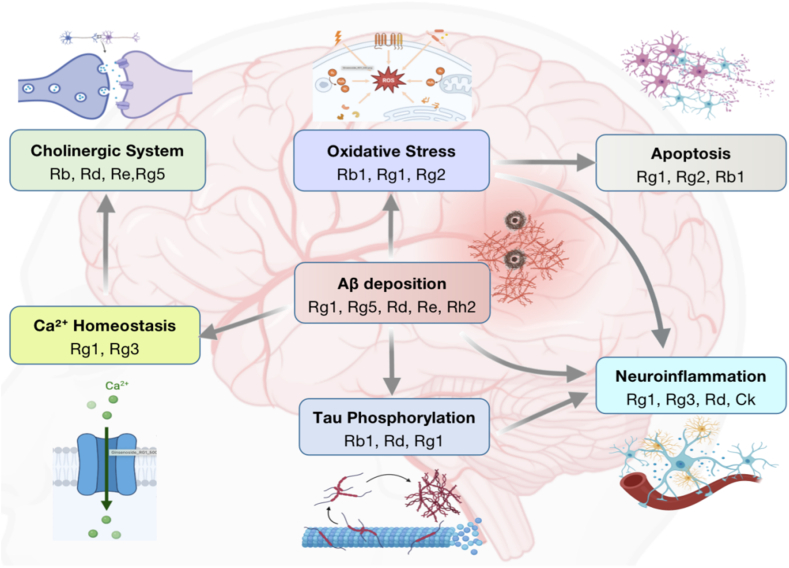
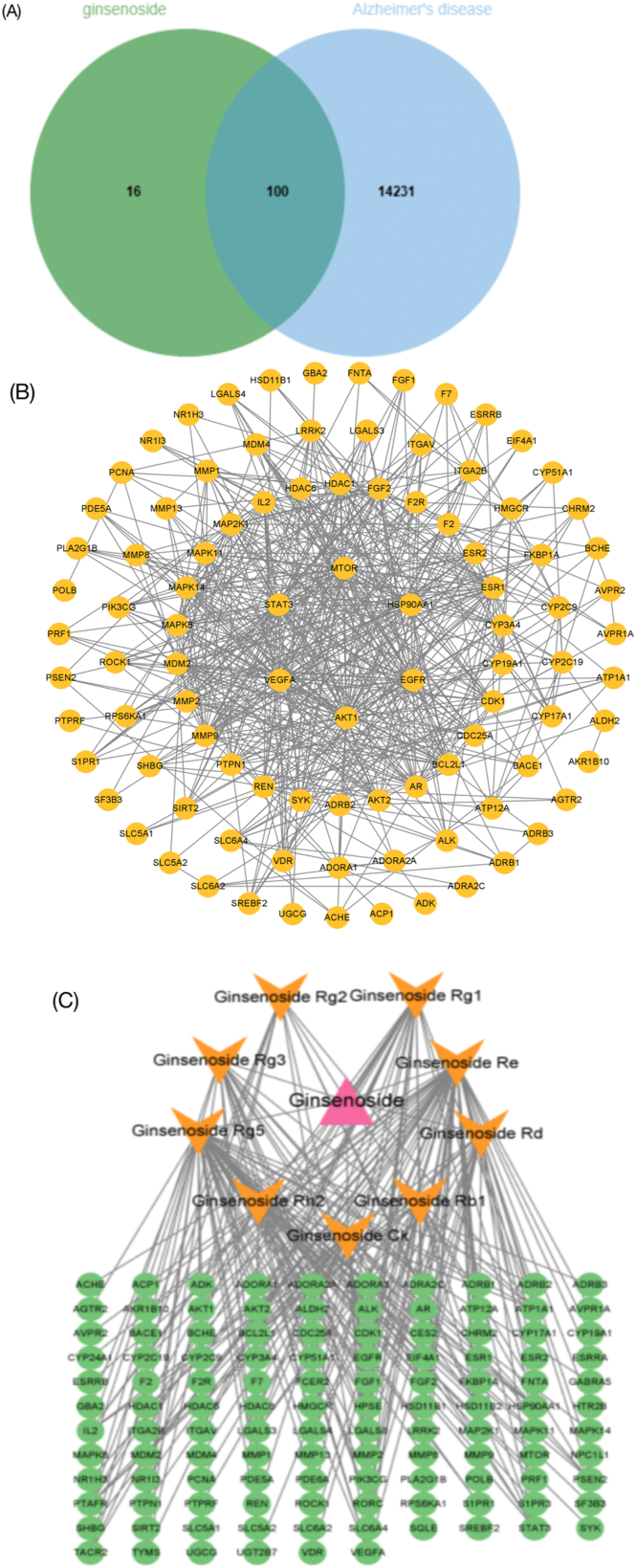
Alzheimer's disease (AD) is a progressive neurodegenerative disease characterized by memory loss, cognitive disorder, language dysfunction, and mental disability. The main neuropathological changes in AD mainly include amyloid plaque deposition, neurofibrillary tangles, synapse loss, and neuron reduction. However, the current anti-AD drugs do not demonstrate a favorable effect in altering the pathological course of AD. Moreover, long-term use of these drugs is usually accompanied with various side effects. Ginsenosides are the major active constituents of ginseng and have protective effects on AD through various mechanisms in both and studies. In this review, we focused on discussing the therapeutic potential effects and the mechanisms of pharmacological activities of ginsenosides in AD, to provide new insight for further research and clinical application of ginsenosides in the future. Recent studies on the pharmacological effects and mechanisms of ginsenosides were retrieved from Chinese National Knowledge Infrastructure, National Science and Technology Library, Wanfang Data, Elsevier, ScienceDirect, PubMed, SpringerLink, and the Web of Science database up to April 2023 using relevant keywords. Network pharmacology and bioinformatics analysis were used to predict the therapeutic effects and mechanisms of ginsenosides against AD. Ginsenosides presented a wide range of therapeutic and biological activities, including alleviating Aβ deposition, decreasing tau hyperphosphorylation, regulating the cholinergic system, resisting oxidative stress, modulating Ca homeostasis, as well as anti-inflammation and anti-apoptosis in neurons, respectively. For further developing the therapeutic potential as well as clinical applications, the network pharmacology approach was combined with a summary of published studies.
阿尔茨海默病(AD)是一种进行性神经退行性疾病,其特征为记忆力减退、认知障碍、语言功能障碍和智力残疾。AD的主要神经病理学变化主要包括淀粉样斑块沉积、神经原纤维缠结、突触丧失和神经元减少。然而,目前的抗AD药物在改变AD病理进程方面并未显示出良好效果。此外,长期使用这些药物通常会伴有各种副作用。人参皂苷是人参的主要活性成分,在体内和体外研究中均通过多种机制对AD具有保护作用。在本综述中,我们着重讨论人参皂苷在AD中的治疗潜在作用及其药理活性机制,为未来人参皂苷的进一步研究和临床应用提供新的见解。使用相关关键词,从中国知网、国家科技图书文献中心、万方数据、爱思唯尔、ScienceDirect、PubMed、SpringerLink以及Web of Science数据库中检索截至2023年4月的关于人参皂苷药理作用和机制的最新研究。采用网络药理学和生物信息学分析来预测人参皂苷对AD的治疗作用和机制。人参皂苷呈现出广泛的治疗和生物学活性,分别包括减轻Aβ沉积、降低tau蛋白过度磷酸化、调节胆碱能系统、抵抗氧化应激、调节钙稳态以及神经元的抗炎和抗凋亡作用。为了进一步开发其治疗潜力以及临床应用,将网络药理学方法与已发表研究的总结相结合。