Pezantes-Orellana Camila, German Bermúdez Fátima, Matías De la Cruz Carmen, Montalvo José Luis, Orellana-Manzano Andrea
NovaVita, Guayaquil, Ecuador.
Laboratorio para Investigaciones Biomédicas, Facultad de Ciencias de la Vida, Escuela Superior Politécnica del Litoral (ESPOL), Guayaquil, Ecuador.
Front Med (Lausanne). 2024 Feb 16;11:1337785. doi: 10.3389/fmed.2024.1337785. eCollection 2024.
Essential oils from various plants have diverse therapeutic properties and are researched extensively. They have applications in medicine, aromatherapy, microbiology, agriculture, livestock, and the food industry, benefiting the population.
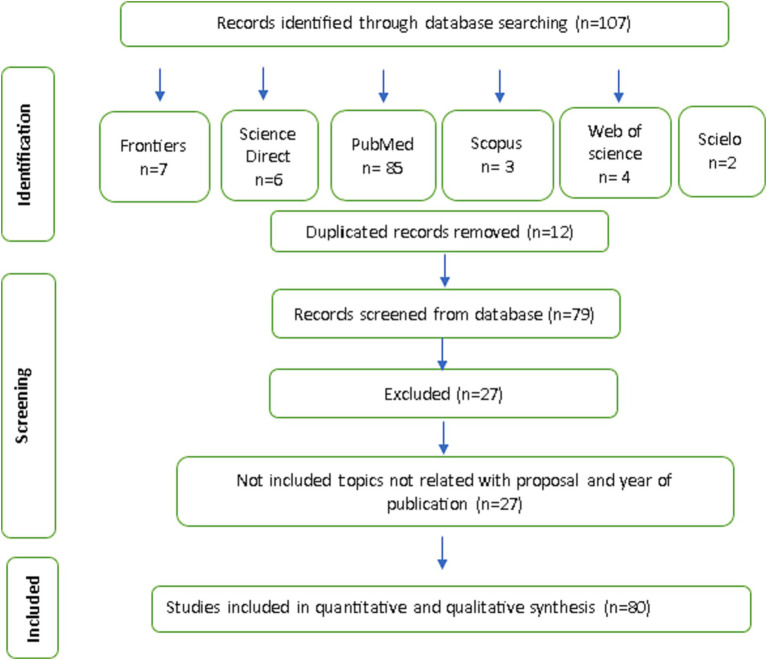
This systematic review followed the PRISMA verification protocol. The study focused on the anti-inflammatory effects, nutraceutical properties, antioxidant and antibacterial activity of essential oils in lemon, orange, cumin, cinnamon, coriander, rosemary, thyme, and parsley. We also looked at their presence in the diet, their effect, their mechanism of action on health, and the most important active compounds. The search was conducted in the PubMed database for the last 12 years of publications, including , , and online cell model tests.
Essential oils have been shown to have multiple health benefits, primarily due to their antimicrobial and anti-inflammatory effects. The mechanism of action of cinnamon oil alters bacterial membranes, modifies lipid profiles, and inhibits cell division, giving a potential benefit in protection against colitis. On the other hand, a significant improvement was observed in the diastolic pressure of patients with metabolic syndrome when supplementing them with cumin essential oil. The antimicrobial properties of coriander essential oil, especially its application in seafood like tilapia, demonstrate efficacy in improving health and resistance to bacterial infections. Cumin essential oil treats inflammation. Parsley essential oil is an antioxidant. Orange peel oil is antibacterial, antifungal, antiparasitic, and pro-oxidative. Lemon essential oil affects mouse intestinal microbiota. Thyme essential oil protects the colon against damage and DNA methylation. Carnosic acid in rosemary oil can reduce prostate cancer cell viability by modifying the endoplasmic reticulum function.
Essential oils have many therapeutic and antiparasitic properties. They are beneficial to human health in many ways. However, to understand their potential benefits, more research is needed regarding essential oils such as coriander, parsley, rosemary, cumin, and thyme. These research gaps are relevant since they restrict understanding of the possible benefits of these crucial oils for health-related contexts.
来自各种植物的精油具有多种治疗特性,并且受到广泛研究。它们在医学、芳香疗法、微生物学、农业、畜牧业和食品工业中都有应用,造福于大众。
本系统评价遵循PRISMA验证方案。该研究聚焦于柠檬、橙子、孜然、肉桂、香菜、迷迭香、百里香和欧芹中精油的抗炎作用、营养特性、抗氧化和抗菌活性。我们还研究了它们在饮食中的存在情况、效果、对健康的作用机制以及最重要的活性成分。在PubMed数据库中搜索了过去12年的出版物,包括[具体文献类型未给出]以及在线细胞模型测试。
精油已被证明具有多种健康益处,主要归因于它们的抗菌和抗炎作用。肉桂油的作用机制会改变细菌膜、改变脂质谱并抑制细胞分裂,在预防结肠炎方面具有潜在益处。另一方面,给代谢综合征患者补充孜然精油时,观察到舒张压有显著改善。香菜精油的抗菌特性,尤其是其在罗非鱼等海鲜中的应用,证明在改善健康和抵抗细菌感染方面有效。孜然精油可治疗炎症。欧芹精油是一种抗氧化剂。橙皮油具有抗菌、抗真菌、抗寄生虫和促氧化作用。柠檬精油会影响小鼠肠道微生物群。百里香精油可保护结肠免受损伤和DNA甲基化。迷迭香油中的鼠尾草酸可通过改变内质网功能降低前列腺癌细胞的活力。
精油具有许多治疗和抗寄生虫特性。它们在许多方面对人类健康有益。然而,为了了解它们的潜在益处,需要对香菜、欧芹、迷迭香、孜然和百里香等精油进行更多研究。这些研究空白很重要,因为它们限制了我们对这些关键精油在健康相关背景下可能带来的益处的理解。