Centre de Recherche en Cancérologie de Lyon, UMR INSERM U1052 CNRS 5286, Centre Léon Bérard, Lyon, France.
ErVimmune, Lyon, France.
Cell Mol Immunol. 2024 Apr;21(4):315-331. doi: 10.1038/s41423-024-01145-x. Epub 2024 Mar 5.
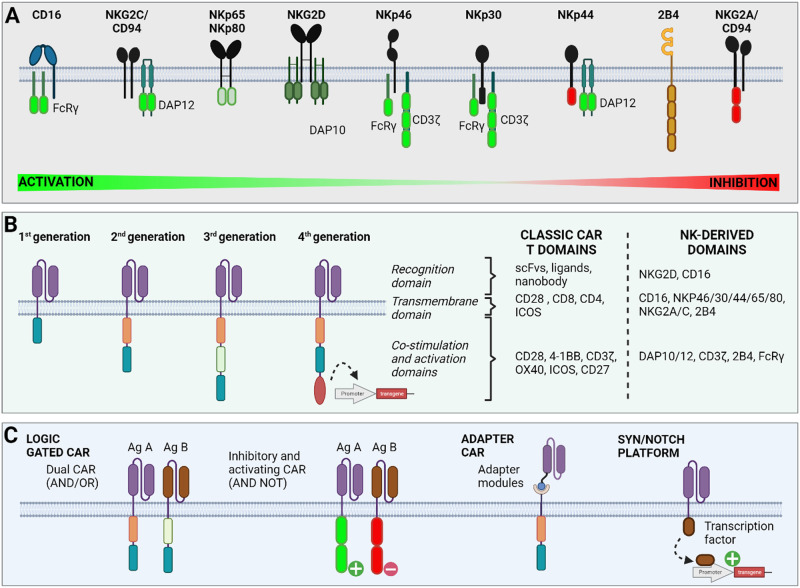
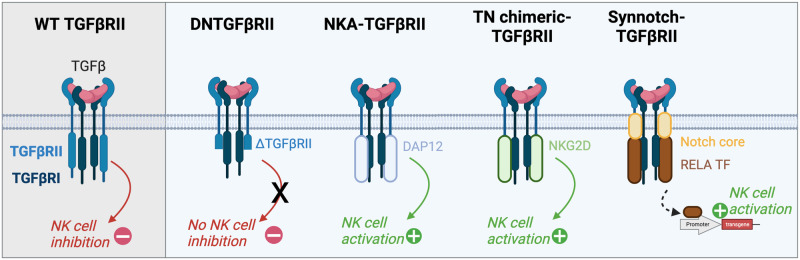
Natural killer (NK) cell-based immunotherapies are attracting increasing interest in the field of cancer treatment. Early clinical trials have shown promising outcomes, alongside satisfactory product efficacy and safety. Recent developments have greatly increased the therapeutic potential of NK cells by endowing them with enhanced recognition and cytotoxic capacities. This review focuses on surface receptor engineering in NK cell therapy and discusses its impact, challenges, and future directions.Most approaches are based on engineering with chimeric antigen receptors to allow NK cells to target specific tumor antigens independent of human leukocyte antigen restriction. This approach has increased the precision and potency of NK-mediated recognition and elimination of cancer cells. In addition, engineering NK cells with T-cell receptors also mediates the recognition of intracellular epitopes, which broadens the range of target peptides. Indirect tumor peptide recognition by NK cells has also been improved by optimizing immunoglobulin constant fragment receptor expression and signaling. Indeed, engineered NK cells have an improved ability to recognize and destroy target cells coated with specific antibodies, thereby increasing their antibody-dependent cellular cytotoxicity. The ability of NK cell receptor engineering to promote the expansion, persistence, and infiltration of transferred cells in the tumor microenvironment has also been explored. Receptor-based strategies for sustained NK cell functionality within the tumor environment have also been discussed, and these strategies providing perspectives to counteract tumor-induced immunosuppression.Overall, receptor engineering has led to significant advances in NK cell-based cancer immunotherapies. As technical challenges are addressed, these innovative treatments will likely reshape cancer immunotherapy.
自然杀伤 (NK) 细胞为基础的免疫疗法在癌症治疗领域越来越受到关注。早期临床试验显示出了有希望的结果,同时产品疗效和安全性也令人满意。最近的发展通过赋予 NK 细胞增强的识别和细胞毒性能力,极大地增加了 NK 细胞的治疗潜力。这篇综述集中讨论了 NK 细胞治疗中的表面受体工程,并讨论了其影响、挑战和未来方向。
大多数方法都是基于嵌合抗原受体的工程,使 NK 细胞能够靶向特定的肿瘤抗原,而不受人类白细胞抗原限制。这种方法提高了 NK 介导的识别和消除癌细胞的精确性和效力。此外,用 T 细胞受体工程化 NK 细胞也介导了对细胞内表位的识别,从而拓宽了靶肽的范围。通过优化免疫球蛋白恒定区受体表达和信号转导,也提高了 NK 细胞对间接肿瘤肽的识别。事实上,工程化 NK 细胞具有更好的能力来识别和破坏特异性抗体包被的靶细胞,从而提高其抗体依赖性细胞毒性。NK 细胞受体工程促进转移细胞在肿瘤微环境中的扩增、持续存在和浸润的能力也得到了探索。还讨论了基于受体的在肿瘤环境中持续 NK 细胞功能的策略,这些策略为对抗肿瘤诱导的免疫抑制提供了新的视角。
总之,受体工程在 NK 细胞为基础的癌症免疫疗法方面取得了重大进展。随着技术挑战的解决,这些创新的治疗方法可能会重塑癌症免疫疗法。