Dolce Daniela, Ravenni Novella, Fevola Cristina, Francalanci Michela, Bonomi Paolo, Cavicchi Maria Chiara, Galici Valeria, Neri Anna Silvia, Taccetti Giovanni, Terlizzi Vito, Innocenti Diletta, Ferrari Beatrice, Bianchimani Chiara, Camera Erica, Orioli Tommaso, Campana Silvia
Meyer Children's Hospital IRCCS, Cystic Fibrosis Regional Reference Centre, Department of Paediatric Medicine, Florence, 50139, Italy.
Freelance Statistician, Milan, 20146, Italy.
Heliyon. 2024 Feb 29;10(5):e26978. doi: 10.1016/j.heliyon.2024.e26978. eCollection 2024 Mar 15.
The upper airways of cystic fibrosis (CF) persons are an evolutionary niche where genetically adapted bacterial strains are selected for lung infection. The microbiological studies conducted up to now on the upper airways are not easily comparable.
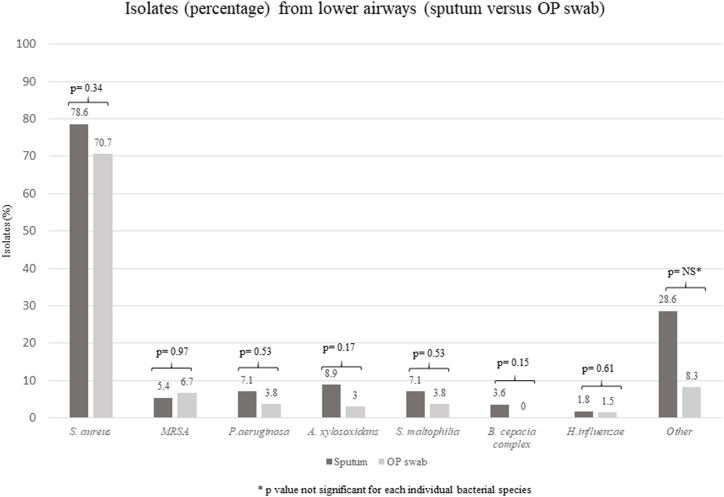
Using classical culture methods, we simultaneously studied the microbiological status of upper and lower airways in persons not chronically infected with . Each person had a single upper airways sampling and a concomitant lower airways sampling. Lower airways sampling was performed by oropharyngeal swab or sputum collection. Using a quasi-experimental design of study, we evaluated the performance of 2 different upper airways' sampling methods, nasal lavage according to method described by Mainz or nasal lavage with a rhino-set. Pain was measured with appropriate scales.
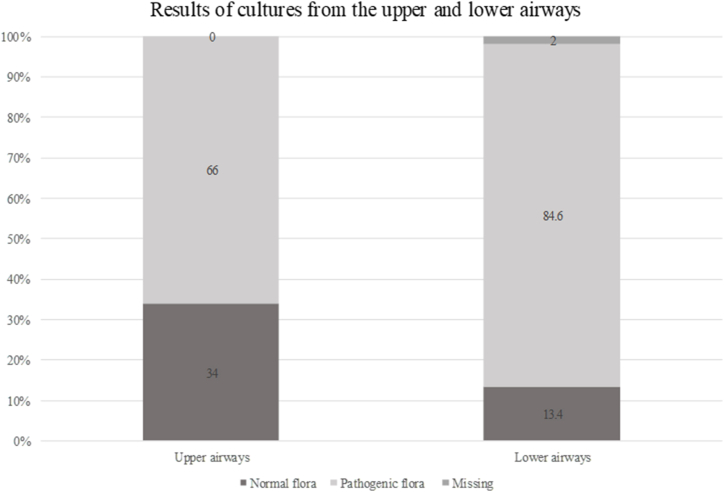
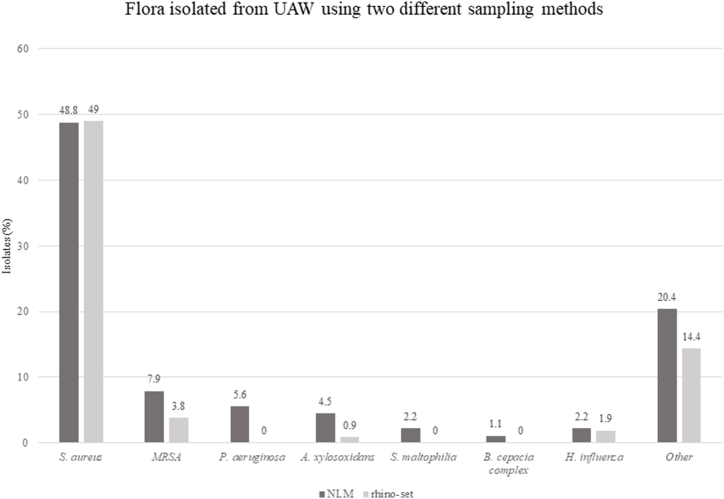
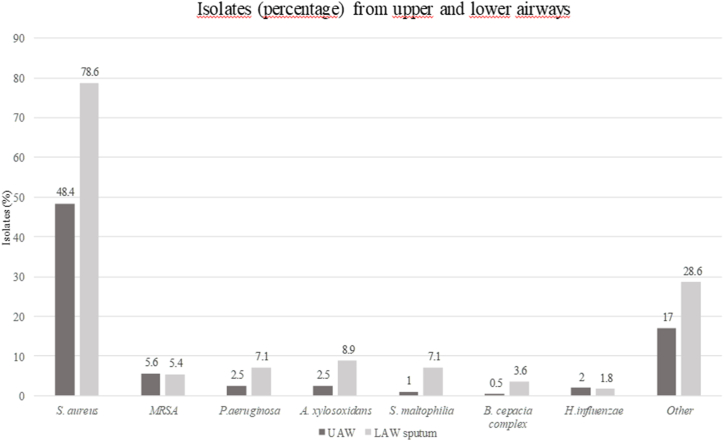
A total of 194 persons were enrolled in this study. Pathogenic flora was found in 128 (6.6%) of 194 upper airways samples and in 164 (84.6%) lower airways samples. A statistically significant difference between the upper airways and the lower airways was found in the isolation of and non-fermenter gram negatives. Nasal lavage according to Mainz resulted in the isolation of more non-fermenter gramnegatives than the rhino-set (p < 0.05). No differences were found in the pain caused bythe two methods.
In our study population, cultures of the upper airway and lower airway differ in CF persons. In people sampled with nasal lavage according to Mainz more non-fermenter gram negatives were detected than with rhino-set. The two sampling methods were comparable with regard to the caused pain, nasal lavage according to Mainz method being quicker to perform.
囊性纤维化(CF)患者的上呼吸道是一个进化生态位,在此会选择基因适应的细菌菌株用于肺部感染。目前对上呼吸道进行的微生物学研究不易进行比较。
我们使用经典培养方法,同时研究了未慢性感染的患者上呼吸道和下呼吸道的微生物学状况。每位患者进行一次上呼吸道采样和一次同步的下呼吸道采样。下呼吸道采样通过口咽拭子或痰液采集进行。采用准实验研究设计,我们评估了两种不同的上呼吸道采样方法的性能,即根据美因茨描述的方法进行鼻腔灌洗或使用鼻用套件进行鼻腔灌洗。使用适当的量表测量疼痛程度。
本研究共纳入194名患者。在194份上呼吸道样本中的128份(6.6%)和164份下呼吸道样本中的164份(84.6%)中发现了致病菌群。在上呼吸道和下呼吸道分离出的[具体细菌名称未给出]和非发酵革兰氏阴性菌方面存在统计学显著差异。根据美因茨方法进行的鼻腔灌洗分离出的非发酵革兰氏阴性菌比鼻用套件更多(p < 0.05)。两种方法引起的疼痛没有差异。
在我们的研究人群中,CF患者的上呼吸道和下呼吸道培养结果不同。根据美因茨方法进行鼻腔灌洗采样的患者中检测到的非发酵革兰氏阴性菌比使用鼻用套件的患者更多。两种采样方法在引起的疼痛方面具有可比性,根据美因茨方法进行鼻腔灌洗操作更快。