Wang Li-Ting
Department of Leisure and Recreation Management, Taipei City University of Science & Technology, Taipei.
Digit Health. 2024 Mar 5;10:20552076241237391. doi: 10.1177/20552076241237391. eCollection 2024 Jan-Dec.
This study aimed to examine the effects of semi-immersive virtual reality (VR)-based exercise on the quality of life of older adults.
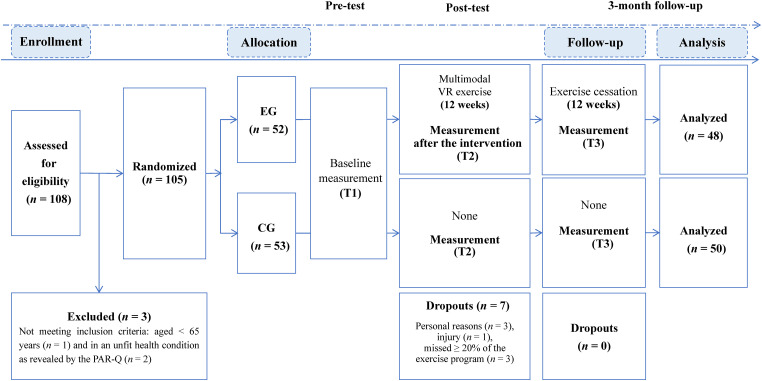
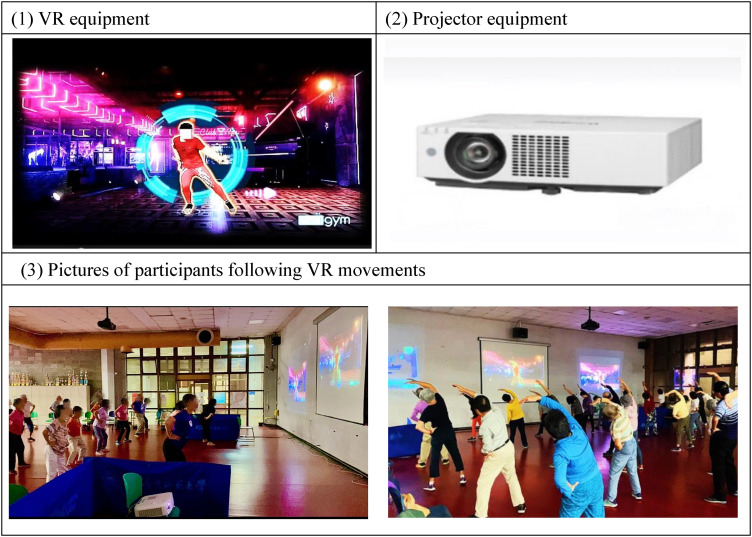
It used a randomized controlled trial design. Older adults (mean age: 72.16 ± 4.9 years) were randomly assigned to experimental (= 48) and control (= 50) groups. The experimental group engaged in semi-immersive VR exercise for 75-90 min, twice a week, for 12 weeks and partook in no other intervention between the end of the exercise intervention and follow-up. Control group members did not participate in any similar program during the intervention or follow-up periods. Both groups completed three assessments: at baseline (pre-test), post-intervention (post-test), and 3 months later (follow-up). Quality of life was assessed using the World Health Organization Quality of Life Instrument-Older Adults Module.
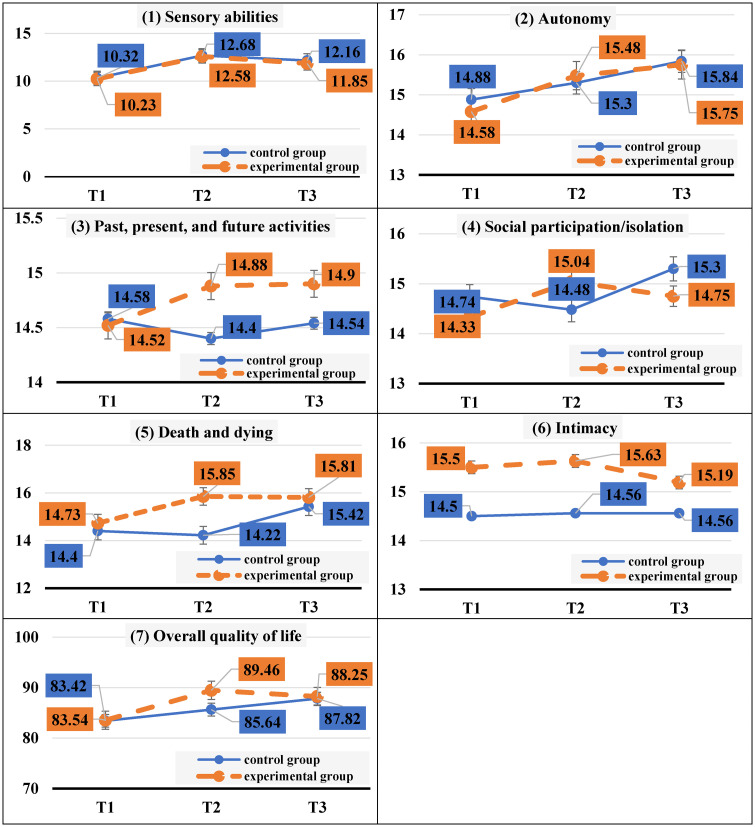
Generalized estimating equation analyses indicated that the experimental group exhibited significant post-intervention improvements in quality of life in terms of sensory ability, autonomy, social participation/isolation, death and dying domain, and overall quality of life scores. However, none of these significant effects were maintained 3 months after exercise intervention cessation.
Semi-immersive VR exercise may be a feasible strategy toward enhancing the quality of life of older adults. However, the participants' quality of life was not maintained upon exercise cessation, indicating that older adults need to be encouraged to exercise regularly to maintain a good quality of life. VR may need to be combined with other modes of intervention in the future to facilitate long-term quality-of-life improvement in older adults.
本研究旨在探讨基于半沉浸式虚拟现实(VR)的运动对老年人生活质量的影响。
采用随机对照试验设计。将老年人(平均年龄:72.16±4.9岁)随机分为实验组(n = 48)和对照组(n = 50)。实验组每周进行两次75 - 90分钟的半沉浸式VR运动,持续12周,且在运动干预结束至随访期间不参与其他干预。对照组在干预或随访期间未参加任何类似项目。两组均在基线(预测试)、干预后(后测试)和3个月后(随访)完成三项评估。使用世界卫生组织生活质量量表 - 老年人模块评估生活质量。
广义估计方程分析表明,实验组在感觉能力、自主性、社会参与/孤立、死亡与临终领域以及总体生活质量得分方面,干预后生活质量有显著改善。然而,运动干预停止3个月后,这些显著效果均未维持。
半沉浸式VR运动可能是提高老年人生活质量的一种可行策略。然而,运动停止后参与者的生活质量未能维持,这表明需要鼓励老年人定期运动以保持良好的生活质量。未来VR可能需要与其他干预方式相结合,以促进老年人生活质量的长期改善。