Anaesthesia and Intensive Care Division, San Camillo-Forlanini Hospital Rome, Rome, Italy.
Otolaryngology Unit, San-Camillo Forlanini Hospital, Rome, Italy.
J Med Case Rep. 2024 Mar 7;18(1):143. doi: 10.1186/s13256-023-04303-3.
Every year 2% of pregnant women undergo nonobstetric surgical interventions worldwide. According to the American College of Obstetricians and Gynecologists Committee on Obstetric Practice, pregnant women should never be denied the most appropriate surgical treatment, regardless of the trimester of pregnancy. However, additional attention should be paid during the first trimester since it has the highest risk of inducing teratogenic mutations; additionally, during the third trimester, due to the possibility of preterm birth and low birth weight of the newborn, great care should be paid.
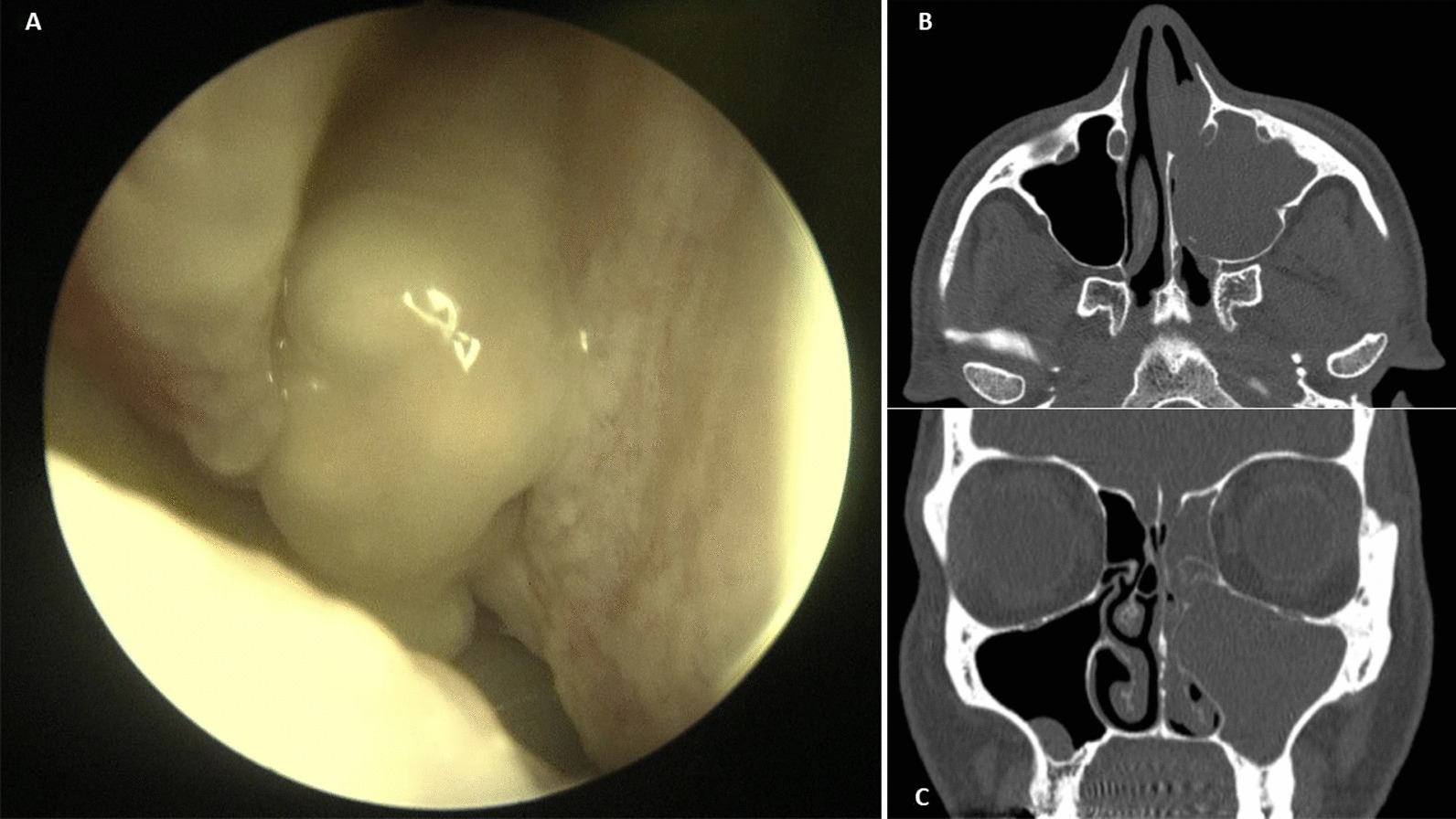
We present the case of a Caucasian 36-year-old woman during her 21st week of pregnancy, with a normal-sized fetus, according to the gestational age on ultrasound exam, and with no additional risk factors. The patient referred to an increasing nasal obstruction associated with rhinorrhea of the left nasal cavity. She also reported episodes of sleep apnea and hyposmia. The patient received a detailed otolaryngological examination, which allowed for identification of a mass within the left nasal cavity. The subsequent nasal endoscopy confirmed a grayish polypoid mass lesion with a multinodular surface occupying the entire left nasal fossa. The lesion totally obliterated the left maxillary sinus, resulting in obstruction of the anterior osteomeatal unit and ethmoidal sinusitis. She was referred for a functional endoscopic sinus surgery using analgosedation with remifentanil target-controlled infusion.
To the very best of our knowledge, this is the first case described in English literature about the use of analgosedation with remifentanil target-controlled infusion for otolaryngology surgery, specifically in functional endoscopic sinus surgery. It could be an interesting option to avoid the use of inhaled anesthetics that could induce fetal damage, especially during the first months of pregnancy. Furthermore, patient intubation is not necessary, which avoids cases of difficult intubation or any trauma to the airways. An adequate informed consent and appropriate compliance are elements of paramount importance in tailoring the anesthetic strategy for pregnant women who need nonobstetric surgical management.
全球每年有 2%的孕妇需要接受非产科手术干预。根据美国妇产科医师学会产科实践委员会的规定,无论孕妇处于妊娠的哪个阶段,都不应拒绝给予最合适的手术治疗。然而,由于第一个孕期有诱发致畸突变的最高风险,因此应格外注意;此外,在第三个孕期,由于早产和新生儿低体重的可能性,应特别注意。
我们介绍了一位 36 岁的白人孕妇,她在妊娠第 21 周,根据超声检查的孕周,胎儿大小正常,没有其他危险因素。患者自述左侧鼻腔鼻塞逐渐加重,伴有流涕。她还报告了睡眠呼吸暂停和嗅觉减退的症状。患者接受了详细的耳鼻喉科检查,发现左侧鼻腔内有一个肿块。随后的鼻内镜检查证实了一个灰白色息肉样肿块病变,表面呈多结节状,占据了整个左侧鼻腔。病变完全阻塞了左侧上颌窦,导致前鼻额窦复合体和筛窦炎阻塞。她被转介进行功能性内镜鼻窦手术,采用瑞芬太尼靶控输注进行镇痛镇静。
据我们所知,这是英语文献中首例描述瑞芬太尼靶控输注用于耳鼻喉科手术(特别是功能性内镜鼻窦手术)的病例。对于避免使用可能导致胎儿损伤的吸入性麻醉剂,尤其是在妊娠的头几个月,这可能是一种有趣的选择。此外,不需要进行患者插管,这可以避免出现插管困难或气道创伤的情况。充分的知情同意和适当的配合是为需要非产科手术治疗的孕妇制定麻醉策略的至关重要的要素。