Janssen Vaccines and Prevention B.V., Archimedesweg 4-6, Leiden, The Netherlands.
Molecular Virology Laboratory, Department of Medical Microbiology, Leiden University Medical Center, Leiden, The Netherlands.
Sci Rep. 2024 Mar 8;14(1):5735. doi: 10.1038/s41598-024-56293-x.
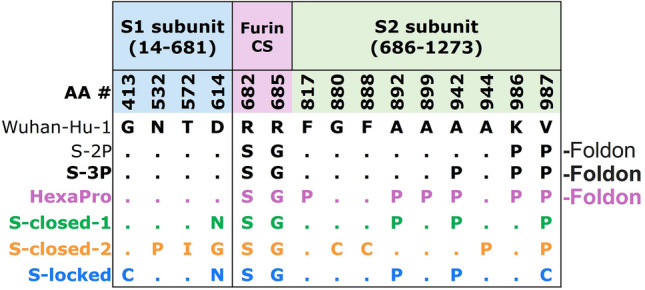
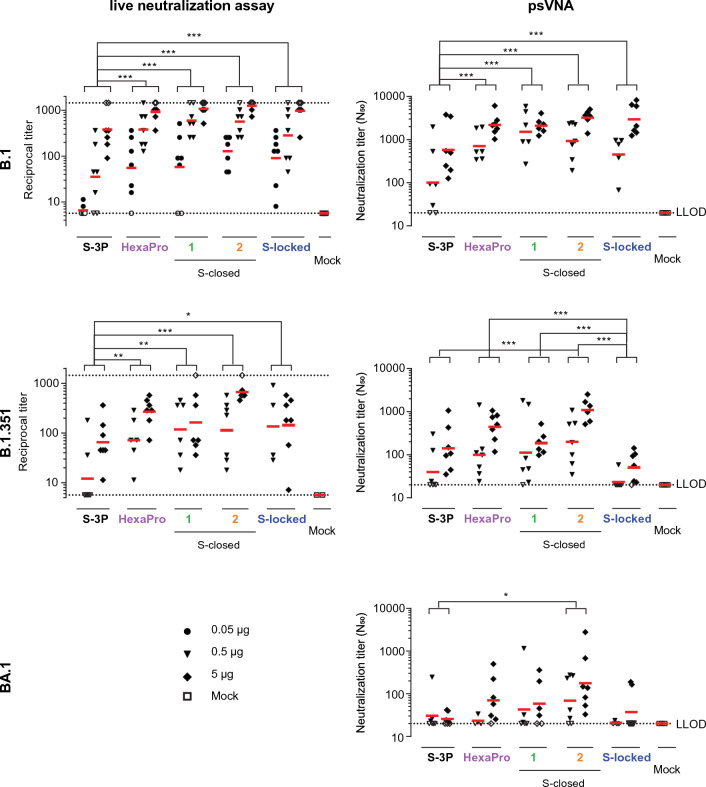
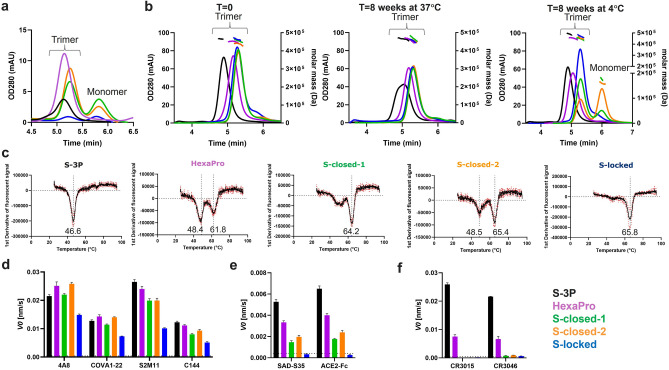
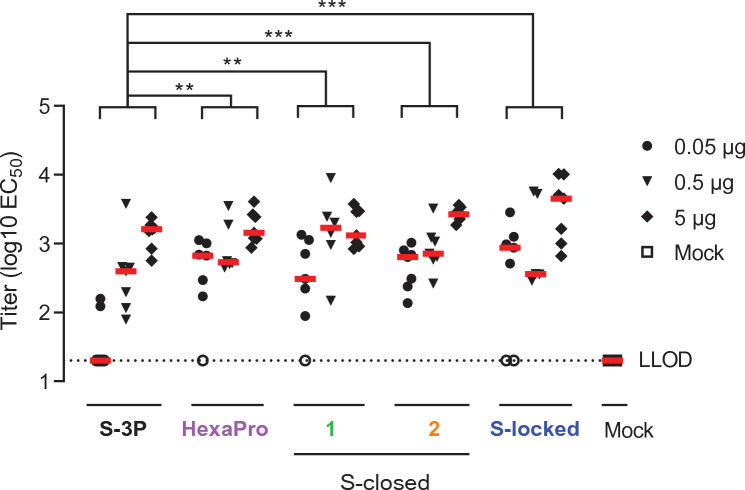
The spike protein (S) of SARS-CoV-2 induces neutralizing antibodies and is the key component of current COVID-19 vaccines. The most efficacious COVID-19 vaccines are genetically-encoded spikes with a double proline substitution in the hinge region to stabilize S in the prefusion conformation (S-2P). A subunit vaccine can be a valuable addition to mRNA and viral vector-based vaccines but requires high stability of spike. In addition, further stabilization of the prefusion conformation of spike might improve immunogenicity. To test this, five spike proteins were designed and characterized, ranging from low to high stability. The immunogenicity of these proteins was assessed in mice, demonstrating that a spike (S-closed-2) with a high melting temperature, which still allowed ACE2 binding, induced the highest neutralization titers against homologous and heterologous strains (up to 16-fold higher than the least stabilized spike). In contrast, the most stable spike variant (S-locked), in which the receptor binding domains (RBDs) were locked in a closed conformation and thus not able to breathe, induced relatively low neutralizing antibody titers against heterologous strains. These data demonstrate that S protein stabilization with RBDs exposing highly conserved epitopes may be needed to increase the immunogenicity of spike proteins for future COVID-19 vaccines.
SARS-CoV-2 的刺突蛋白(S)诱导中和抗体,是当前 COVID-19 疫苗的关键组成部分。最有效的 COVID-19 疫苗是在铰链区带有双脯氨酸取代的基因编码刺突,以稳定 S 的预融合构象(S-2P)。亚单位疫苗可以是 mRNA 和病毒载体疫苗的有价值的补充,但需要刺突具有高稳定性。此外,进一步稳定刺突的预融合构象可能会提高免疫原性。为了验证这一点,设计并表征了五种刺突蛋白,其稳定性范围从低到高。这些蛋白在小鼠中的免疫原性进行了评估,结果表明,一种具有高热稳定性的刺突(S-closed-2),仍允许 ACE2 结合,诱导针对同源和异源株的最高中和效价(比最不稳定的刺突高 16 倍)。相比之下,最稳定的刺突变体(S-locked),其受体结合域(RBD)被锁定在封闭构象中,因此无法呼吸,诱导针对异源株的相对较低的中和抗体效价。这些数据表明,S 蛋白稳定性与 RBD 暴露高度保守表位可能需要提高刺突蛋白的免疫原性,用于未来的 COVID-19 疫苗。