Abdullah Mohan, Abrha Ftsum Berhe, Kedir Beshir, Tamirat Tagesse Takore
Department of Electrical and Computer Engineering, Wachemo University, Ethiopia.
Heliyon. 2024 Feb 29;10(5):e26938. doi: 10.1016/j.heliyon.2024.e26938. eCollection 2024 Mar 15.
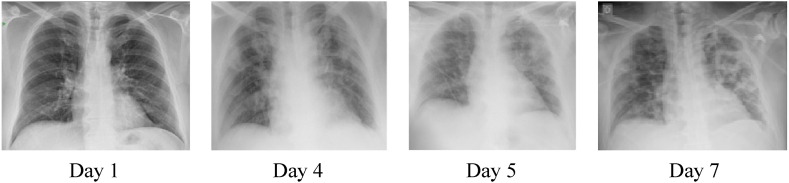
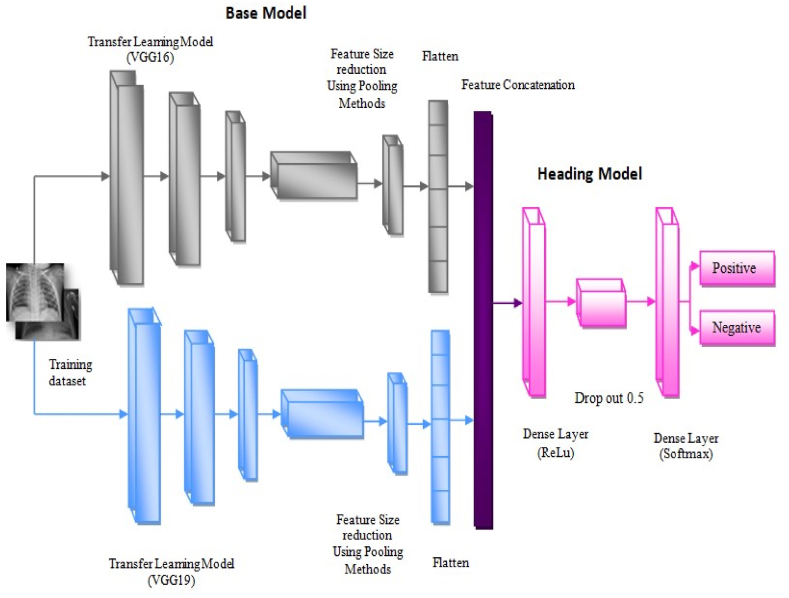
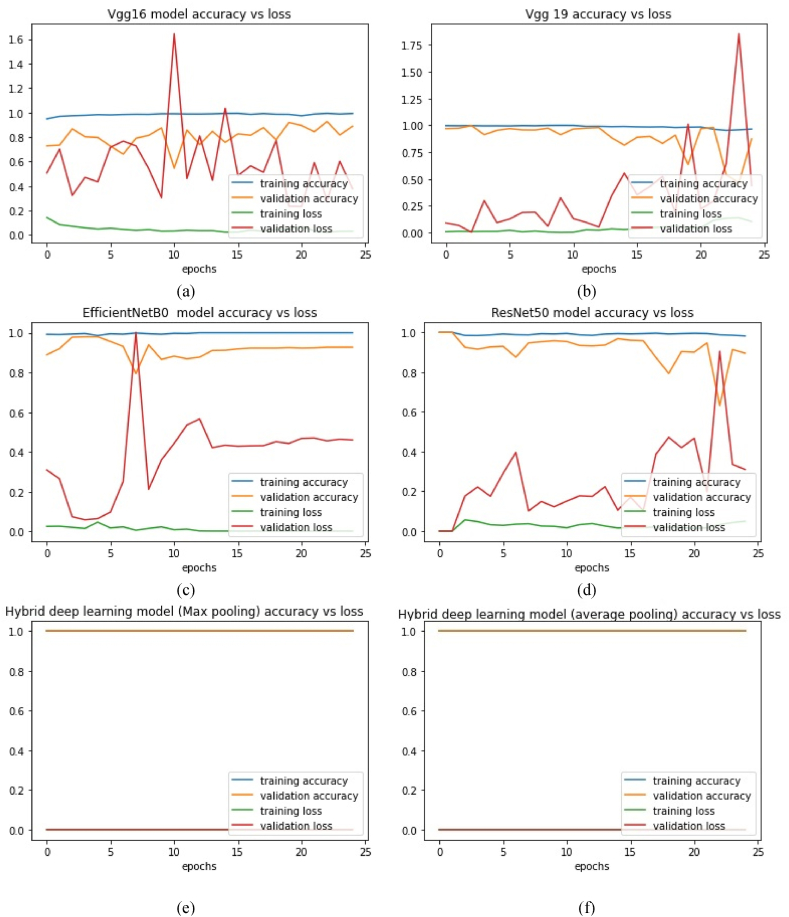
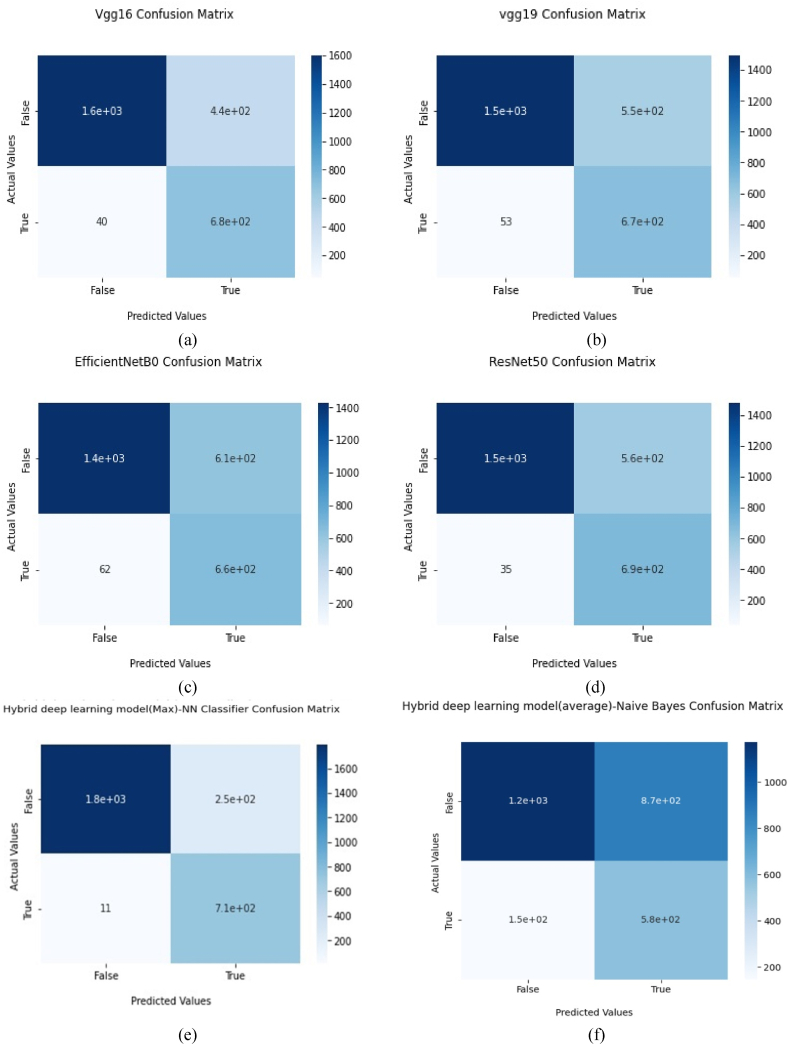
Coronavirus disease (COVID-2019) is emerging in Wuhan, China in 2019. It has spread throughout the world since the year 2020. Millions of people were affected and caused death to them till now. To avoid the spreading of COVID-2019, various precautions and restrictions have been taken by all nations. At the same time, infected persons are needed to identify and isolate, and medical treatment should be provided to them. Due to a deficient number of Reverse Transcription Polymerase Chain Reaction (RT-PCR) tests, a Chest X-ray image is becoming an effective technique for diagnosing COVID-19. In this work, the Hybrid Deep Learning CNN model is proposed for the diagnosis COVID-19 using chest X-rays. The proposed model consists of a heading model and a base model. The base model utilizes two pre-trained deep learning structures such as VGG16 and VGG19. The feature dimensions from these pre-trained models are reduced by incorporating different pooling layers, such as max and average. In the heading part, dense layers of size three with different activation functions are also added. A dropout layer is supplemented to avoid overfitting. The experimental analyses are conducted to identify the efficacy of the proposed hybrid deep learning with existing transfer learning architectures such as VGG16, VGG19, EfficientNetB0 and ResNet50 using a COVID-19 radiology database. Various classification techniques, such as K-Nearest Neighbor (KNN), Naive Bayes, Random Forest, Support Vector Machine (SVM), and Neural Network, were also used for the performance comparison of the proposed model. The hybrid deep learning model with average pooling layers, along with SVM-linear and neural networks, both achieved an accuracy of 92%.These proposed models can be employed to assist radiologists and physicians in avoiding misdiagnosis rates and to validate the positive COVID-19 infected cases.
冠状病毒病(COVID - 2019)于2019年在中国武汉出现。自2020年以来已蔓延至全球。截至目前,数百万人受到影响并因此死亡。为避免COVID - 2019传播,各国采取了各种预防措施和限制措施。同时,需要识别并隔离感染者,并为他们提供医疗救治。由于逆转录聚合酶链反应(RT - PCR)检测数量不足,胸部X光图像正成为诊断COVID - 19的有效技术。在这项工作中,提出了用于使用胸部X光诊断COVID - 19的混合深度学习卷积神经网络(CNN)模型。所提出的模型由一个头部模型和一个基础模型组成。基础模型利用两个预训练的深度学习结构,如VGG16和VGG19。通过合并不同的池化层,如最大池化和平均池化,来减小这些预训练模型的特征维度。在头部部分,还添加了具有不同激活函数的三个密集层。补充了一个随机失活层以避免过拟合。使用COVID - 19放射学数据库进行实验分析,以确定所提出的混合深度学习与现有迁移学习架构(如VGG16、VGG19、EfficientNetB0和ResNet50)相比的有效性。还使用了各种分类技术,如K近邻(KNN)、朴素贝叶斯、随机森林、支持向量机(SVM)和神经网络,来对所提出模型的性能进行比较。具有平均池化层的混合深度学习模型,与SVM - 线性模型和神经网络一样,都达到了92%的准确率。这些所提出的模型可用于协助放射科医生和医生避免误诊率,并验证COVID - 19阳性感染病例。