Division of Pharmacy and Optometry, School of Health Sciences, Manchester Academic Health Sciences Centre, University of Manchester, Oxford Road, Manchester, M13 9PL, UK.
Daresbury Laboratory, Science and Technologies Facilities Council (STFC), Keckwick Lane, Daresbury, Warrington, WA4 4AD, UK.
J Comput Aided Mol Des. 2024 Mar 12;38(1):11. doi: 10.1007/s10822-024-00557-1.
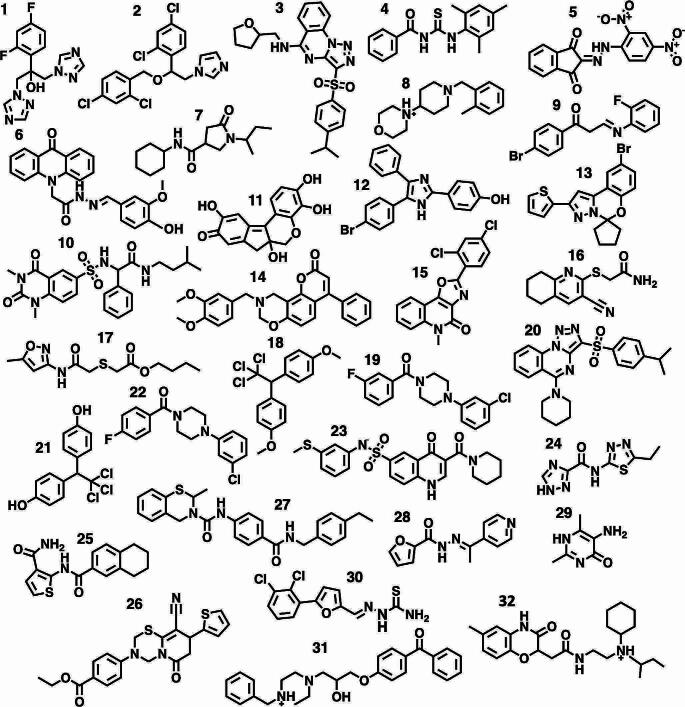
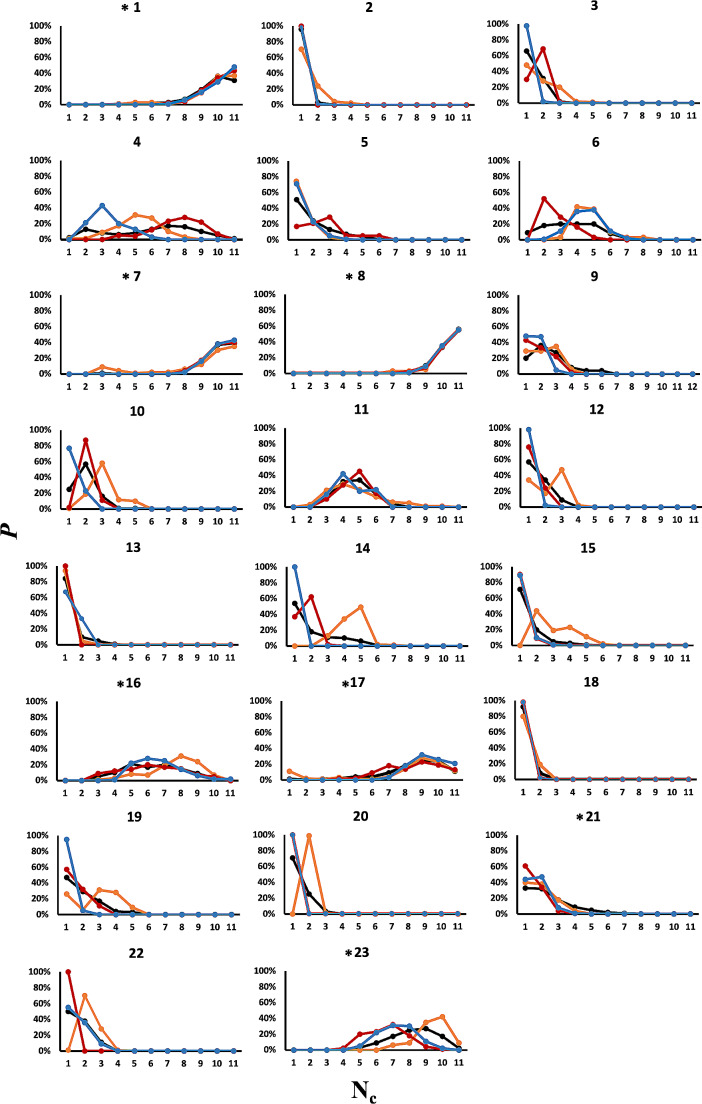
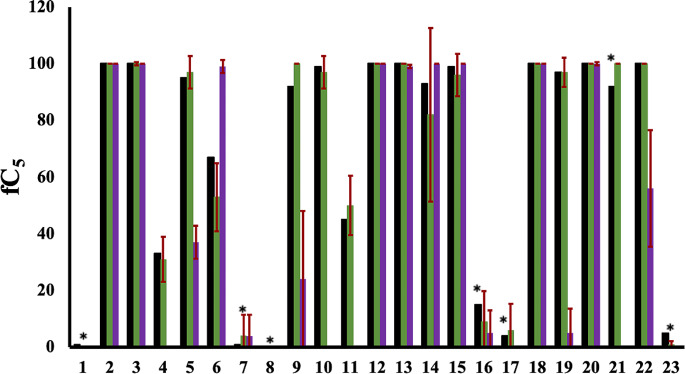
Small colloidally aggregating molecules (SCAMs) can be problematic for biological assays in drug discovery campaigns. However, the self-associating properties of SCAMs have potential applications in drug delivery and analytical biochemistry. Consequently, the ability to predict the aggregation propensity of a small organic molecule is of considerable interest. Chemoinformatics-based filters such as ChemAGG and Aggregator Advisor offer rapid assessment but are limited by the assay quality and structural diversity of their training set data. Complementary to these tools, we explore here the ability of molecular dynamics (MD) simulations as a physics-based method capable of predicting the aggregation propensity of diverse chemical structures. For a set of 32 molecules, using simulations of 100 ns in explicit solvent, we find a success rate of 97% (one molecule misclassified) as opposed to 75% by Aggregator Advisor and 72% by ChemAGG. These short timescale MD simulations are representative of longer microsecond trajectories and yield an informative spectrum of aggregation propensities across the set of solutes, capturing the dynamic behaviour of weakly aggregating compounds. Implicit solvent simulations using the generalized Born model were less successful in predicting aggregation propensity. MD simulations were also performed to explore structure-aggregation relationships for selected molecules, identifying chemical modifications that reversed the predicted behaviour of a given aggregator/non-aggregator compound. While lower throughput than rapid cheminformatics-based SCAM filters, MD-based prediction of aggregation has potential to be deployed on the scale of focused subsets of moderate size, and, depending on the target application, provide guidance on removing or optimizing a compound's aggregation propensity.
小胶体聚集分子(SCAMs)可能会给药物发现项目中的生物测定带来问题。然而,SCAMs 的自组装特性在药物传递和分析生物化学中有潜在的应用。因此,预测小分子有机分子聚集倾向的能力具有相当大的意义。基于化学信息学的过滤器,如 ChemAGG 和 Aggregator Advisor,提供了快速评估,但受到其训练集数据的测定质量和结构多样性的限制。作为这些工具的补充,我们在这里探索了分子动力学(MD)模拟作为一种基于物理的方法,能够预测各种化学结构的聚集倾向的能力。对于一组 32 个分子,使用 100ns 的显式溶剂模拟,我们发现成功率为 97%(一个分子被错误分类),而 Aggregator Advisor 的成功率为 75%,ChemAGG 的成功率为 72%。这些短时间尺度的 MD 模拟代表了更长的微秒轨迹,并在溶质集合中产生了一系列有信息的聚集倾向谱,捕捉到了弱聚集化合物的动态行为。使用广义 Born 模型的隐式溶剂模拟在预测聚集倾向方面不太成功。MD 模拟还用于探索选定分子的结构-聚集关系,确定了改变给定聚集剂/非聚集剂化合物预测行为的化学修饰。虽然比快速基于化学信息学的 SCAM 过滤器的通量低,但基于 MD 的聚集预测有可能在中等规模的聚焦子集上部署,并根据目标应用提供关于去除或优化化合物聚集倾向的指导。