Pirunkaset Ekanong, Boonyarat Chantana, Maneenet Juthamart, Khamphukdee Charinya, Daodee Supawadee, Monthakantirat Orawan, Awale Suresh, Kijjoa Anake, Chulikhit Yaowared
Graduate School of Pharmaceutical Sciences, Khon Kaen University, Khon Kaen 40002, Thailand.
Division of Pharmaceutical Chemistry, Faculty of Pharmaceutical Sciences, Khon Kaen University, Khon Kaen 40002, Thailand.
Molecules. 2024 Feb 22;29(5):957. doi: 10.3390/molecules29050957.
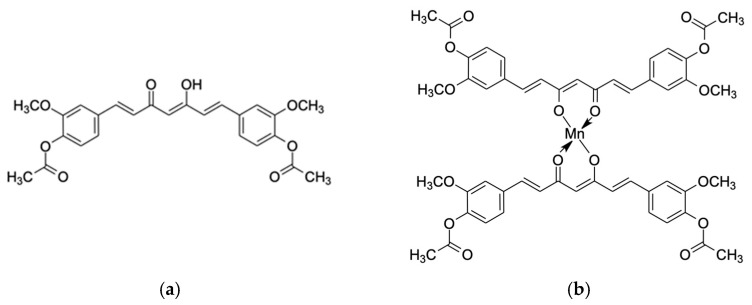
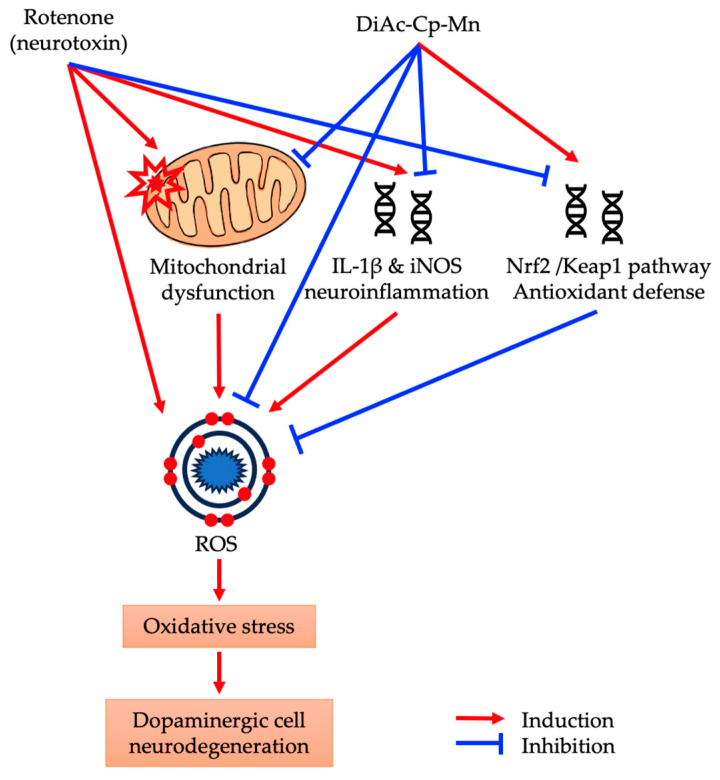
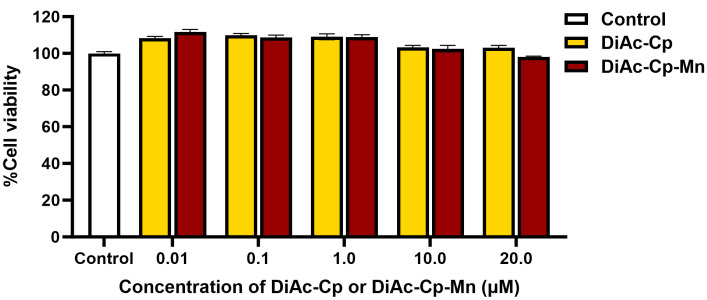
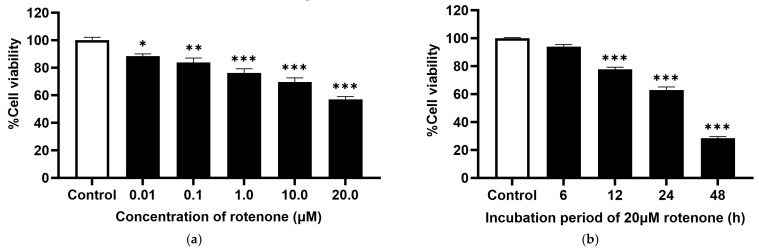
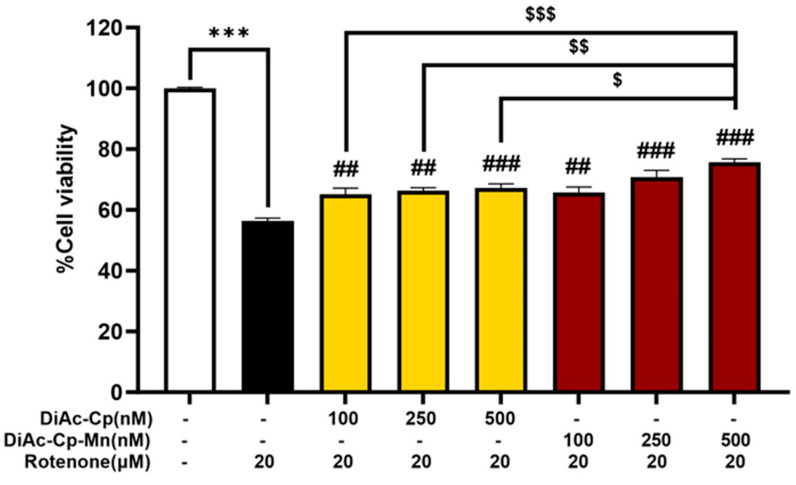
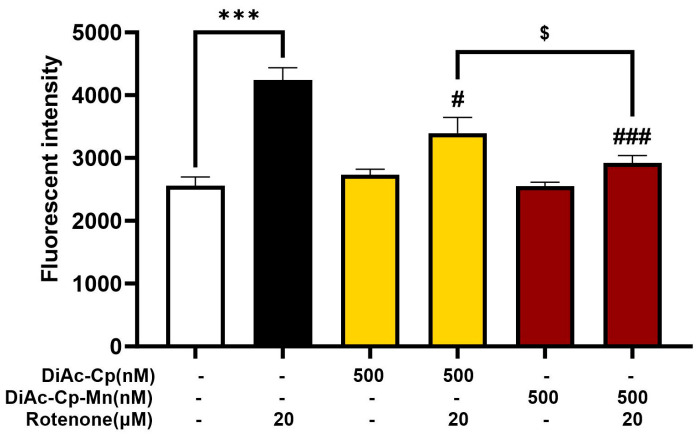
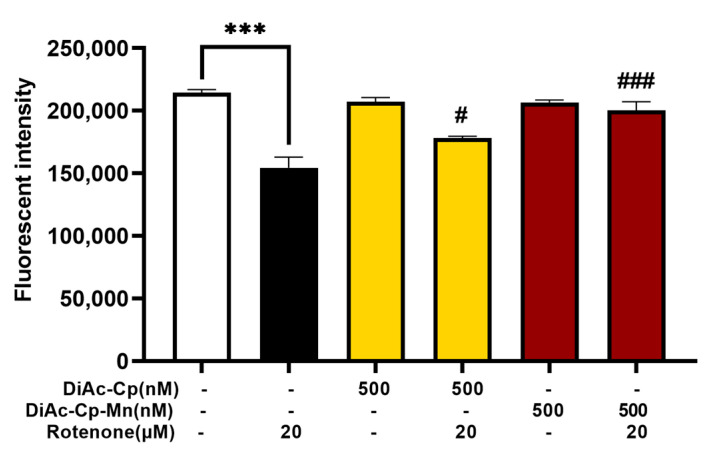
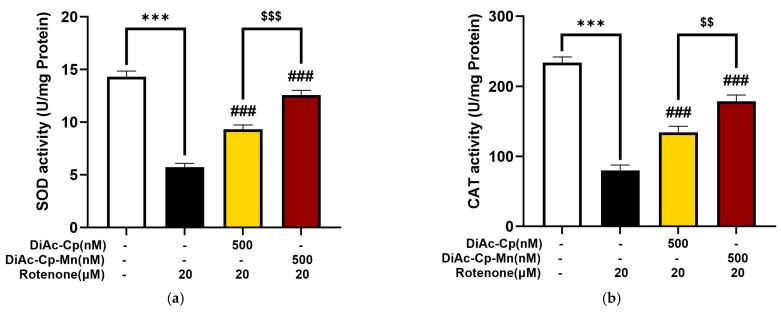
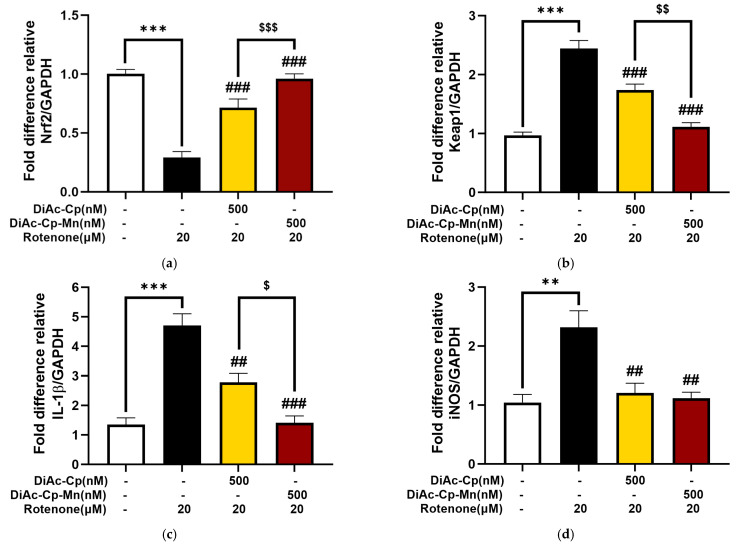
Diacetylcurcumin manganese complex (DiAc-Cp-Mn) is a diacetylcurcumin (DiAc-Cp) derivative synthesized with Mn (II) to mimic superoxide dismutase (SOD). It exhibited superior reactive oxygen species (ROS) scavenging efficacy, particularly for the superoxide radical. The present study investigated the ROS scavenging activity, neuroprotective effects, and underlying mechanism of action of DiAc-Cp-Mn in a cellular model of Parkinson's disease. This study utilized rotenone-induced neurotoxicity in SH-SY5Y cells to assess the activities of DiAc-Cp-Mn by measuring cell viability, intracellular ROS, mitochondrial membrane potential (MMP), SOD, and catalase (CAT) activities. The mRNA expression of the nuclear factor erythroid 2 p45-related factor (Nrf2), Kelch-like ECH-associated protein 1 (Keap1), inducible nitric oxide synthase (iNOS), and Interleukin 1β (IL-1β), which are oxidative and inflammatory genes, were also evaluated to clarify the molecular mechanism. The results of the in vitro assays showed that DiAc-Cp-Mn exhibited greater scavenging activity against superoxide radicals, hydrogen peroxide, and hydroxyl radicals compared to DiAc-Cp. In cell-based assays, DiAc-Cp-Mn demonstrated greater neuroprotective effects against rotenone-induced neurotoxicity when compared to its parent compound, DiAc-Cp. DiAc-Cp-Mn maintained MMP levels, reduced intracellular ROS levels, and increased the activities of SOD and CAT by activating the Nrf2-Keap1 signaling pathway. In addition, DiAc-Cp-Mn exerted its anti-inflammatory impact by down-regulating the mRNA expression of iNOS and IL-1β that provoked neuro-inflammation. The current study indicates that DiAc-Cp-Mn protects against rotenone-induced neuronal damage by reducing oxidative stress and inflammation.
双乙酰姜黄素锰配合物(DiAc-Cp-Mn)是一种与锰(II)合成的双乙酰姜黄素(DiAc-Cp)衍生物,用于模拟超氧化物歧化酶(SOD)。它表现出卓越的活性氧(ROS)清除功效,尤其是对超氧阴离子自由基。本研究在帕金森病细胞模型中探究了DiAc-Cp-Mn的ROS清除活性、神经保护作用及潜在作用机制。本研究利用鱼藤酮诱导SH-SY5Y细胞产生神经毒性,通过测量细胞活力、细胞内ROS、线粒体膜电位(MMP)、SOD和过氧化氢酶(CAT)活性来评估DiAc-Cp-Mn的活性。还评估了氧化和炎症相关基因核因子红系2 p45相关因子(Nrf2)、 Kelch样ECH相关蛋白1(Keap1)、诱导型一氧化氮合酶(iNOS)和白细胞介素1β(IL-1β)的mRNA表达,以阐明分子机制。体外实验结果表明,与DiAc-Cp相比,DiAc-Cp-Mn对超氧阴离子自由基、过氧化氢和羟自由基表现出更强的清除活性。在细胞实验中,与母体化合物DiAc-Cp相比,DiAc-Cp-Mn对鱼藤酮诱导的神经毒性表现出更强的神经保护作用。DiAc-Cp-Mn通过激活Nrf2-Keap1信号通路维持MMP水平,降低细胞内ROS水平,并提高SOD和CAT的活性。此外,DiAc-Cp-Mn通过下调引发神经炎症的iNOS和IL-1β的mRNA表达发挥抗炎作用。当前研究表明,DiAc-Cp-Mn通过减轻氧化应激和炎症来保护细胞免受鱼藤酮诱导的神经元损伤。