Department of Crystallography and Structural Biology, Institute of Physical Chemistry Blas Cabrera, Spanish National Research Council (CSIC), Madrid, Spain.
Departamento de Bioquímica y Biología Molecular y Celular e Instituto de Biocomputación y Física de Sistemas Complejos (BIFI), Universidad de Zaragoza, Zaragoza, Spain.
Protein Sci. 2024 Apr;33(4):e4957. doi: 10.1002/pro.4957.
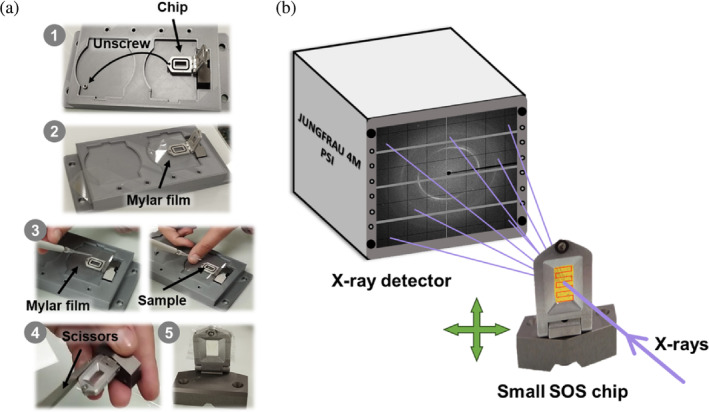
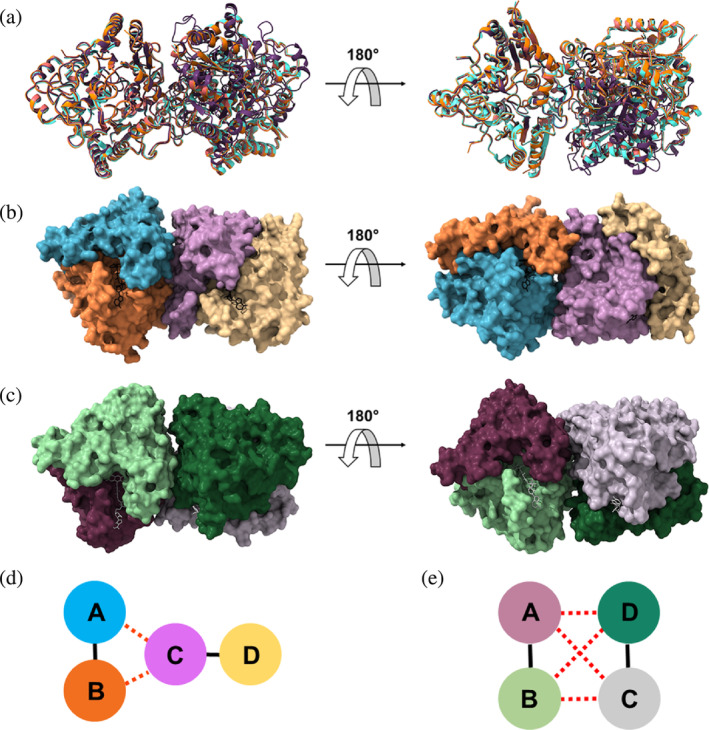
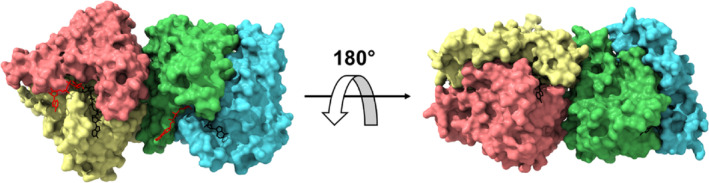
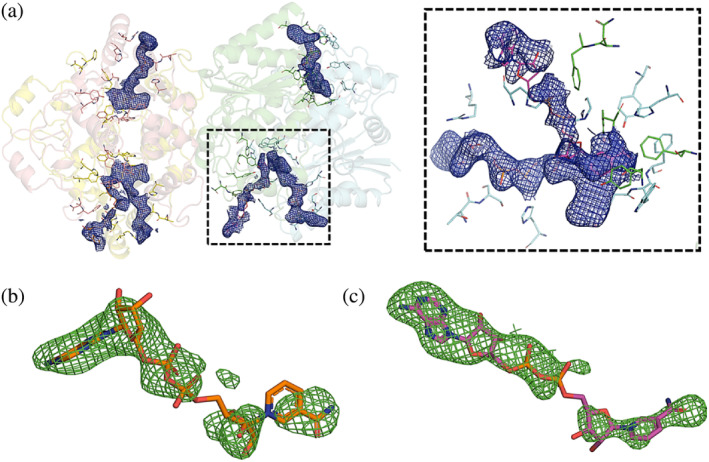
The human NQO1 (hNQO1) is a flavin adenine nucleotide (FAD)-dependent oxidoreductase that catalyzes the two-electron reduction of quinones to hydroquinones, being essential for the antioxidant defense system, stabilization of tumor suppressors, and activation of quinone-based chemotherapeutics. Moreover, it is overexpressed in several tumors, which makes it an attractive cancer drug target. To decipher new structural insights into the flavin reductive half-reaction of the catalytic mechanism of hNQO1, we have carried serial crystallography experiments at new ID29 beamline of the ESRF to determine, to the best of our knowledge, the first structure of the hNQO1 in complex with NADH. We have also performed molecular dynamics simulations of free hNQO1 and in complex with NADH. This is the first structural evidence that the hNQO1 functional cooperativity is driven by structural communication between the active sites through long-range propagation of cooperative effects across the hNQO1 structure. Both structural results and MD simulations have supported that the binding of NADH significantly decreases protein dynamics and stabilizes hNQO1 especially at the dimer core and interface. Altogether, these results pave the way for future time-resolved studies, both at x-ray free-electron lasers and synchrotrons, of the dynamics of hNQO1 upon binding to NADH as well as during the FAD cofactor reductive half-reaction. This knowledge will allow us to reveal unprecedented structural information of the relevance of the dynamics during the catalytic function of hNQO1.
人类 NQO1(hNQO1)是一种黄素腺嘌呤核苷酸(FAD)依赖性氧化还原酶,可催化醌向氢醌的两电子还原,对于抗氧化防御系统、肿瘤抑制因子的稳定以及醌类化学治疗药物的激活至关重要。此外,它在几种肿瘤中过表达,这使其成为有吸引力的癌症药物靶点。为了深入了解 hNQO1 催化机制中黄素还原半反应的新结构见解,我们在 ESRF 的新 ID29 光束线上进行了一系列晶体学实验,以确定迄今为止 hNQO1 与 NADH 复合物的第一个结构。我们还对游离 hNQO1 和与 NADH 复合物的 hNQO1 进行了分子动力学模拟。这是第一个结构证据表明,hNQO1 的功能协同作用是通过活性位点之间的结构通信驱动的,通过协同效应在 hNQO1 结构中的长程传播。结构结果和 MD 模拟都支持 NADH 的结合显著降低了蛋白质的动力学,并稳定了 hNQO1,尤其是在二聚体核心和界面处。总之,这些结果为未来在 X 射线自由电子激光和同步加速器上对 hNQO1 与 NADH 结合以及 FAD 辅因子还原半反应过程中的动力学进行时间分辨研究铺平了道路。这些知识将使我们能够揭示 hNQO1 催化功能过程中动力学的前所未有的结构信息。